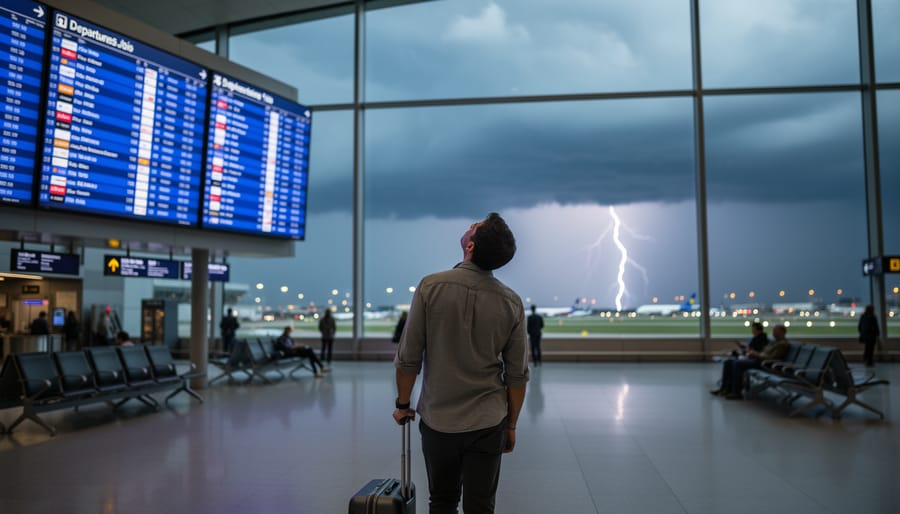
Why Is My Flight Delayed at Heathrow or Gatwick? Understanding Thunderstorm Disruptions and What to Do
Thunderstorm delays at Heathrow and Gatwick stem from air traffic control restrictions that prioritize safety over speed, and your first step is to check your airline’s app or text updates for rebooking options before you join the customer service queue. The recent disruption saw more than 900 flights delayed, with some passengers stuck for up to six hours as thunderstorms swept across southern England. Air traffic control authorities introduced temporary flow restrictions, the same protocol used whenever severe weather threatens safe operations around Britain’s two busiest airports.
I’ve been caught in this exact situation three times, twice at Gatwick during summer storm season. The frustration is real when you’re watching departure boards cycle through delay after delay, but understanding why these restrictions happen and what you can actually do about it makes the difference between a wasted day at the airport and salvaging your plans.
This guide walks through recognizing whether your delay is short-term weather or a cascading multi-hour problem, the specific reasons thunderstorms create bottlenecks at these airports, immediate actions that protect your rights and options, and strategies to minimize storm disruption on future trips. The key is acting fast with the right information, not just waiting at the gate hoping for good news.
What’s Happening Right Now: The Storm Disruption Breakdown
Southern England got slammed by severe thunderstorms on Saturday, creating a cascade of flight chaos at two of the UK’s busiest airports. More than 900 flights faced delays at Heathrow and Gatwick, with some passengers stuck waiting up to six hours as storms swept across the region.
Airport authorities responded by introducing temporary ATC restrictions and delays to maintain safety during the adverse weather. These weren’t arbitrary decisions. Lightning, wind shear, and reduced visibility force air traffic controllers to slow everything down, spacing aircraft farther apart and sometimes grounding departures until conditions improve.
The UK’s National Air Traffic Services (NATS) issued a NATS warning on continuing disruption throughout the day, signaling this wasn’t a quick-fix situation. When storms park themselves over southern England’s airspace, the ripple effects stretch for hours beyond the worst weather. Heathrow and Gatwick, already operating near capacity on a normal day, become bottlenecks where every delayed landing or takeoff compounds into broader schedule chaos.
Why Thunderstorms Cause Flight Delays: The Real Reasons Behind the Wait
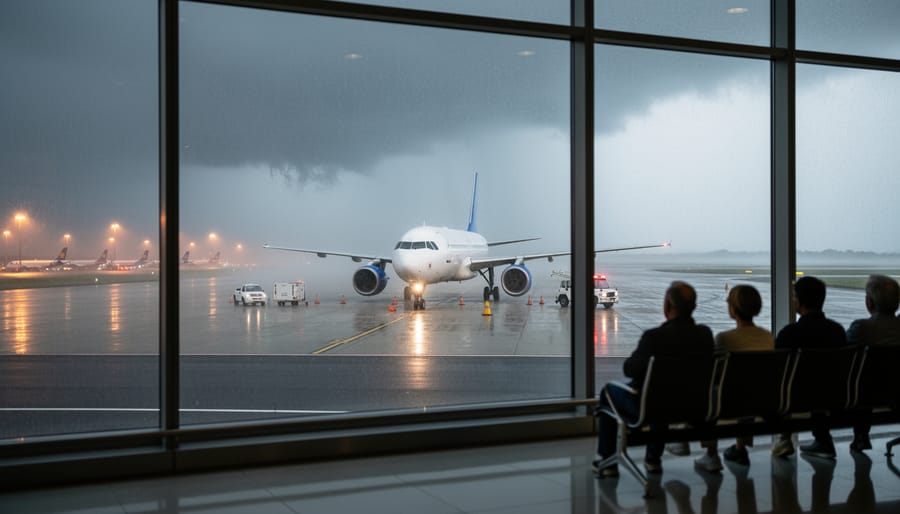
Air traffic control doesn’t ground flights because of a little rain. When thunderstorms roll through, they trigger a cascade of safety protocols that ripple across the entire airspace, turning a busy day into a logistical nightmare. Understanding what’s actually happening behind those vague “weather delay” announcements helps make the wait less frustrating.
The primary culprit is lightning. Aircraft can handle strikes, but ground crew working on the tarmac can’t safely fuel planes, load bags, or marshal aircraft when lightning is within a certain radius of the airport. That radius typically extends 5 to 10 miles, and a single storm cell can shut down ramp operations for 30 minutes or more. I’ve watched entire terminals go quiet as baggage handlers sprint indoors, leaving dozens of planes sitting ready to push back but unable to move.
Air traffic control restrictions kick in before the storm even arrives. NATS (the UK’s air navigation service) reduces the number of aircraft allowed in the airspace when thunderstorms create dangerous conditions. This means planes already in the air must enter holding patterns, circling at assigned altitudes while waiting for clearance to land. On the ground, departures stack up because the airport can’t accept new arrivals until the backlog clears.
- Air traffic control restrictions
- Temporary limits on the number of aircraft allowed in a specific airspace or at an airport, implemented to maintain safe separation during adverse weather or operational constraints.
- Wind shear
- Sudden, dramatic changes in wind speed or direction over a short distance, particularly dangerous during takeoff and landing as it can cause rapid altitude or speed fluctuations.
- Holding patterns
- Racetrack-shaped flight paths where aircraft circle at designated altitudes while waiting for permission to land, typically stacked vertically with 1,000-foot separation between planes.
- Slot delays
- Revised departure times assigned by air traffic control when the original takeoff slot can’t be met, often cascading as storms disrupt the carefully choreographed schedule of landings and departures.
Wind shear poses another serious threat. Thunderstorms generate powerful downdrafts and unpredictable wind changes near the ground. Pilots can’t safely take off or land when instruments detect wind shear conditions, which can shift from safe to dangerous in minutes. Modern aircraft have excellent detection systems, but the solution is simple: wait it out.
Reduced visibility compounds every other problem. Heavy rain and low clouds force airports to increase spacing between aircraft, meaning fewer planes can land per hour. Heathrow normally handles one landing every 45 seconds during peak times. In storm conditions, that interval doubles or triples.
Heathrow and Gatwick are particularly vulnerable because they operate at near-maximum capacity every day. There’s no slack in the system. A 30-minute weather delay doesn’t just affect 30 minutes of flights, it creates a backlog that takes hours to clear because every landing slot, gate, and crew schedule is connected. Add southern England’s position as the entry point for transatlantic and European traffic, and a local thunderstorm becomes an international disruption. The high traffic volume means these airports can’t simply absorb delays the way a smaller regional airport might.
Recognizing Your Delay Situation: Triage Your Next Steps
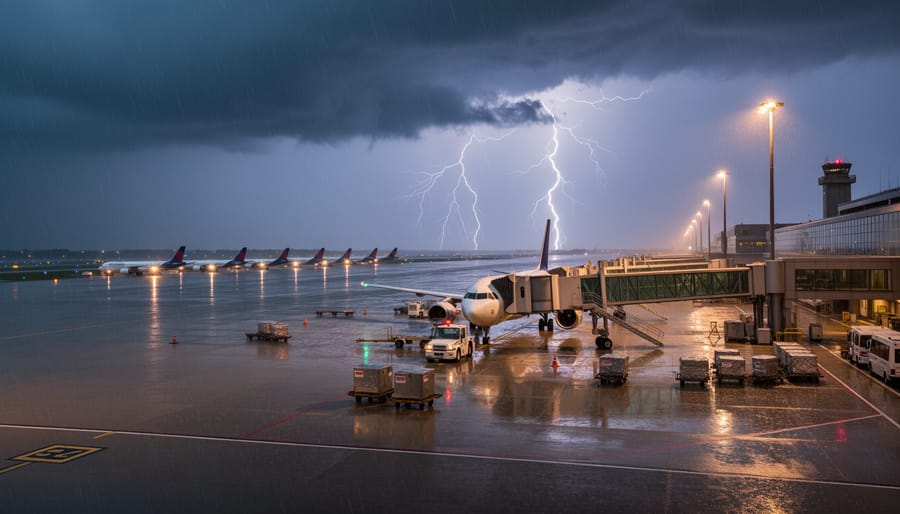
When you’re staring at the departures board and your flight status has changed, the first thing you need to do is figure out exactly what you’re dealing with. Not all delays are created equal, and understanding the difference between a minor hiccup and a major disruption determines your next move.
I learned this the hard way during a Dublin delay years ago when I wasted two hours queuing at the customer service desk for what turned out to be a 45-minute weather hold. The gate agent finally told me, “Love, just grab a coffee and relax.” She was right.
Here’s how to quickly triage your situation at Heathrow or Gatwick during these thunderstorm disruptions:
| Delay Duration | What It Means | Your Rights | Immediate Action |
|---|---|---|---|
| Under 2 hours | Minor storm-related hold; likely to depart same day | No compensation required, but airline should provide updates | Stay near gate, monitor flight status app, keep phone charged |
| 2-3 hours | Moderate disruption; aircraft repositioning or crew delays | Entitled to meal vouchers and refreshments under UK regulations | Request vouchers at gate or airline desk, find comfortable waiting area |
| 3-6 hours | Significant delay; multiple factors compounding (like Saturday’s six-hour delays) | Meals, drinks, and hotel accommodation if overnight stay required | Speak with airline rep about accommodation, keep all receipts if you book yourself |
| 6+ hours or cancellation | Flight will not operate today; rebooking necessary | Full refund or alternative flight, plus meals and accommodation | Get in the rebooking queue immediately (app often faster than desk), explore alternative airports |
The key distinction is whether your delay falls under “extraordinary circumstances.” Weather events like thunderstorms typically qualify, which means you won’t receive the standard EC 261/2004 compensation (those payments from 250 to 600 euros). However, the airline still has a duty of care. They must provide assistance regardless of the cause.
Check your flight status every 30 minutes rather than constantly refreshing. Airlines often update timings in blocks as they receive clearer information from air traffic control. During Saturday’s disruption, NATS issued updates throughout the day, and flight times shifted as conditions improved.
Your rights kick in at different thresholds, so knowing which category you fall into helps you advocate for yourself without wasting energy on requests the airline isn’t obligated to fulfill yet.
What to Do Right Now: Step-by-Step Action Plan
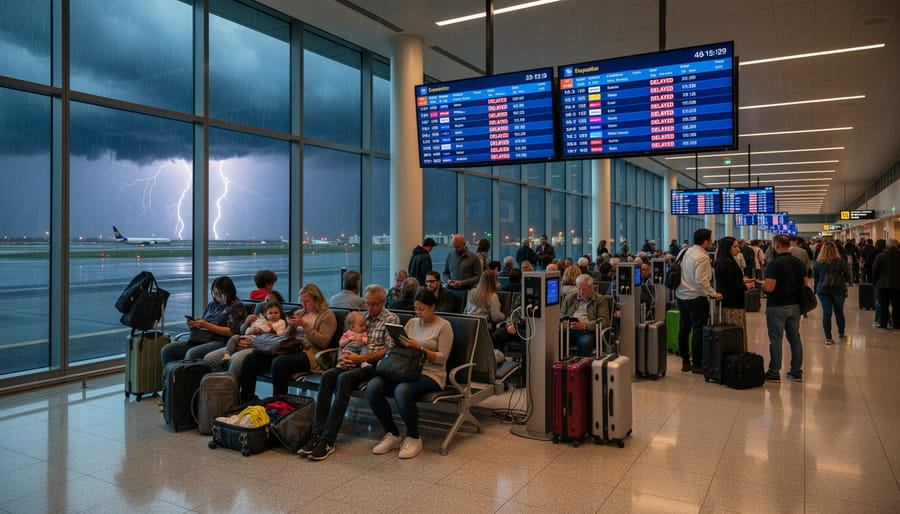
If You’re Still at Home or Your Hotel
Before you grab your bags and rush out the door, pause. During active thunderstorm disruptions like Saturday’s chaos that grounded 900+ flights, leaving early can mean spending six hours in a crowded terminal instead of your comfortable hotel room. I learned this the hard way during a Madrid delay when I watched departure boards shift every fifteen minutes while nursing overpriced airport coffee.
First, check flight status directly with your airline’s app or website, not third-party aggregators that lag behind real-time updates. If your flight shows delays exceeding two hours, don’t head to the airport yet. Call the airline’s customer service line to ask whether they recommend delaying your departure, many agents will tell you honestly if conditions are improving or worsening.
Monitor NATS (National Air Traffic Services) updates on social media for air traffic control restriction announcements. When thunderstorms sweep southern England, restrictions typically lift within hours as cells move through, but knowing the forecast helps you time your departure. Pack snacks and keep your phone charged while you wait at your accommodation. The goal isn’t avoiding the airport entirely; it’s arriving when your flight has a realistic chance of departing rather than sitting in uncertainty.
If You’re Already at the Airport
You’re stuck airside watching departure boards cycle through delay after delay, I’ve been there, and the key is settling in strategically rather than pacing anxiously near your gate. Your first move should be locating a quieter zone away from the main concourse; both Heathrow and Gatwick have less-trafficked gate areas and upper-level seating that offer breathing room when terminals get packed during mass delays.
Check your airline’s app immediately to see if you qualify for lounge access, some carriers open their lounges to delayed economy passengers during major disruptions, and the comfortable seating, free Wi-Fi, and charging stations make hours pass considerably easier. If lounge access isn’t available, scout the terminal for power outlets near comfortable seating; the charging stations by restrooms and gate clusters fill up quickly, so claiming a spot early matters. I always carry a portable charger for situations like this, and it’s saved me multiple times when outlets were scarce.
Meal vouchers depend entirely on your airline’s policies rather than passenger rights regulations, since thunderstorms count as extraordinary circumstances under UK law. Ask gate agents or check airline customer service desks, some carriers voluntarily provide vouchers for delays exceeding three hours, though they’re not legally required to do so. Don’t wait until you’re starving; grab food when you can, as airport restaurants get overwhelmed when hundreds of delayed passengers descend simultaneously.
Managing stress during extended waits comes down to accepting what you can’t control. Download shows or books before your phone battery drains, update family or colleagues about your situation, and remember that while airline amenities vary widely, the safety protocols causing these delays exist for good reason, pilots and air traffic controllers won’t risk flying until conditions improve, and that ultimately protects everyone onboard.
Understanding Your Passenger Rights During Weather Delays
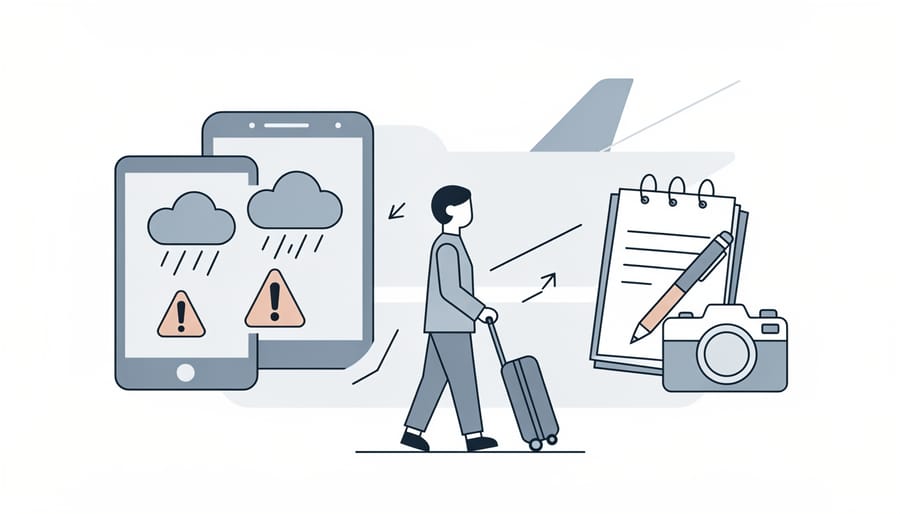
Here’s the harsh truth about weather delays: legally, airlines can duck compensation claims by citing “extraordinary circumstances.” But that doesn’t mean you’re completely out of luck when thunderstorms ground your flight.
Under UK and EU passenger protection rules (specifically EC 261/2004), weather events like the recent Heathrow and Gatwick thunderstorms count as extraordinary circumstances beyond airline control. This means you won’t receive the standard €250-€600 compensation you’d get if the airline caused the delay themselves through mechanical issues or crew scheduling problems. I learned this the hard way during a Barcelona thunderstorm that stranded me overnight, my compensation claim was rejected within 48 hours.
What airlines must provide depends on delay length and flight distance. For flights over 1,500km (covering most international routes from Heathrow and Gatwick), you’re entitled to meals and drinks after three hours, plus hotel accommodation and transfers if the delay extends overnight. On shorter flights, these provisions kick in after two hours.
The critical distinction here: duty of care obligations apply regardless of delay cause. Airlines can’t skip providing water and meal vouchers just because a thunderstorm rolled through. During the six-hour delays this past Saturday, affected passengers should have received refreshments and potentially hotel rooms if flights were pushed to the next day.
To claim reimbursement for expenses you covered yourself, keep every receipt. If the airline failed to provide care and you bought meals or booked emergency accommodation, file a claim through their customer service portal within six months. Document everything with photos and timestamp records. Understanding your rights means knowing what airlines owe you even when Mother Nature throws a wrench in travel plans.
Preventing Future Thunderstorm Travel Headaches
After dealing with a six-hour delay myself at Heathrow during a summer storm two years ago, I learned that a little preparation goes a long way. You can’t control the weather, but you can stack the odds in your favor.
Book Morning Flights When Possible
Thunderstorms in southern England typically build during the afternoon and evening as temperatures peak. I now deliberately choose flights departing before noon whenever traveling through Heathrow or Gatwick during summer months. While morning fog occasionally creates issues, the risk of thunderstorm delays drops significantly. You’ll also have more rebooking options if something does go wrong early in the day.
Choose Your Airline Strategically
Not all airlines handle disruptions equally. Before booking, I check the carrier’s rebooking policies and track record during weather events. Some airlines proactively rebook passengers on partner flights; others leave you stranded for days. Reading reviews from travelers who’ve experienced delays gives you a realistic picture beyond the marketing promises.
Essential Prevention Checklist
- Purchase comprehensive travel insurance covering weather delays and accommodation costs
- Download weather apps like Met Office or Windy to monitor forecasts 48 hours before departure
- Select flexible or refundable tickets when traveling during peak storm season (May through September)
- Build at least three hours between connections at Heathrow or Gatwick during summer
- Sign up for airline text alerts and download their app for real-time updates
Understanding your rights around flight delay compensation before you travel helps you act quickly if delays occur. Save screenshots of delay notifications and keep receipts for any expenses incurred.
I’ve started checking the five-day forecast before any UK summer travel. If severe weather is predicted, I either reschedule or pack extra entertainment and snacks. The peace of mind is worth the minor inconvenience.
Common Questions About Storm Delays at UK Airports
Thunderstorm delays raise urgent questions when you’re stuck at the gate or racing to catch a rebooked connection. Based on what travelers ask most often during weather disruptions at Heathrow and Gatwick, here are the answers you need right now.
Why do thunderstorms affect flights so much? Thunderstorms create multiple hazards simultaneously: lightning poses risks to refueling operations and ground crew, wind shear can suddenly change wind speed or direction during takeoff and landing, and reduced visibility makes it harder for pilots to navigate safely. Air traffic controllers must space planes farther apart during storms, which dramatically reduces how many aircraft can take off or land each hour. At busy airports like Heathrow and Gatwick, this creates a cascade effect where even a brief restriction can cause hours of delays as the backlog clears.
How long do storm delays typically last? It varies wildly depending on the storm’s path and intensity. During Saturday’s disruption across southern England, some flights faced delays up to six hours while the thunderstorm system moved through. If the storm passes quickly, delays might be minimal, but airports need additional time to work through the backlog of delayed departures and arrivals. NATS issues updates throughout the day when weather restrictions are in place, so delays can extend as new cells develop or linger longer than forecast.
Will my connecting flight wait for me if my first flight is delayed by weather?
Airlines don’t typically hold connecting flights for delayed passengers, but if multiple passengers from your delayed flight are connecting to the same onward service, there’s a small chance they’ll wait. Contact the airline immediately to explore rebooking options rather than counting on a hold.
Can I get compensation for weather delays at UK airports?
No. Thunderstorms qualify as extraordinary circumstances under EC 261/2004, meaning airlines aren’t required to pay cash compensation. However, they must still provide meals, refreshments, and hotel accommodation if your delay extends overnight.
What happens if my luggage doesn’t make my rebooked flight?
Your checked bags will follow on the next available flight and the airline will deliver them to your destination address. File a delayed baggage report at the airport before leaving and keep your claim reference number.
How do I know when it’s safe to fly again after thunderstorms?
NATS lifts air traffic control restrictions once the storm system clears and conditions meet safety standards. Check your airline’s app or website for real-time updates, as they receive direct notifications when restrictions are removed and normal operations can resume.
Another frequent concern involves rebooking during mass disruptions. When hundreds of flights are delayed or canceled simultaneously, airline systems become overwhelmed. Calling the airline’s international number rather than the UK customer service line sometimes gets you through faster, since fewer people think to try that route. I’ve had better luck using airline apps to self-service rebook than waiting in serpentine phone queues.
Travel insurance coverage for storm delays confuses many passengers. Standard policies rarely cover delays caused by weather, but “cancel for any reason” upgrades might reimburse non-refundable hotel nights or other expenses if you choose not to travel. Read your policy’s weather-related exclusions before filing a claim, as insurers reject most storm delay claims under the “foreseeable event” clause if forecasts predicted storms days earlier.
Parents traveling with children often ask about priority rebooking. Airlines don’t offer formal priority for families during weather disruptions, but gate agents sometimes accommodate families with young children on earlier flights if seats open up. Politely explaining your situation can help, though there’s no guarantee during events affecting 900-plus flights like Saturday’s thunderstorm system.
How to Fix It Step by Step
Step 1: Check Your Flight Status Immediately
Before you do anything else, confirm whether your flight is delayed, how long the delay is, or if it’s been cancelled. Visit your airline’s app or website directly, don’t rely solely on airport departure boards, which can lag behind real-time updates. The current thunderstorm disruption at Heathrow and Gatwick has caused delays ranging from short holds to six-hour waits, so knowing your specific situation determines your next moves.
Step 2: Contact Your Airline for Rebooking Options
If your delay extends beyond two hours or your flight is cancelled, call your airline’s customer service line or use their app to explore rebooking. Airlines often release alternative flights during weather disruptions, and acting quickly, before other delayed passengers flood the queue, gives you better options. Ask specifically about flights to nearby airports or routing through different hubs if your destination allows it.
Step 3: Understand What the Airline Must Provide
For delays over two hours, UK regulations require airlines to offer meals, refreshments, and communication facilities (phone calls, emails). Over three hours, you’re entitled to hotel accommodation if an overnight stay becomes necessary, plus transport between the airport and hotel. Thunderstorms qualify as extraordinary circumstances, which typically exempts airlines from compensation payments, but they still must cover your care costs during the wait.
Step 4: Decide Whether to Stay or Leave the Airport
If you’re facing a delay of three to six hours and live within reasonable distance, consider whether going home or to a nearby hotel makes sense. However, weather conditions can improve suddenly, and airlines sometimes bring flights forward when windows open. I’ve learned the hard way that leaving the airport during unpredictable weather delays means risking missed boarding calls. If you stay, find the quietest terminal areas away from gate congestion, similar strategies that help with airport wait times during busy periods apply here too.
Step 5: Document Everything for Potential Claims
Keep all receipts for meals, transport, or accommodation you purchase during the delay. Take screenshots of delay notifications from your airline and official weather warnings from NATS. While thunderstorm delays rarely qualify for compensation, you may be able to claim reimbursement for reasonable expenses, and solid documentation strengthens any claim you submit later.
I’ve spent my share of time in airport terminals watching storm clouds roll in, and I know how exhausting it is when your plans dissolve into uncertainty. Whether you’re still waiting for updates or finally boarding after hours of delays, remember that the safety protocols causing your frustration exist to get you home in one piece.
The key actions bear repeating: check your airline’s app constantly, know your passenger rights, document everything if you’re incurring expenses, and don’t hesitate to ask airport staff for help. Stay connected to official channels like NATS and your airline’s social media for real-time updates rather than relying on airport announcements alone.
Thunderstorms will always disrupt air traffic in southern England, it’s geography and physics, not incompetence. What you can control is how prepared you are next time: earlier flights, travel insurance, flexible tickets, and realistic connection buffers all reduce the sting when weather doesn’t cooperate. The Saturday disruption affecting 900+ flights reminded us that even the busiest airports remain at nature’s mercy, but travellers who understand the system navigate delays with far less stress than those caught off guard.