How to Fly with Your Vape: Complete Guide to Flying with Vape Devices in 2026
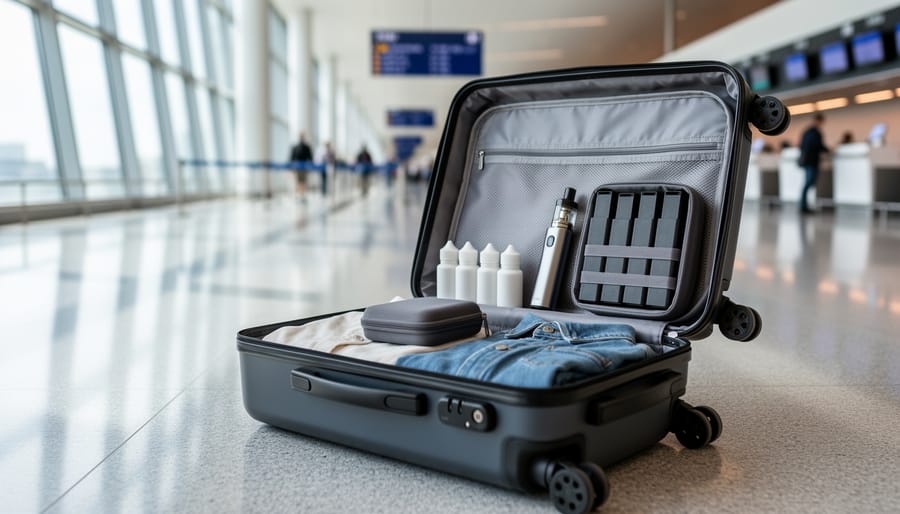
Yes, you can fly with your vape, but it must stay in your carry-on bag, batteries need to be removed or protected, and e-liquids have to follow the 3.4-ounce rule. TSA permits vaping devices on planes as of 2026, but you’ll need to follow specific packing and safety steps to avoid delays, confiscation, or being pulled aside at security.
I learned this the hard way during a trip to Vancouver last year when I casually tossed my vape kit into checked luggage. The bag got flagged, I had to wait 45 minutes at baggage claim while they inspected it, and a TSA officer gave me a lecture about lithium batteries in cargo holds. Not fun when you’re trying to catch a connecting flight.
The good news? Once you know the rules, flying with vape gear becomes straightforward. Airlines and security agencies updated their policies over the past few years as vaping became more common, so there’s less confusion now than there used to be. You just need to pack correctly, understand what TSA screeners are looking for, and know how to handle your device during the flight itself.
This guide walks you through the entire process: what to pack, how to organize your gear for security checkpoints, what you can and cannot do on the plane, and how to verify you’re following current rules before you leave home. Whether this is your first time travel with vape gear or you’ve had issues before, these steps will keep you compliant and stress-free.
What You Need Before You Pack Your Vape
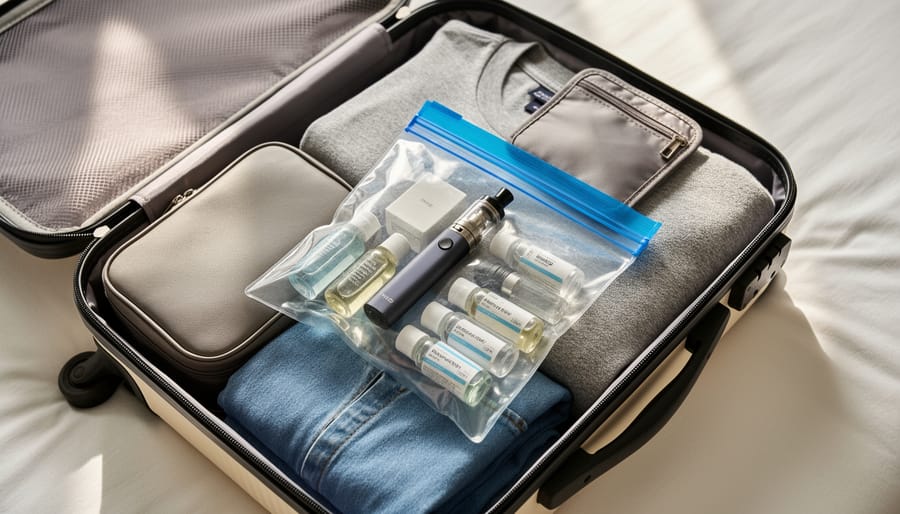
Before you zip your suitcase and head to the airport, gather everything you need to pack your vape legally and safely. Missing even one item can mean scrambling at security or risking confiscation, so let’s walk through what to have on hand.
Your vape device is the obvious starting point, but preparation matters more than you might think. If your device has removable batteries, you’ll need those batteries individually protected, either in their original packaging or in dedicated battery cases. Loose batteries in a bag can short-circuit if they touch metal objects like keys or coins, and lithium battery fires are no joke at 30,000 feet. This is why TSA takes battery safety seriously.
E-liquid bottles need attention too. The 3-1-1 rule applies here: each bottle must be 3.4 ounces (100ml) or smaller, all bottles must fit in a single quart-sized zip-top bag, and you’re limited to one bag per passenger. Even if you have a massive 120ml bottle that’s only half-full, TSA goes by the container size, not the contents. Grab a clear, resealable plastic bag, the kind airports provide at checkpoints works, but having your own saves time.
Here’s your complete packing checklist:
- Vape device (mod, pod system, or pen)
- Spare batteries in cases or original packaging (if removable)
- E-liquid bottles (100ml or smaller each)
- Quart-sized zip-top bag for liquids
- Battery cases (plastic clamshell-style work best)
- Replacement coils or pods (optional but smart)
- Purchase receipts or product documentation (especially for international travel)
That documentation might seem unnecessary, but it proves ownership and product specs if you’re questioned, particularly crossing international borders where vaping regulations vary wildly. I learned this the hard way in Dubai when a customs officer wanted proof my device was under the watt-hour limit, fortunately, I had my receipt showing the battery capacity.
Understanding TSA and Airline Vape Policies
Domestic U.S. Flights
TSA rules apply uniformly across all U.S. airports, so once you understand the basics, domestic travel is straightforward. Your vape device, e-liquid (up to 3.4 oz per bottle in a quart-sized bag), and batteries stay in your carry-on, no exceptions. The FAA lithium battery watt-hour limits typically allow vape batteries without special approval, since most are well under 100 watt-hours. If you carry spare batteries in carry-on keep them in their original cases or plastic sleeves to prevent short circuits. As of 2026, there haven’t been major rule changes, TSA still won’t let you check vapes, but screening procedures have gotten more consistent nationwide. To stay compliant just remember: carry-on only, liquids follow the 3-1-1 rule, and batteries must be protected from contact with metal objects.
International Travel Considerations
International vape rules change dramatically once you leave the United States. What’s legal in one country might land you in serious trouble in another.
Thailand and Singapore enforce strict bans, bringing vaping devices into these countries can result in hefty fines or even jail time. I learned this the hard way when a fellow traveler at Bangkok’s airport was detained for hours over a vape pen he’d forgotten in his jacket pocket. Authorities don’t care whether you planned to use it; possession alone breaks the law.
Australia requires a prescription for nicotine-containing e-liquids. India prohibits vapes entirely. Many Middle Eastern countries, including Qatar and the UAE, have complex regulations that vary by emirate. European Union countries generally allow vapes but restrict nicotine strength to 20mg/ml maximum.
Check your destination’s customs website before booking. Call their embassy if information seems unclear. Airlines also set their own policies, some prohibit vapes on specific routes regardless of legality at either end.
Don’t assume carry-on rules transfer internationally. Research both your destination and any layover countries. Pack documentation showing nicotine content if traveling to prescription-required nations. When in doubt, leave it home.
Safety Warnings and What Could Go Wrong
Lithium batteries are the biggest safety concern when flying with vaping gear. These batteries can overheat, vent, or catch fire if they short-circuit, especially when jostled in luggage or exposed to pressure changes. I once witnessed a TSA officer pull aside a traveler whose loose 18650 batteries were rolling around in a backpack pocket with coins and keys. That’s a fire waiting to happen. If battery terminals touch metal objects, they can spark and ignite. Airlines take this seriously because cabin fires are catastrophic at 35,000 feet.
Beyond batteries, cabin pressure creates another headache: leaking e-liquid. As the plane climbs, air pressure inside your tank decreases relative to the cabin, forcing liquid out through airflow holes and mouthpieces. You might land to find a sticky mess coating everything in your bag. The solution is simple, empty your tank before you fly, or keep it completely full with no air gaps. Half-full tanks leak the worst.
Accidental device activation is another risk. If your vape fires up inside your bag, it can burn through fabric, melt plastic, or trigger a smoke alarm. I’ve heard stories of passengers smelling something burning mid-flight, only to discover their forgotten vape auto-firing in the overhead bin. Most modern devices have lock functions, use them.
Finally, the legal side: putting vapes in checked luggage violates federal regulations and can get you fined. In some countries, like Thailand or Singapore, possession of vaping products leads to serious penalties, including confiscation, fines, or even arrest. A preventable mistake, like forgetting a disposable vape in your toiletry bag headed for Bangkok, can derail your entire trip. Know the rules, follow them, and you’ll avoid these pitfalls entirely.
Step-by-Step: Packing Your Vape for Air Travel
Preparing Your Device
Before you zip up your carry-on, take five minutes to prep your vape device properly. This simple routine prevents mid-flight disasters like e-liquid leaks and accidental battery drain.
Start by emptying your tank completely. Cabin pressure changes during takeoff and landing can force liquid through the seals, creating a sticky mess in your bag. Pour out any remaining e-liquid or vape it down before you leave for the airport. If your tank has a removable coil and you’re worried about leakage, pull it out and store it separately in a small zip-top bag.
Next, switch off your device using the five-click lock feature (or whatever method your model uses). This prevents accidental firing if something presses the button during handling. I learned this the hard way when my mod turned on in my backpack and burned through half a battery before I noticed the warm spot.
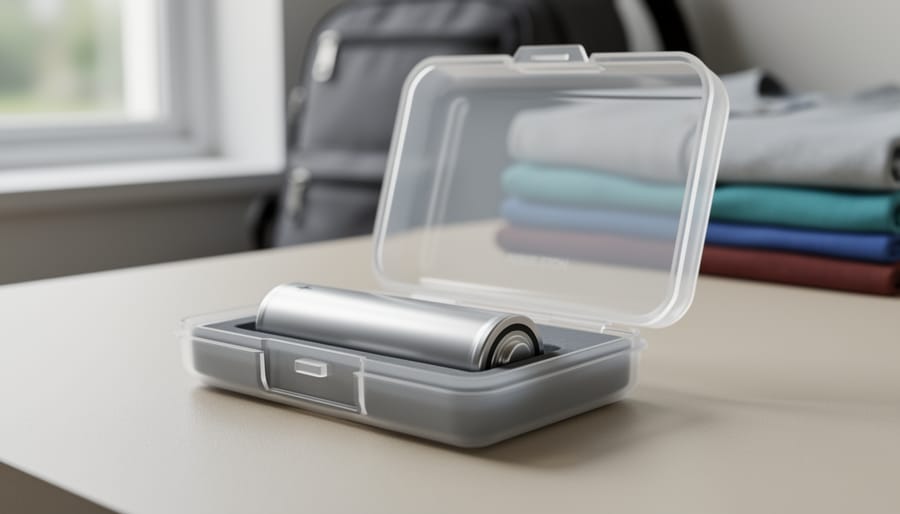
For devices with removable batteries, take them out and store them in a proper battery case, never loose in your pocket or bag where metal objects could create a short circuit. Non-removable battery devices should be fully powered down, not just locked.
Handling E-Liquids and Batteries
E-liquids fall under TSA’s 3-1-1 rule, which means each bottle must be 3.4 ounces (100 milliliters) or smaller, all bottles must fit in a single quart-sized clear plastic bag, and you’re limited to one bag per passenger. If you’re traveling with larger bottles, transfer liquid into TSA-compliant containers before you leave, airport security will confiscate anything over the limit, no exceptions. Keep your liquids bag easily accessible in your carry-on because you’ll need to remove it during screening, just like your toiletries.
Spare batteries require even more attention. Lithium-ion batteries can short-circuit if their terminals touch metal objects or each other, potentially causing fires. Always keep spare batteries in their original retail packaging or use dedicated battery cases that prevent contact with other items. I learned this the hard way when a loose battery in my backpack pocket started heating up mid-flight, fortunately I caught it before anything serious happened. Never toss loose batteries into your bag alongside keys, coins, or other vape parts.
Double-check your packing checklist before heading to the airport: all e-liquids in compliant bottles inside a clear bag, all batteries either installed in devices or secured in cases, and everything together in your carry-on. Checking these items in luggage isn’t just against regulations, it’s genuinely dangerous.
Organizing Your Carry-On
Place your vape device in an easily accessible pocket or compartment near the top of your carry-on bag. I learned this the hard way after fumbling through a packed backpack at security while other passengers waited behind me. Your device and any accessories should be reachable within seconds when the TSA agent asks you to remove electronics.
Keep spare batteries in their protective cases and store them in a separate zippered pocket. This prevents them from touching metal objects like keys or coins that could cause a short circuit. Your clear quart-sized bag with e-liquids should sit right on top where screeners can see it immediately.
During the flight, stow your vape in the seat pocket in front of you or a secure bag compartment overhead. Never leave it loose on your tray table or seat where it could slide off during turbulence. If you’re carrying multiple devices or a full kit, use a small padded case to prevent damage and keep everything contained. The goal is quick access at checkpoints and secure storage once airborne.
Going Through Security with Your Vape
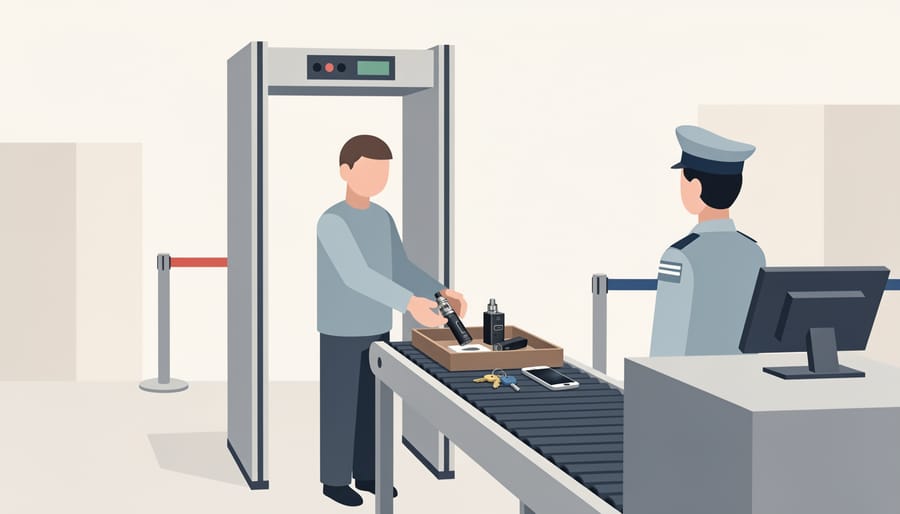
The TSA checkpoint is where your packing prep pays off. When you reach the conveyor belt, pull your vape device out of your bag and place it in a bin by itself, just like you would a laptop or tablet. This gives screeners a clear view and speeds things along. Your e-liquids should already be in that quart-sized bag with your other toiletries, so toss that in a separate bin too.
Most of the time, your vape will sail through without a second glance. Occasionally, though, a TSA officer might pick it up for a closer look, especially if it’s a larger box mod or an unfamiliar design. Don’t panic. They’re checking for prohibited items and verifying it’s not something else entirely. If they ask what it is, a simple “It’s my vape device” usually does the trick. Some officers might ask follow-up questions about batteries or whether it contains liquid; just answer honestly and you’ll be on your way.
Here’s what makes the process smoother:
- Keep your vape in an outside pocket or easily accessible spot in your carry-on
- Know your battery specs (watt-hours) in case an officer asks, most personal vapes are well under the 100Wh limit
- Be ready to explain that it’s an electronic nicotine device, not something prohibited
- Stay calm and cooperative; TSA sees these daily and they’re just doing their job
Regional variations exist: some smaller airports wave electronics through without removal, while international hubs might swab your vape for residue testing. If you’ve packed correctly and can handle flight delays with patience, security screening is just another quick step before your flight.
Using Your Vape at the Airport and On the Plane
Once you’ve made it through security with your vape in your carry-on, you might be tempted to take a quick hit before boarding, but hold on. You can’t just vape anywhere in the airport. Most U.S. airports restrict vaping to designated smoking areas, which are usually tucked away outside the terminal or in poorly-ventilated glass enclosures that smell like regret and stale cigarette smoke. I once had a two-hour layover in Denver and spent fifteen minutes hunting down the smoking area, only to find it was back outside security. Lesson learned: if you need to vape before a long flight, do it before you go through TSA, or plan extra time to find the designated zone.
Inside the terminal, treat your vape like a loaded weapon, keep it packed away and turned off. Some airports have relaxed attitudes and clear signage pointing to smoking lounges, while others will have security approach you the moment you pull out your device. When in doubt, ask a staff member or look for official airport maps that mark smoking areas. International airports vary wildly: some European hubs have decent indoor smoking lounges, while airports in Asia and the Middle East often have zero tolerance for vaping inside.
Now let’s talk about the flight itself. Do not, under any circumstances, vape on the plane. It doesn’t matter if you’re in the bathroom, under a blanket, or think you can stealth-vape without anyone noticing. Aircraft smoke detectors are sensitive, flight attendants are trained to spot this behavior, and your fellow passengers will absolutely report you. Airlines take in-flight vaping seriously because it creates genuine safety concerns: smoke detectors triggering in a confined space can cause panic, and lithium batteries present a fire risk if mishandled. Beyond the immediate safety issues, you’re looking at potential federal charges, airline bans, and the humiliation of being escorted off the plane by law enforcement upon landing. Save yourself the trouble and wait until you’re back on solid ground.
Verifying You’re Travel-Ready and What to Do If Stopped
Before you head to the airport, run through this quick verification to avoid any surprises at security. Check that your vape device, spare batteries, and all e-liquids are in your carry-on bag, nothing in checked luggage. Confirm your spare batteries are in protective cases or original packaging, each under 100 watt-hours. Make sure your e-liquid containers are 3.4 ounces or smaller and fit in a single quart-sized zip-top bag. Turn off your device completely and ensure the tank is empty or nearly empty to prevent leaks during flight. If you’re connecting through multiple airports or flying internationally, track your flight to stay updated on gate changes where screening procedures might vary.
If TSA pulls you aside for additional screening, stay calm and cooperative. Explain what each item is if asked, and they’ll typically let you through once they verify everything meets regulations. However, if an agent confiscates something, say, a battery that exceeds watt-hour limits or a large e-liquid bottle, don’t argue. Accept it, apologize for the oversight, and move on. You can file a complaint later if you believe the confiscation was unwarranted, but arguing at the checkpoint won’t help.
Can I bring disposable vapes on a plane?
Yes, disposable vapes follow the same carry-on-only rule as rechargeable devices since they contain lithium batteries.
What if my battery exceeds the 100 watt-hour limit?
Batteries over 100Wh but under 160Wh require airline approval, and anything above 160Wh is prohibited. Check your battery specs before packing.
What happens if I accidentally packed my vape in checked luggage?
If caught during screening, TSA will either remove it or pull you aside to retrieve it. The bag may be delayed or you could face additional questioning.
When you land internationally, be aware that customs officers may inspect your vape gear. Some countries require declarations for nicotine products or have outright bans. If you’re uncertain about local laws at your destination, leave your vape at home rather than risk confiscation, fines, or worse. Double-checking regulations before departure saves headaches on arrival.
Flying with your vape doesn’t have to be stressful once you understand the basics. Keep your device and all vaping gear in your carry-on bag, never in checked luggage. That’s the golden rule, and it’s non-negotiable for safety reasons. Take a few minutes before your trip to double-check TSA regulations, verify your e-liquid quantities meet the 3-1-1 standard, and secure those spare batteries properly. If you’re heading internationally, a quick search of your destination’s vaping laws can save you from serious headaches at customs.
I’ve flown with my vape dozens of times across multiple countries, and preparation makes all the difference. When you’ve got your kit organized and you know what to expect at security, you’ll breeze through the airport with confidence. The key is treating your vaping gear like any other valuable electronic device that needs a bit of extra attention.
Pack smart, stay informed, and you’ll have one less thing to worry about on travel day. Now go enjoy that trip.