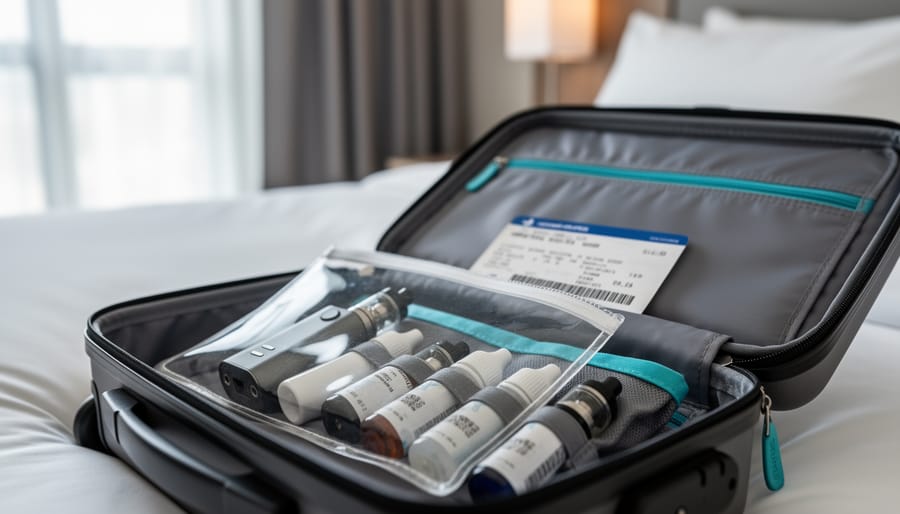
How to Travel with Vape Gear: Pack, Fly, and Stay Compliant in 2026
Traveling with your vape requires three critical steps: understanding airline battery rules, packing devices in carry-on luggage only, and researching vaping laws at your destination before you book. Most travelers run into problems not because vaping gear is banned, but because they pack it incorrectly or arrive somewhere vaping is illegal. I learned this the hard way in 2019 when airport security in Bangkok pulled me aside for having my mod packed in checked baggage, a violation I genuinely didn’t know about until that moment.
The Transportation Security Administration and international aviation authorities treat vape devices as battery-powered electronics, which means specific rules apply about where and how you can transport them. Lithium-ion batteries pose fire risks in cargo holds, so every major airline worldwide prohibits vape devices, spare batteries, and mods in checked luggage. You must carry them on board. That’s non-negotiable.
But getting through security is only half the challenge. Countries like Thailand, Singapore, and Qatar have strict penalties for bringing vaping products across their borders, ranging from hefty fines to confiscation and even jail time in extreme cases. What’s perfectly legal in California might land you in serious trouble in Bali. This guide walks you through the exact gear you need, how to pack it safely, and how to verify you won’t face legal issues when you land.
What You’ll Need for Vape-Friendly Travel
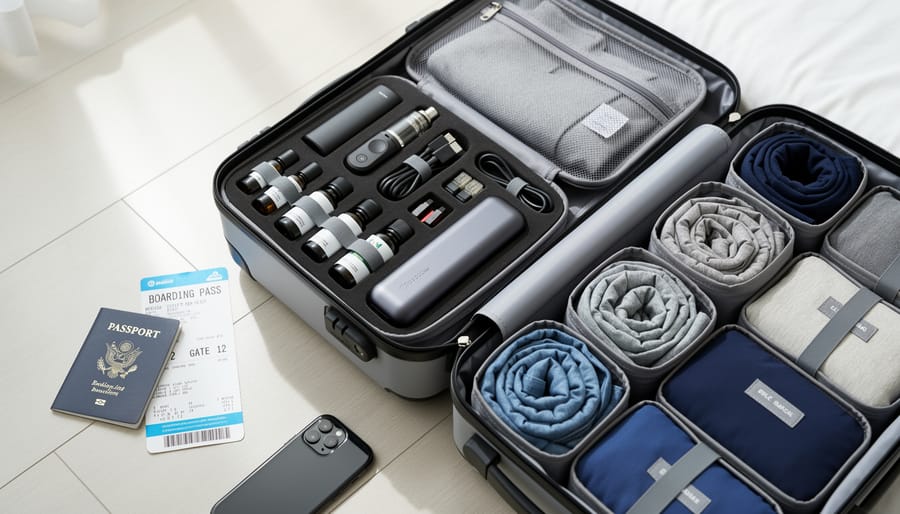
Core Vape Equipment
Your primary vape device is non-negotiable, but bring a backup if you have one. A malfunctioning device mid-trip leaves you without options in unfamiliar places where vape shops might not carry your model or be open when you need them.
Pack extra pods or tanks, at least two spares. Coils burn out unpredictably, and cabin pressure can accelerate wear. I learned this the hard way on a weeklong trip to Vancouver when my only coil failed on day two. Replacement coils matching your device specs should fill a small corner of your bag but save enormous frustration.
Include a basic toolkit: a small screwdriver for adjusting connections, spare O-rings for leak prevention, and cotton swabs for cleaning. These weigh almost nothing but address 90% of common device issues.
Don’t forget charging cables and adapters compatible with your destination’s outlets. USB-C cables work for most modern devices, but verify your specific model’s requirements. A portable power bank (properly stored per battery rules) provides charging flexibility during long travel days without hunting for outlets.
Travel-Specific Accessories
Investing in travel-specific vape accessories prevents most common travel disasters: leaked e-liquid ruining your belongings, damaged devices, or dead batteries stranding you without your gear. These accessories aren’t luxuries, they’re practical solutions to real problems that occur when vaping equipment meets the pressures, jostles, and temperature swings of travel.
Start with a hard-shell protective case designed for vape devices. These cases absorb impact during baggage handling and prevent accidental button activation that can drain batteries or trigger fire alarms. Look for cases with foam inserts that secure your device in place rather than letting it rattle around.
Battery storage is non-negotiable. Silicone or plastic battery cases with individual slots prevent terminals from touching each other or metal objects, which can cause dangerous shorts. I learned this the hard way when a loose battery in my bag contacted keys and started heating up, caught it just in time. Cases cost a few dollars and might save your trip or worse.
- Hard-shell protective case with foam inserts to prevent device damage and accidental activation
- Dedicated battery cases with terminal protection to prevent dangerous shorts
- Silicone travel bottles (under 100ml) with secure caps to prevent leaks and meet TSA limits
- Small organizational pouch or tech organizer to keep all vape items together and visible during screening
- Spare O-rings and seals stored in a small bag to replace worn parts that cause leaks
For e-liquids, transfer them into travel-sized silicone bottles with locking caps. Standard glass bottles can break, and plastic bottles often leak under cabin pressure. Silicone bottles compress slightly, accommodating pressure changes without forcing liquid through seals. Keep these bottles upright in your quart-sized liquids bag, leaving air space at the top.
An organizational pouch pulls everything together. Choose something transparent or easily openable for security screening, with multiple compartments to separate batteries from liquids and devices from charging cables. This keeps you organized and speeds up checkpoint inspections.
Know Before You Go: Safety Warnings and Legal Restrictions
Battery Safety on Aircraft
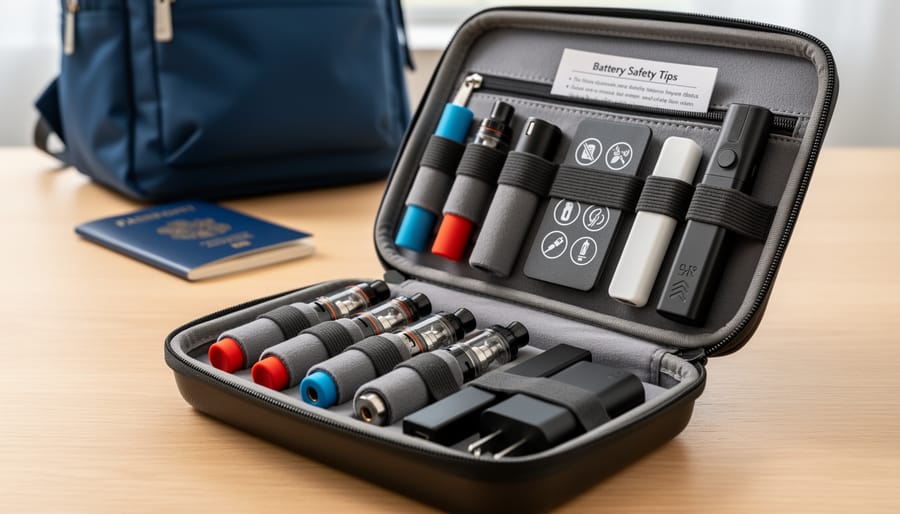
Lithium-ion batteries power most vaping devices, and airlines treat them as potential fire hazards. A battery short-circuit can ignite quickly, which is why aviation authorities worldwide mandate strict handling rules.
You must carry all spare batteries in your carry-on bag, never in checked luggage. Each battery needs protection from short-circuits: store them in original packaging, a dedicated battery case, or cover the terminals with non-conductive tape. Loose batteries rolling around with keys or coins create serious fire risk.
Batteries installed in your device can stay in place, but switch the device completely off. Remove the battery if your mod allows it. Most airlines limit spare batteries to two per passenger, with watt-hour ratings under 100Wh (standard vape batteries qualify). Check your specific airline’s policy since some carriers restrict quantities further.
Never charge batteries on the plane. Pack your charging cable separately and wait until you reach your destination. If a battery shows damage, swelling, or torn wrapping, leave it home. Damaged cells are prohibited on aircraft and can fail catastrophically during pressure changes.
International and Domestic Vaping Laws
Before you book that flight, understand this: vaping laws shift dramatically between countries, and ignorance won’t save you from consequences. Some nations treat vaping devices like any other consumer product, while others ban them outright with penalties ranging from confiscation to imprisonment.
Start by checking your destination country’s official customs or health ministry website at least two weeks before departure. Search “[country name] vaping laws” and “[country name] electronic cigarette regulations” to find current rules. Pay attention to what’s prohibited: some countries ban nicotine-containing e-liquids but allow devices, others reverse this, and places like Thailand and Singapore have historically imposed severe penalties for any vaping products.
Document everything. Print or save screenshots of relevant regulations, purchase receipts for your devices, and any prescriptions if you use nicotine replacement therapy. For domestic US travel, state laws vary significantly, California restricts flavored products differently than Texas, and some municipalities ban vaping in all public spaces.
Create a simple checklist: device legality, liquid restrictions, age requirements, usage locations, and import limits. When in doubt, contact the destination’s embassy or consulate directly. Five minutes of research prevents hours of airport detention.
Airline-Specific Policies
Airlines set their own vaping policies beyond the baseline TSA regulations, and those rules can differ significantly. Budget carriers sometimes restrict vape products entirely, while major airlines generally allow them with strict carry-on requirements. Some international carriers ban certain battery types or limit the number of spare batteries you can bring, even if your origin country permits more.
Don’t assume consistency. I once showed up to a connecting flight only to discover the second carrier had stricter liquid limits than the first, forcing me to discard a brand-new bottle of e-liquid at the gate.
Check your airline’s website under “restricted items” or “dangerous goods” at least 48 hours before departure. If the policy seems unclear, call the customer service line directly and document the representative’s name and confirmation number. For multi-leg trips with different carriers, verify rules for each airline separately, the most restrictive policy becomes your packing standard.
Step-by-Step: Packing Your Vape Gear for Air Travel
Step 1: Empty and Clean Your Device
Start by completely emptying your vape tank before packing. Altitude changes during flight create pressure differentials that force any remaining e-liquid through seals and air holes, potentially ruining your luggage and device. I learned this the hard way on a flight to Vancouver, my half-full tank leaked everywhere despite being “securely closed.”
Remove all e-liquid from the tank, then disassemble removable components like the glass tube, drip tip, and coil. Wipe down threading and O-rings with a clean cloth to remove residue that could compromise seals under pressure. For pod systems, empty the pod completely or remove it entirely from the device.
Clean battery connection points and charging ports using a cotton swab. Any liquid residue here creates short-circuit risks during travel. Let everything air-dry completely before reassembling for packing, moisture trapped inside can leak mid-flight.
Step 2: Secure Batteries Properly
Remove any detachable batteries from your vape device before flying. Lithium-ion batteries must travel in your carry-on bag, never in checked luggage, because crews can respond quickly if a battery overheats in the cabin. Airlines enforce this strictly after documented fire incidents.
Buy a hard plastic battery case with individual slots that prevent terminals from touching. I learned this the hard way when a loose battery in my toiletry bag contacted keys and started heating up during taxi. Each battery needs its own compartment or protective covering over the terminals. Electrical tape over the positive end works in a pinch, but dedicated cases cost under five dollars and eliminate risk.
Keep batteries at room temperature and avoid extreme cold or heat exposure before your flight. Store the battery case in an easily accessible pocket of your carry-on so you can retrieve it if officers request additional screening.
Step 3: Pack E-Liquids According to Liquid Rules
E-liquids face the same TSA restrictions as any other liquid: each container must hold 100ml (3.4oz) or less, and all containers must fit in a single quart-sized, clear, resealable plastic bag. I learned this the hard way when security confiscated my 120ml bottle at SeaTac, expensive lesson.
For carry-on, transfer liquid into smaller bottles if your favorites exceed the limit. Travel-sized 30ml bottles work perfectly and reduce waste if confiscated. Place them upright in your liquids bag, sealed tightly to prevent leaks from cabin pressure changes.
Checked baggage allows larger bottles without the 100ml restriction, but pressure changes increase leak risk significantly. If checking e-liquid, double-bag containers in sealed plastic bags and surround them with absorbent materials like clothing. Personally, I always carry-on my liquids despite the size limit, losing luggage means losing your supply entirely.
Keep your liquids bag easily accessible at security. You’ll need to remove it separately for screening, just like toiletries.
Step 4: Organize Devices and Accessories
Place your vape device, backup pods, and coils in your carry-on bag, never in checked luggage. Airlines prohibit vaping equipment in the cargo hold due to fire risk from lithium batteries. Use a hard-shell protective case for your main device to prevent accidental button presses and physical damage during transit. I learned this after finding my mod scratched and my tank cracked from being jostled against my laptop.
Keep accessories like charging cables and spare coils in a clear toiletry pouch or dedicated tech organizer. This makes security screening faster and prevents small parts from scattering. Position your vape gear near the top of your carry-on for quick access, TSA officers may ask to inspect it separately, and fumbling through a packed bag delays everyone behind you.
Step 5: Prepare for Security Screening
Empty your vape and accessories into a separate bin before you reach the X-ray machine. TSA officers need a clear view of devices and batteries, so don’t bury them under clothing or electronics. Place your quart-sized liquid bag where screeners can easily see it.
If an officer asks about your vape gear, answer directly and briefly. “It’s my vaping device and batteries” works better than lengthy explanations. Keep any receipts or prescriptions accessible in case questions arise about liquid contents or device authenticity, though officers rarely request them.
Anticipate that batteries might trigger additional inspection. Officers may swab cases or ask you to power on devices. Stay calm and cooperative, resistance or irritation only extends screening time. The process typically adds just two or three minutes when you’re organized and transparent.
Getting Through Airport Security and the Flight
At the Security Checkpoint
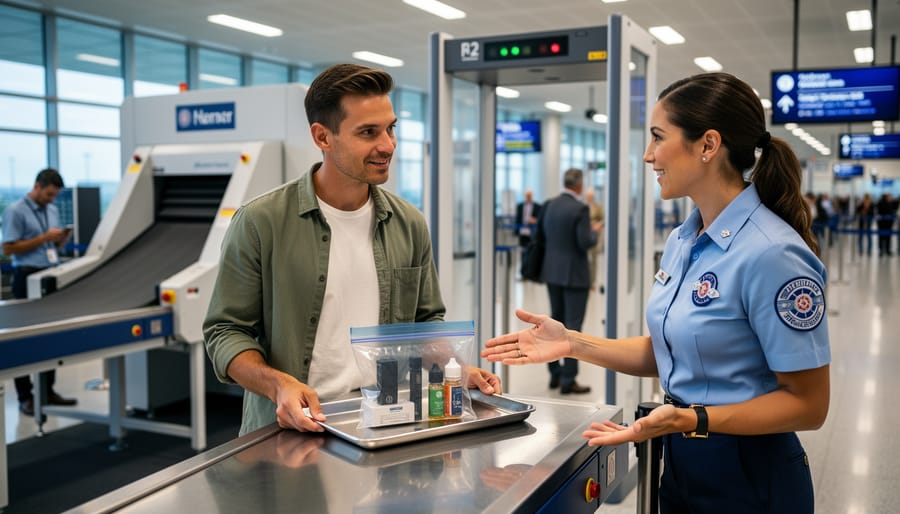
At most airports, you won’t need to declare your vape gear upfront unless an officer asks directly. Place your vape device, batteries in their protective cases, and e-liquid bag in separate bins during screening, this speeds the process and shows you understand the rules. If your bag triggers additional inspection, stay calm and be ready to explain what each item is.
Officers might ask if batteries are lithium-ion (yes), whether the device contains liquid (explain tank vs. battery), or why you’re carrying multiple batteries. Answer clearly and factually. Don’t volunteer unnecessary details, but never lie or downplay what you’re carrying.
If selected for secondary screening, they may swab your device for explosive residue or ask you to power it on. Keep your vape charged enough to demonstrate it works, a dead device raises suspicion. I’ve watched travelers get pulled aside simply because they couldn’t turn their mod on when requested.
Some airports have stricter protocols for international flights. Budget extra time and keep documentation handy: receipts proving recent purchase, prescription if using CBD/THC alternatives legally, or printed airline policies if an officer seems uncertain about the rules.
During the Flight
Once you board, stow your vape device in the seat pocket directly in front of you or in your personal item under the seat, never in the overhead bin where you can’t monitor it. Keeping it accessible lets you respond quickly if a battery issue arises, though proper pre-flight preparation makes this extremely unlikely.
Cabin pressure changes during ascent and descent can force e-liquid out through airflow holes even in sealed tanks. To minimize mess, keep your device upright in a leak-proof case or bag. If you notice seepage, use tissues or paper towels from the lavatory to clean it immediately before it damages electronics or stains belongings.
Battery safety remains critical throughout the flight. If you smell burning plastic, notice unusual heat, or see smoke from your bag, alert a flight attendant immediately. Don’t attempt to open or move a smoking device yourself. Crew members have fire containment equipment and training for lithium battery incidents.
Resist any temptation to sneak a vape in the lavatory. Aircraft lavatories have highly sensitive smoke detectors that trigger alarms, and you’ll face serious consequences. The no-use policy isn’t airline preference, it’s federal aviation law. Flight attendants must report violations, and you could be met by law enforcement at arrival.
Keep your device powered off to prevent accidental activation from pressure on the fire button while packed. Some travelers remove batteries entirely during flight for extra peace of mind, though this isn’t required if they’re already in protective cases in your carry-on.
Vaping at Your Destination: Hotels and Tourist Attractions

Checking Hotel and Accommodation Policies
Before you book a room, call the hotel directly and ask whether they permit vaping in guest rooms or only in designated outdoor areas. Many properties treat vaping like smoking and charge cleaning fees, often $200 to $500, if sensors detect vapor or staff find evidence of use. Request a room near a balcony or patio if you plan to vape, and confirm the policy in writing via email to avoid disputes at checkout. Upon arrival, locate designated smoking or vaping zones; most resorts and larger hotels mark these areas clearly. If your accommodation prohibits vaping entirely, scout nearby public spaces where it’s legal. The same advance planning you use to track your flight status applies here: verify the rules before you arrive, respect them during your stay, and you’ll sidestep penalties that can ruin an otherwise smooth trip.
Vaping Near Tourist Attractions
Tourist attractions often enforce stricter vaping rules than surrounding areas. Many heritage sites, museums, and cultural landmarks ban vaping entirely within their grounds, not just indoors but across outdoor courtyards, gardens, and viewing platforms. Enforcement varies, but fines can hit £100-200 in the UK or €50-150 across European attractions.
Before entering major sites, check signage at entrances and ask staff about designated areas. UNESCO World Heritage Sites frequently prohibit vaping to preserve air quality and protect sensitive stonework from aerosol residue. Some attractions treat vaping identically to smoking, while others have separate policies, don’t assume outdoor spaces are automatically fair game.
When exploring city centres, stay aware that vaping near religious buildings, government monuments, or national parks often triggers local ordinances separate from general city rules. If you need to vape during a long tour, step well away from attraction boundaries to public sidewalks where general smoking laws apply.
Watch for “no smoking” symbols that include e-cigarette icons. When in doubt, walk an extra block to a cafe terrace or public square rather than risking confiscation or a fine that ruins your day.
How to Verify You’re Ready and What to Do Next
Run through this final checklist the night before you leave. I keep a digital copy on my phone and tick through it while my bag is still open, which has saved me from at least two frantic repacking sessions:
- Batteries removed from devices and stored in protective cases in your carry-on
- E-liquid bottles sealed, under 100ml each, and placed in a clear quart-sized bag
- Tanks emptied or at minimum fill to prevent pressure leaks
- Airline’s specific vaping policy confirmed on their website (screenshot it)
- Destination country’s vaping laws researched and documented
- Hotel’s smoking/vaping policy verified in writing
- Backup device or coils packed in case of equipment failure
- Purchase receipts accessible if customs requires proof of ownership
If you catch a problem at this stage, you’ve got time to fix it. Order compliant bottles, buy proper battery cases, or adjust your packing strategy without airport stress.
Discovered an issue at the airport itself? Stay calm and cooperative. If security flags your setup, explain clearly what each item is and offer to demonstrate it’s a vaping device. Don’t argue with officers about regulations, they’re following protocol, and resistance only delays you. If they confiscate something, ask for documentation of what was taken and why. This matters for insurance claims and for understanding what went wrong.
Keep your airline’s customer service number handy and know your rights around handle flight delays or disruptions, vape gear complications can occasionally cause you to miss flights. Understanding flight delay compensation policies helps if repacking or additional screening makes you late. For last-minute regulation questions, check the TSA’s “Ask TSA” service on Twitter or your country’s equivalent, they respond quickly with official guidance.
Common Questions About Traveling with Vape Gear
Can I bring disposable vapes?
Yes, disposable vapes follow the same rules as refillable devices. You must pack them in your carry-on bag with batteries intact, never in checked luggage. Because you can’t remove the battery from a disposable vape, you need to ensure it’s protected against accidental activation during the flight. Place each disposable in a separate protective case or wrap the mouthpiece area with a rubber band and tape to prevent the button from being pressed. Some countries ban all vaping products regardless of type, so research your destination’s laws before you pack any disposables.
How many vape devices can I travel with?
Most airlines don’t specify an exact limit on the number of devices, but TSA and CATSA focus on battery quantity instead. Each passenger can typically carry spare lithium-ion batteries in carry-on bags, with limits around 15-20 batteries depending on the airline and their watt-hour rating. Your actual devices count toward this total. If you’re traveling with multiple setups, check your airline’s specific battery policy and check delays ahead of your departure so you have time to adjust your packing if needed. For most travelers, bringing one primary device and one backup stays well within acceptable limits.
What if my destination bans vaping entirely?
Leave your vape gear at home. Countries like Thailand, Singapore, and several Middle Eastern nations treat vaping equipment as contraband, with penalties ranging from confiscation and fines to arrest and imprisonment. No amount of careful packing protects you from laws that criminalize possession itself.
Can I use my vape in airport smoking lounges?
It depends on the specific airport and lounge. Some designated smoking areas permit vaping while others explicitly prohibit it, posting clear signage at entrances. Ask lounge staff before using your device, and respect their rules even if they seem inconsistent with smoking permissions.
What should I do if e-liquid leaks during the flight?
Wipe up any leaked liquid immediately with paper towels, and keep the affected device away from other belongings until you can clean it properly. Cabin pressure changes cause leaks even in properly emptied tanks, which is why packing devices in sealed plastic bags inside protective cases prevents damage to clothing and electronics.
Are nicotine-free e-liquids treated differently at security?
No. Security screening focuses on liquid volume limits and potential hazards, not nicotine content. Whether your e-liquid contains nicotine, CBD, or just flavoring, the 100ml container limit and quart-sized bag requirement apply equally. Some destinations regulate nicotine-free liquids differently under their laws, but airport security checkpoints don’t distinguish between them during the screening process.
Traveling with vape gear doesn’t have to be stressful or complicated. The difference between a smooth journey and a confiscated device comes down to preparation. You’ve now got the tools, the safety knowledge, and the step-by-step process to pack correctly, navigate security, and stay compliant wherever you go.
The key is doing your homework before you leave home. Research your airline’s specific policies, verify your destination’s vaping laws, and double-check that your gear meets carry-on requirements. These fifteen minutes of preparation prevent hours of frustration at checkpoints or, worse, legal trouble abroad.
I learned this the hard way during that Vancouver trip I mentioned earlier. After nearly losing my device to security confusion, I completely changed my approach. Now I pack methodically, arrive early, and keep documentation accessible. The transformation has been remarkable. My last three international trips went off without a hitch, and I’ve actually helped fellow travelers at security who were scrambling with unprepared gear. Having delay survival tips ready helps too, since you’ll want your vape gear organized even when plans change unexpectedly.
Take the time to prepare properly, respect the regulations at every stage of your journey, and you’ll find that vaping and travel fit together perfectly. Safe travels, and enjoy the freedom that comes with knowing you’ve done it right.