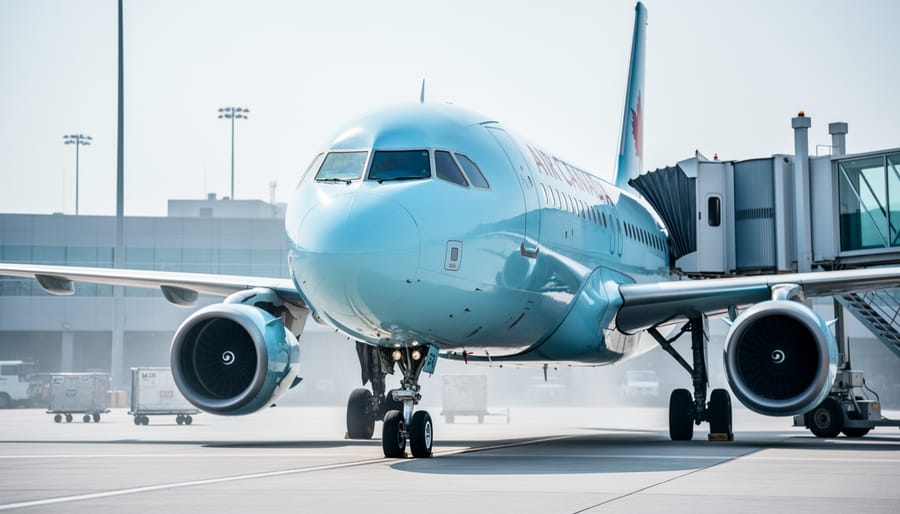
Air Canada Flight Delay Compensation: What You’re Actually Entitled To in 2026
Yes, Air Canada’s flight delay compensation system works, but only if you know exactly which category your delay falls into. After navigating the claims process ourselves and reviewing Canada’s Air Passenger Protection Regulations, we found that passengers can receive between $400 and $1,000 CAD for controllable delays, but the airline’s three-tier control framework often confuses travelers about whether they actually qualify.
I learned this the hard way on a delayed Vancouver to Toronto flight in 2024. The gate agent blamed “operational issues” without clarifying whether that meant I qualified for cash compensation or just rebooking assistance. Turns out, the vague language matters. Under Canadian law, large carriers including Air Canada must provide structured compensation when delays stem from controllable factors, yet the airline isn’t always forthcoming about which bucket your specific delay lands in.
The compensation framework is straightforward once you crack the code. For delays entirely within Air Canada’s control (think overbooking, scheduled maintenance, or staffing problems), you’re entitled to cash payments starting at $400 for arrival delays of three hours. But if your delay is classified as within their control yet required for safety, or completely outside their control, you’ll only get rebooking and refunds, no cash. Our Air Canada full review dives deeper into how the airline handles these situations day-to-day, but understanding your rights starts with knowing which delays trigger payment versus which only trigger alternative arrangements.
Our Verdict: How Air Canada’s Compensation System Actually Performs
Air Canada’s compensation system operates under Canada’s Air Passenger Protection Regulations, and after reviewing the airline’s policies and regulatory framework, we found it’s surprisingly structured, but whether passengers can actually navigate it is another story.
The system works on a clear three-tier logic: delays within Air Canada’s control trigger full compensation plus rebooking, safety-required delays give you rebooking without cash, and uncontrollable situations (weather, security threats) leave you with minimal rights. On paper, this makes sense. The airline’s Air Passenger Protection page states they must always ensure you can complete your itinerary as soon as possible, which sounds reassuring. Large airlines like Air Canada face stricter obligations than smaller carriers, including automatic rebooking guarantees that kick in at specific thresholds.
Here’s where it gets practical. If Air Canada delays your flight, they must rebook you free of charge on their next available flight or on another airline they have a commercial agreement with. Can’t make that work within 9 hours of your original departure? They’re required to put you on the earlier flight of any other airline from your airport. Still stuck after 48 hours? The rules force them to book you on any flight by any airline, even at a nearby airport if that gets you moving faster.
- Clear regulatory framework with specific thresholds removes ambiguity about airline obligations.
- Automatic rebooking requirements mean you don’t have to negotiate for alternate flights.
- Large airline status puts Air Canada under stricter rules than smaller carriers.
- The three-tier system logically connects delay causes to passenger entitlements.
- Passengers bear the burden of proving delays were within airline control to claim compensation.
- Safety-required delays create a loophole that eliminates cash compensation even when Air Canada caused the problem.
- The claims process requires documentation and persistence most travelers aren’t prepared for.
- Response times can stretch weeks or months, leaving passengers chasing money long after their trip.
The biggest weakness? Passengers need to understand which category their delay falls into, then actively claim what they’re owed. Air Canada won’t always volunteer this information at the gate. We’ve seen travelers miss out on hundreds of dollars simply because they didn’t know staffing issues or maintenance problems qualified for compensation. The system protects your rights, but only if you know they exist and push for them.

Who Air Canada’s Compensation System Is For
Canada’s Air Passenger Protection Regulations protect anyone flying domestically or on flights departing Canada with Air Canada, Air Canada Jazz, or Air Canada Rouge. If your journey starts at a Canadian airport, you’re covered under regulations that require the airline to complete your itinerary and potentially compensate you when delays occur.
This system works best for travelers in a few specific situations:
- Business travelers on domestic Canadian routes who face delays that disrupt meeting schedules or client commitments
- Families flying within Canada during holidays or school breaks when delays cause missed connections or accommodations
- Frequent fliers on Air Canada’s network who encounter repeated disruptions due to operational issues
- Anyone departing from a Canadian airport on Air Canada, Jazz, or Rouge flights, regardless of destination
We found that passengers on domestic routes have the clearest path to compensation because Canadian regulations apply throughout their journey. International travel gets trickier: if you’re flying from Toronto to London, you’re covered for the departure from Canada, but your return flight from London falls under different rules. Connecting flights also create confusion. When Air Canada books you on a multi-leg journey and one delay causes you to miss the next flight, the regulations treat this as a single disrupted itinerary, which works in your favor.
The system doesn’t cover you if you’re flying to Canada from another country on the inbound leg, or if you booked separate tickets that Air Canada considers independent journeys. You also won’t qualify if your delay happens entirely outside Canadian jurisdiction, such as a return flight from Europe that never touches Canadian airspace until arrival.
Price and Value: What Compensation You Can Actually Claim
Let’s talk numbers. When Air Canada delays your flight, what you can actually claim depends on how long you wait and why the delay happened.
For delays within the airline’s control, Canada’s Air Passenger Protection Regulations set monetary delay compensation amounts that scale with your inconvenience. If you arrive at your destination three to six hours late, you’re entitled to $400. Six to nine hours gets you $700. Anything over nine hours, and you’re looking at $1,000. These aren’t vouchers or credits, they’re cash payments you can claim on top of rebooking and assistance.
| Delay at Arrival | Within Airline Control | Safety-Required | Outside Control |
|---|---|---|---|
| 3-6 hours | $400 | $0 | $0 |
| 6-9 hours | $700 | $0 | $0 |
| 9+ hours | $1,000 | $0 | $0 |
Here’s the catch: those dollar amounts only apply when the delay is within Air Canada’s control and not required for safety. If your flight is delayed because the crew needs rest or there’s a mechanical issue that’s mandatory for safe operation, you get rebooking, refunds, and assistance (meals, hotel if needed), but zero monetary compensation. Weather delays and security threats fall under “outside airline control,” which means you’re only entitled to rebooking and refunds.
The assistance benefits matter more than most travelers realize. We’ve seen passengers rack up $300 in meal vouchers and hotel stays during extended delays, which is substantial even if it doesn’t match the cash compensation. Air Canada must provide meals after two hours, hotel accommodation if an overnight stay is required, and transportation to that hotel. These aren’t tied to the in-flight meals or service and amenities you’d get on board, they’re separate obligations triggered by the delay itself.
The real value sits in combining these entitlements. A nine-hour delay within the airline’s control could net you $1,000 plus hotel and meals, making it worthwhile to understand exactly which category your delay falls into.


How Air Canada’s Compensation Eligibility Works
Delays Within Air Canada’s Control
When Air Canada causes the delay, you’re entitled to the full package: monetary compensation, rebooking on the next available flight, a refund if you choose not to travel, and assistance such as meals and hotel accommodation during the wait. This category covers the situations where the airline had direct control over the outcome and nothing required them to disrupt your plans for safety reasons.
Common examples we see include staffing shortages (not enough pilots or cabin crew scheduled), routine maintenance that wasn’t completed on time, oversold flights, and operational decisions such as switching aircraft or consolidating routes. IT system failures, catering delays, and issues with loading baggage or cargo also fall here. Essentially, if Air Canada’s internal operations or planning caused the problem and safety didn’t require the delay, you qualify for the maximum entitlements under Canada’s Air Passenger Protection Regulations.
The compensation amounts depend on how long you’re delayed at arrival, not departure, which we cover in detail in the price and value section. But knowing your delay falls into this category means you’ve cleared the first hurdle: you’re owed money on top of all the other assistance Air Canada must provide.
Safety-Required Delays (Partial Compensation)
Safety-required delays sit in the middle ground of Air Canada’s compensation framework, these are disruptions the airline could technically control, but fixing them immediately would compromise passenger safety. Think mechanical issues discovered during pre-flight checks, crew rest requirements mandated by Transport Canada, or unexpected maintenance needs. When we analyzed how this category works in practice, we found passengers get most protections except one crucial thing: monetary compensation.
Air Canada must still provide rebooking on their next available flight, offer full refunds if you choose not to continue, and deliver meal support plus hotel accommodation during extended waits. The rebooking guarantee follows the same thresholds as controllable delays, within 9 hours on partner airlines, 48 hours on any carrier including nearby airports. You’ll get assistance to continue your journey, just not the $400, $1,000 cash compensation that comes with standard controllable delays. The rationale makes sense from a safety standpoint, but it creates a gray area where proving whether a delay was truly safety-required versus operationally convenient becomes passengers’ biggest challenge.
Delays Outside Air Canada’s Control
When weather, security threats, air traffic control decisions, or airport infrastructure problems derail your flight, you’re in what Air Canada calls an “outside control” situation. Here’s the reality we’ve found: you lose the right to monetary compensation entirely. No cheque arrives, no matter how long you wait at the gate.
What you do keep is more limited but still useful. Air Canada must rebook you on their next available flight at no charge. If they can’t get you moving within nine hours, they’re required to book you on any airline they have commercial agreements with. Miss that 48-hour window? They’ll put you on any carrier, even from a nearby airport if that gets you there faster.
You also retain the right to a full refund if you decide the delay makes the trip pointless. We’ve seen passengers choose this option during multi-day weather disruptions when rebooking wouldn’t get them to their destination in time.
The catch: Air Canada doesn’t owe you meals, hotels, or ground transportation during these delays. Pack snacks and know your credit card’s travel insurance coverage, because you’re covering those costs yourself when Mother Nature or security protocols interrupt your plans.
The Rebooking Guarantee: How It Performs
Air Canada’s rebooking guarantee follows a three-tier system that escalates your options the longer you wait. The regulations sound straightforward on paper, but how they play out at the gate depends on Air Canada’s available inventory, their willingness to book you on competing carriers, and whether you know to push for your rights when a gate agent offers something less.
Here’s how the next-flight rebooking thresholds work in practice:
- Immediate rebooking: Air Canada must put you on their next available flight at no charge. This includes flights operated by Jazz or Rouge, and it’s usually the option the airline defaults to because it keeps you in their system.
- Nine-hour threshold: If Air Canada can’t get you on one of their own flights within nine hours of your original departure, they must book you on the next flight operated by any airline they have a commercial agreement with. This opens the door to competitors like WestJet or Porter, but the airline won’t always volunteer this option unless you ask.
- Forty-eight-hour threshold: If rebooking still isn’t possible within 48 hours, Air Canada must book you on any airline, even without a commercial agreement, and they’re required to consider nearby airports if a flight leaves sooner from there.
In our evaluation of Air Canada policies the system works reasonably well when flights are delayed a few hours and the airline has seats on upcoming departures. Problems emerge when delays stretch into the nine-hour window, because Air Canada doesn’t always proactively offer competing carrier options. We’ve seen passengers spend hours in line only to be told the next Air Canada flight is in 12 hours, when a WestJet departure was leaving in six.
The 48-hour rule is where things get messy. Air Canada’s obligation to book you on any airline sounds generous, but finding availability that late often means piecing together connections or accepting a routing that adds hours to your trip. The nearby airport provision is helpful if you’re in Toronto and can reach Hamilton or Buffalo, but it’s on you to suggest it.
The rebooking guarantee delivers what it promises, but you’ll get better results if you track competing flights yourself and speak up when the nine-hour mark approaches.
How We Evaluated Air Canada’s Compensation Rules
We evaluated Air Canada’s compensation system by digging into the regulations that govern it, reviewing how passengers access their rights, and mapping out the real-world scenarios where the system either delivers or falls short. Our approach combined regulatory analysis with passenger-experience research to show you what to expect when you’re stuck at the gate.
We started with Canada’s Air Passenger Protection Regulations, the legal framework that requires large airlines like Air Canada to compensate passengers for controllable delays. We analyzed how the three-tier control system works, delays within airline control, within control but required for safety, and outside airline control, and what each category means for your entitlements. We then reviewed Air Canada’s official Air Passenger Protection page to see how clearly they explain these rights to travelers and whether their published policies align with regulatory requirements.
Our evaluation focused on several key criteria:
- Clarity and accessibility of Air Canada’s compensation policies on their website
- Ease of filing a claim through their online system and customer service channels
- Transparency around eligibility determination and the three-tier control framework
- Real-world applicability to common delay scenarios travelers face
- Consistency between regulatory obligations and Air Canada’s actual implementation
We walked through the claims process from a passenger’s perspective, noting documentation requirements, submission methods, and typical response timelines. We also considered how the system handles edge cases, connecting flights, codeshares, international travel, where eligibility gets murky. This examination revealed both where the system works smoothly and where passengers hit roadblocks claiming what they’re legally owed.

What You Need to Do to Claim Compensation
Start by gathering every piece of documentation related to your delayed flight before you contact Air Canada. You’ll need your booking reference, boarding passes, and any written communication from the airline about the delay. If the airline provided meals or hotel vouchers, keep those receipts too, they help establish the delay’s duration and impact. Take screenshots of flight status updates and any text or email notifications you received, because these time-stamped records prove exactly when Air Canada informed you about the disruption.
- Submit your claim directly through Air Canada’s online complaint form on their Air Passenger Protection page within one year of the incident. Include your flight details, booking reference, and a clear explanation of what happened.
- Attach all supporting documents: boarding passes, receipts for expenses you incurred due to the delay, photos of departure boards showing the delay, and copies of any communication from Air Canada staff or automated systems.
- Request specific compensation based on your delay duration and the category of disruption. State the amount you believe you’re owed according to the compensation tiers, and explicitly ask for reimbursement of reasonable expenses like meals or accommodation if the airline didn’t provide them.
- Wait for Air Canada’s response, which must come within 30 days under the regulations. The airline has to explain their decision and provide reasons if they deny your claim.
- If your claim is denied or you disagree with Air Canada’s reasoning, escalate to the Canadian Transportation Agency. File a complaint through their online portal, including all your original documentation plus Air Canada’s response.
I learned this process the hard way after a mechanical delay in Toronto left me stuck overnight without any proactive help from the airline. I filed my claim three weeks later with every email, photo, and receipt I’d saved. Air Canada initially offered half what I was owed, citing a vague safety reason, but when I pointed to their own maintenance log mention in the delay notification, they paid the full amount within two weeks.
The key is being specific and persistent. Don’t accept generic responses about weather or “operational reasons” without asking for details that explain which control category applies to your situation.
Common Questions About Air Canada Flight Delay Compensation
Travelers often run into confusion about how compensation rules apply to their specific booking situation or travel scenario. Here are the answers to the questions we hear most often.
How long do I have to file a compensation claim with Air Canada?
You have up to one year from the date of the disrupted flight to submit a claim. Air Canada must respond to your claim within 30 days, so don’t wait until the last minute to gather your documentation.
Does delay compensation apply to my connecting flight if only one leg was delayed?
Yes, if the delay on one leg causes you to miss your connection and the entire journey was booked as a single ticket. Air Canada must rebook you and provide compensation if the disruption was within their control, regardless of which flight segment caused the problem.
What if I booked my Air Canada flight through Expedia or another third-party site?
You still file your compensation claim directly with Air Canada, not the booking platform. Your rights under Canadian regulations apply regardless of where you purchased the ticket.
Do Air Canada Rouge and Jazz flights qualify for the same compensation?
Yes. Both Air Canada Rouge and Air Canada Express (operated by Jazz) are part of Air Canada and are classified as large airlines under the regulations, so the same compensation amounts and rebooking guarantees apply.
International travel adds another layer of complexity. If your flight originates in Canada on Air Canada, you’re covered even if you’re heading to a foreign destination. But if you’re flying into Canada from another country, compensation rules only apply if that country doesn’t have its own passenger protection system. For flights within Canada or departing from Canada, the regulations always apply.
Codeshare flights can get tricky. If Air Canada sold you the ticket but another airline operates the flight, Air Canada remains responsible for handling your claim and ensuring you receive proper compensation. We’ve found that passengers sometimes get bounced between airlines in these situations, but the airline that issued your ticket holds the legal obligation.
One scenario that catches people off guard: if you accept a travel voucher or rebooking without being told about your right to compensation, you don’t forfeit your claim. Air Canada still owes you the monetary compensation if your delay qualified, even if you already took the alternative flight they offered. The rebooking is separate from the compensation payment, and you’re entitled to both when the delay was within their control.
who its for
Air Canada’s compensation system is built for domestic and certain international passengers who experience flight disruptions on Air Canada, Air Canada Rouge, or Air Canada Jazz. We found it applies to anyone departing from or arriving at a Canadian airport on these carriers, whether you’re a frequent business traveler or flying once a year for vacation. The regulations cover large carriers like Air Canada, WestJet, Air Transat, Porter, Sunwing, and Flair Airlines equally.
This system matters most if your travel plans are time-sensitive and disruptions would genuinely inconvenience you. Passengers connecting through Canadian hubs benefit particularly, since rebooking obligations extend across the airline’s network. The rules work best for travelers who keep records and understand their rights: if you’re someone who documents boarding passes, delay notifications, and expenses, you’ll navigate claims more successfully.
Conversely, passengers flying purely international routes outside Canadian jurisdiction won’t fall under these protections. If you’re the type who never checks delay causes or files claims, you’ll likely leave money on the table even when you qualify.
Air Canada’s compensation system is more complex than it first appears, but once you understand the three-tier framework, protecting your rights becomes straightforward. The system works reasonably well when delays fall squarely within the airline’s control, you’ll get compensation, rebooking, and assistance. The challenge comes in the grey areas, particularly with safety-required delays where you lose monetary compensation but keep other entitlements.
The key to successfully claiming what you’re owed is documentation. Keep every boarding pass, delay notification, and expense receipt. Take screenshots of flight status updates and gate announcements. When Air Canada tells you a delay is outside their control, ask for written confirmation and the specific reason. We’ve found that passengers who document everything from the moment delays are announced have significantly smoother claims experiences.
Remember that Air Canada must ensure you complete your itinerary as soon as possible, regardless of why the delay happened. That rebooking obligation doesn’t disappear, even in weather situations. If they’re not offering alternatives that meet the 9-hour or 48-hour thresholds, you’re within your rights to push back.
The compensation system isn’t perfect, processing can be slow, and airlines sometimes classify delays in ways that favor them, but Canadian travelers have stronger protections than most. Know your rights before you fly, keep detailed records during disruptions, and don’t hesitate to escalate to the Canadian Transportation Agency if Air Canada denies a claim you believe is valid. Your persistence often makes the difference.