What Vancouver Airport Security Wait Times Actually Look Like (And How to Breeze Through)
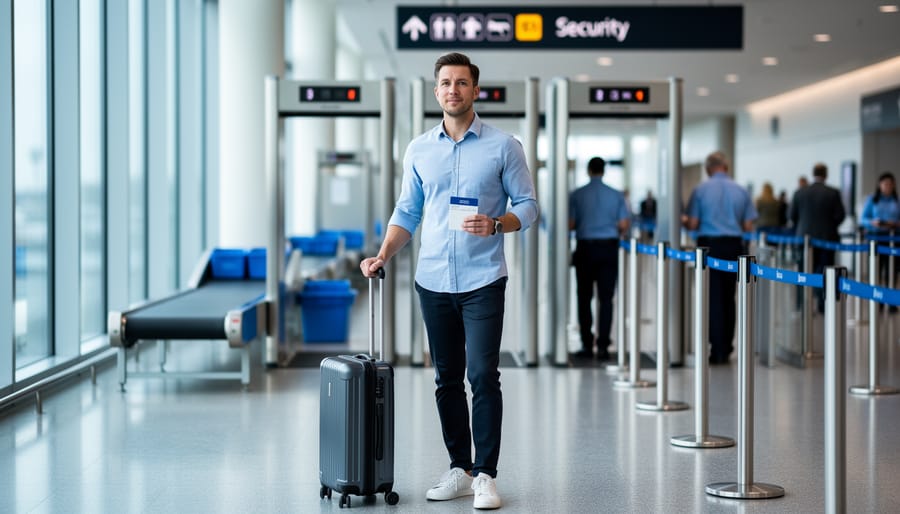
Vancouver Airport security wait times currently average 0 to 5 minutes across all checkpoints, making YVR one of the fastest major airports in North America for clearing security. If you’re planning your arrival timing, the data is reassuring: you’re extremely unlikely to face the 30- or 40-minute waits common at other hubs.
So why does anxiety about YVR security persist? The worry isn’t baseless. Peak summer travel, early-morning flight clusters, and the occasional understaffed checkpoint can stretch waits to 15 or 20 minutes, and if you’re rushing to catch a flight, even a brief delay feels eternal. Social media amplifies the rare horror stories while thousands of smooth three-minute experiences go unmentioned. I’ve cleared YVR security more times than I can count, and the consistency has been remarkable, but I’ve also watched that line suddenly balloon when three wide-body departures align or a scanner goes offline.
The real challenge isn’t predicting a long wait. It’s knowing when the exception might happen and how much buffer to build into your airport arrival. Understanding YVR’s checkpoint layout, recognizing which travel windows carry higher risk, and preparing your carry-on properly can shave minutes off even a fast process. This guide walks through current wait time data for 2026, explains what drives the rare slowdowns, and gives you a practical arrival timeline based on your departure type and risk tolerance.
The Real Story: Current Wait Times at YVR
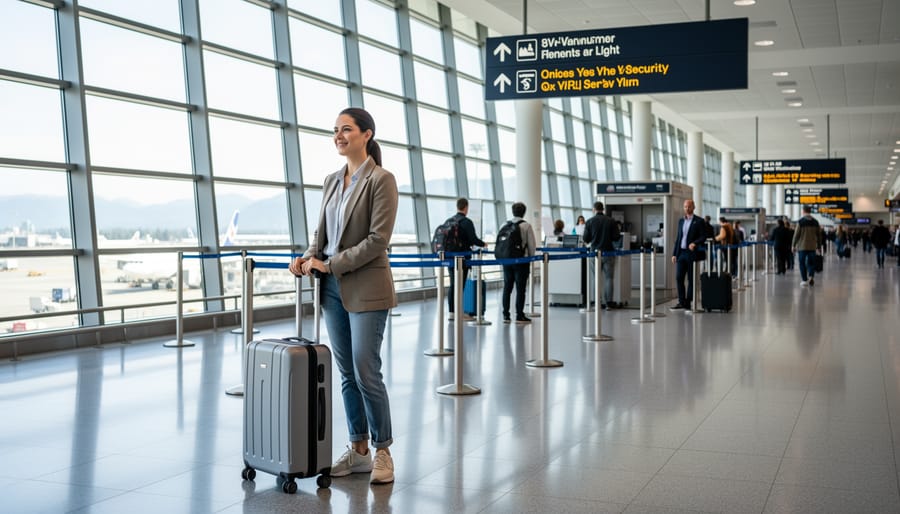
Here’s the truth that might surprise you: Vancouver Airport security wait times right now are extremely short. I’m talking minutes, not the hour-long ordeals you might be bracing yourself for.
YVR operates several security checkpoints serving different travel streams, and current data tells a remarkably consistent story. The airport publishes real-time wait estimates that update every two minutes, and as of recent checks, every checkpoint is showing wait times in the 0-5 minute range. That includes Checkpoint ABC serving domestic Canada flights, Checkpoint D for international departures, and Checkpoint E handling US transborder traffic.
| Checkpoint | Travel Type | Current Wait Range |
|---|---|---|
| ABC – Canada | Domestic | 0-5 minutes |
| D – International | International flights | 0-5 minutes |
| E – United States | US Transborder | 0-5 minutes |
Recent domestic checkpoint readings have shown waits as low as one minute. These aren’t cherry-picked best-case scenarios; they represent what travelers are actually experiencing at YVR security right now.
Here’s the catch: these numbers are estimates, and YVR is explicit about their limitations. The wait time information is provided for convenience only and can change at any moment based on passenger volume and flight departure clustering. The airport doesn’t guarantee these estimates will match your actual experience, because security conditions shift throughout the day.
So why does the anxiety persist? Why are you reading this article if waits are genuinely that short? That disconnect between perception and reality is real, and it’s rooted in factors beyond YVR’s current operations. Past experiences at congested airports, horror stories from friends, and the general unpredictability of air travel all feed into our security wait time worries, even when the data shows Vancouver is handling things efficiently.
The takeaway isn’t to abandon caution. It’s to recognize that while YVR’s security waits are currently very manageable, they represent just one variable in a complex travel equation.
Why the Wait Time Worry Persists (Even When Lines Are Short)
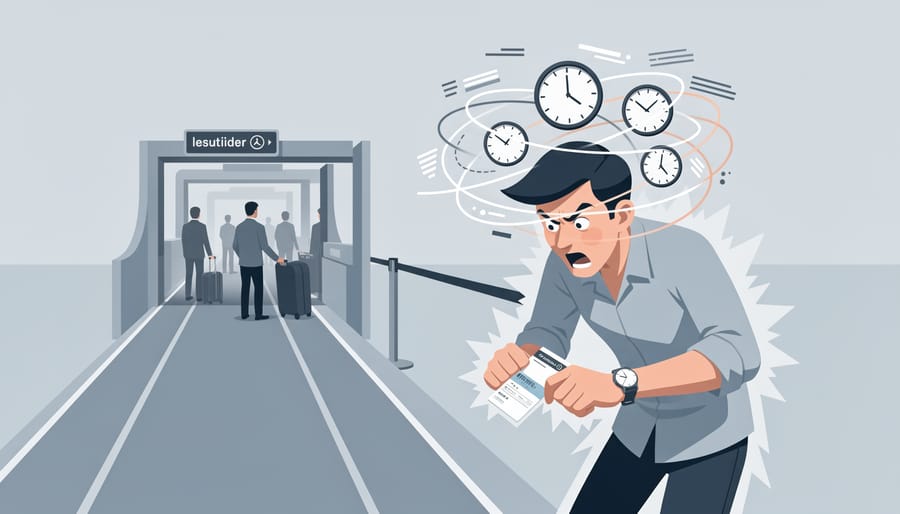
Here’s the thing: when I talk to people planning trips through YVR, they still stress about security lines even after I show them the real-time data displaying those 0-5 minute estimates. The anxiety doesn’t care about facts.
I get it because I’ve been there. Before my first solo trip through Vancouver Airport, I spent an evening reading forum posts from 2019 about hour-long waits and missed flights. My brain latched onto those horror stories, ignoring the dozen recent comments saying “walked straight through in two minutes.” That’s how our minds work when stakes feel high.
Past experiences shape expectations more than current data does. If you’ve sweated through a 45-minute security crawl at LAX or Toronto Pearson, you approach every airport assuming the worst. Your body remembers that panic of watching your departure time tick closer while stuck behind someone unpacking their entire liquids collection. That memory overrides any website telling you YVR currently operates differently.
Travel day stress amplifies everything. You’re coordinating ride timing, maybe trying to travel with a friend who’s running late, double-checking your passport, and managing the low-grade worry that you’ve forgotten something critical. In that mental state, security wait times become something you can research and obsess over, a variable that feels controllable even when it’s not.
The internet doesn’t help. Search “Vancouver Airport security wait times” and you’ll find five-year-old Reddit threads, TripAdvisor reviews from different terminals, and conflicting advice about arrival timing. One person says they breezed through in minutes last week; another claims they barely made their flight last month. Which experience will yours match? You can’t know, and that uncertainty feeds the worry cycle.
Airport security is inherently unpredictable, and our brains hate unpredictability. Even with 0-5 minute estimates right now, conditions can shift. Your concern isn’t irrational. It’s just disproportionate to YVR’s current reality.
When Wait Times Can Actually Spike at YVR
While the real-time data typically shows 0-5 minute waits across YVR’s checkpoints, that doesn’t mean you’ll never encounter a longer line. Security wait times can spike beyond those comfortable averages, and the frustrating reality is that these increases often happen without a predictable pattern you can plan around.
Flight departure clustering creates the most common surge scenario. When multiple international flights board within the same 30-minute window, you’ll see a sudden rush of passengers converging on the same checkpoint. The system handles steady flow efficiently, but these concentrated bursts can temporarily overwhelm even well-staffed security lines. I’ve walked up to an empty checkpoint at 10 a.m., then returned two hours later to find the same area backed up simply because departure schedules aligned differently.
Unexpected screening procedures add another variable you can’t anticipate. A passenger flagged for additional screening, a bag requiring manual inspection, or equipment requiring recalibration can slow the entire line behind them. These situations resolve quickly, but they create temporary delays that won’t show up in the estimates you checked 20 minutes earlier at home.
Staffing situations matter more than most travelers realize. Checkpoint lanes open and close based on demand forecasting, break schedules, and available personnel. Security operations might reduce active lanes during predicted slower periods, but if passenger volume unexpectedly increases or a staff member calls in sick, you’re looking at longer waits until they can adjust coverage.
Seasonal volume changes affect YVR like any major airport. Summer vacation periods, spring break weeks, and winter holidays bring higher passenger counts that can strain even efficient operations. Special circumstances like weather disruptions, system outages, or security alerts can also create sudden bottlenecks that no historical data would have predicted.
This unpredictability is exactly why YVR recommends arriving two hours early for domestic flights and three hours for U.S. or international travel. That buffer time isn’t pessimism about their security efficiency, it’s acknowledging that airports are complex systems where multiple variables intersect in ways you simply cannot forecast from home.
How to Check Real-Time Security Wait Times Before You Leave
Before you even leave for the airport, you can check YVR’s official security wait times, a feature I wish every airport offered. Vancouver Airport maintains a real-time wait time tracker on their website that shows current estimates for each security checkpoint: ABC (Canada), D (International), E (United States), and additional screening points when operational.
The system updates every two minutes, pulling data directly from the airport’s monitoring systems. When I check before heading out, I typically see those consistent 0-5 minute estimates across all checkpoints, which matches what most travelers actually experience at YVR.
Here’s the crucial part most people miss: YVR explicitly states these wait times are “provided for convenience only” and aren’t guaranteed to reflect what you’ll encounter. They’re estimates that change constantly based on flight departures and passenger volume. Think of this information as a helpful snapshot, not a crystal ball. When I see a three-minute estimate, I don’t calculate my departure assuming three minutes, I use it to feel slightly less anxious about my carefully-planned arrival buffer.
The airport’s disclaimer couldn’t be clearer: this tool doesn’t replace arriving early. Even when your phone shows zero-minute waits, you still need those recommended two or three hours. I learned to treat this feature as a nice bonus for peace of mind, not permission to cut arrival times closer. The real value is reducing pre-trip stress, not adjusting your departure schedule.
Smart Arrival Timing: What YVR Actually Recommends
YVR doesn’t leave arrival timing to guesswork. The airport officially recommends arriving at least two hours before domestic flights and at least three hours before US or international departures. These aren’t arbitrary numbers pulled from thin air, they’re built on years of operational data and designed to account for everything that happens between the curb and your gate.
I’ll be honest: when I first saw these recommendations, I thought they seemed excessive. Security waits are typically minutes, not hours, so why the big buffer? Then I actually mapped out everything that needs to happen on a travel day. Check-in lines (even if you’ve already checked in online), bag drop if you’re not traveling carry-on only, the walk from security to your gate (YVR is sprawling), potential gate changes, boarding that starts 30-40 minutes before departure, and US-bound flights requiring customs and immigration clearance at YVR. Security is just one piece of a much longer process.
The three-hour window for US flights particularly makes sense when you factor in preclearance. You’re essentially going through US customs before you fly, which adds another checkpoint beyond security. Even when both lines are moving quickly, you’re still looking at two separate queuing processes.
Following these guidelines transforms your airport experience. Instead of sprinting through the terminal wondering if you’ll make it, you arrive with time to grab coffee, use the restroom without panic, and board without stress. The security line might only take five minutes, but you’ll appreciate that extra hour when your bag takes longer to check than expected or your gate is at the far end of the terminal.
Strategies to Move Through Security Faster (No Matter the Wait)
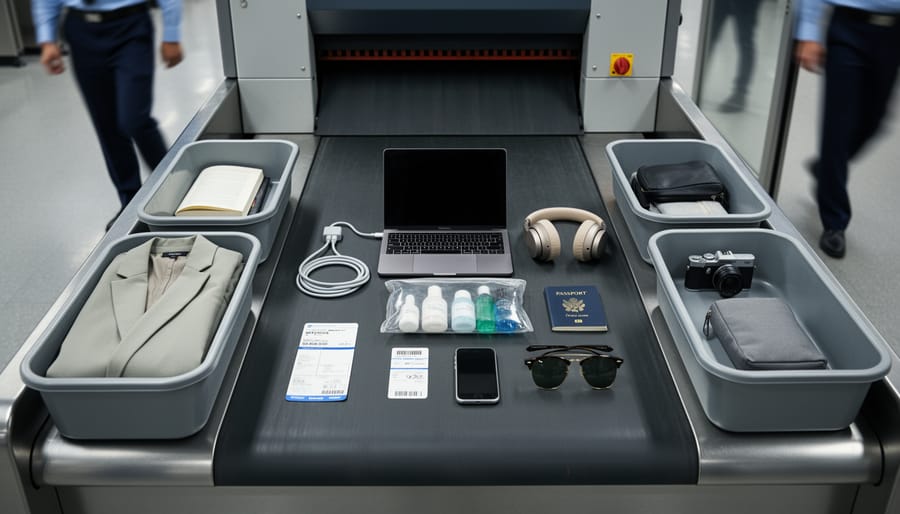
Security waits at YVR might be short right now, but I’ve learned the hard way that preparation matters more than line length. I once sailed through a five-minute wait at the Canada checkpoint because everything was ready, then watched someone ahead of me turn a two-minute line into a ten-minute ordeal by fumbling through their bag for liquids, digging out a laptop, and realizing their belt had a massive buckle.
The difference between smooth and stressful comes down to what you control before you even reach the checkpoint. Here’s what actually makes a difference:
- Get your boarding pass and ID ready before you join the line. Not in your bag, not in your pocket, in your hand. Have your passport or driver’s license tucked inside your phone with the boarding pass pulled up, or both documents together if you’re using paper.
- Pull out liquids and electronics while you’re still in line. Don’t wait until you’re at the bins. Your 3-1-1 liquids bag should already be at the top of your carry-on, and your laptop or tablet should be easily accessible.
- Wear slip-on shoes and minimal metal. Save the lace-up boots and statement jewelry for after security. A simple outfit without belts, watches, or chunky accessories means you’re through the scanner faster.
- Organize your carry-on with security in mind. Keep everything you’ll need to remove in one accessible pocket or at the top. Bury everything else underneath so you’re not unpacking your entire bag at the bins.
- Empty your pockets completely before the line. Phone, wallet, keys, coins, gum wrappers, everything goes into your carry-on before you step up to the bins.
If you travel through YVR regularly, NEXUS membership transforms the experience entirely. The dedicated NEXUS lanes stay consistently empty even when standard security has any kind of backup, and you skip the shoe and laptop removal entirely. The five-year membership costs less than what you’d spend on airport parking for two trips.
I also keep a small bin-ready pouch in my backpack with charging cables, headphones, and small electronics already separated. When I need to pull out devices, everything’s in one place instead of scattered through three different pockets. It’s a small system that’s saved me from that panicked pat-down-your-entire-bag moment more times than I can count.
The reality is that even with YVR’s current 0-5 minute estimates, the person who’s prepared will always move faster than someone who isn’t. These habits matter whether you’re walking into an empty checkpoint or facing an unexpected crowd.
What to Do If You’re Running Late
I missed a tight connection at YVR last year because my ride hit traffic on the way to the airport. Racing through the terminal with 30 minutes until boarding, I learned some hard lessons about what actually helps when you’re short on time.
If you’re cutting it close, don’t waste precious minutes panicking in the security line. As soon as you realize you’re late, head straight to your airline’s check-in counter or gate agent. Most best airlines can see exactly where you are in the airport system and will hold boarding for passengers who’ve checked in and are genuinely en route. They can’t help if they don’t know you’re coming.
Skip the kiosk and talk to a human. Explain your situation calmly and ask if they can expedite your check-in or tag your booking as tight connection. Gate agents have more power than most travelers realize, but they exercise it for people who communicate clearly, not those who show up flustered and demanding.
If you miss your flight despite your best efforts, stay at the gate. The same agent who closed the door can often rebook you on the spot, and you’ll want to secure the next available seat before heading anywhere else. Understanding your rights around delay compensation helps here too, though late arrival typically isn’t the airline’s responsibility. My Air Canada review covers how they handle rebooking, which varies significantly by fare class.
The biggest mistake I made was letting stress override logic. Take a breath, assess your actual timeline, and move with purpose rather than chaos.
Here’s the reality: Vancouver Airport security wait times in 2026 are genuinely short, those 0-5 minute estimates you see aren’t marketing spin. Most days, you’ll breeze through faster than you expected. But that doesn’t mean you should show up 90 minutes before an international flight and hope for the best.
The real lesson here isn’t about gaming the system or obsessing over real-time data. It’s about building in buffer time that lets you travel without that stomach-churning panic when you’re stuck in traffic on the way to YVR. I still check the wait time estimates before I leave home, not because I’m adjusting my departure by 10 minutes, but because it’s one less variable bouncing around in my head.
Smart preparation, your documents ready, your liquids sorted, your shoes easy to slip off, matters more than whether the line is two minutes or four. Following YVR’s recommended arrival windows (two hours domestic, three hours international) isn’t about the security checkpoint. It’s about everything else: check-in hiccups, bathroom stops, grabbing coffee, finding your gate in a terminal you don’t know well.
When you plan properly, short security waits become a pleasant bonus rather than a dice roll you’re banking on.