
Why Is Montreal Airport Delayed? Real-Time Status & Your Rights
If your flight through Montreal-Trudeau is delayed or cancelled right now, check the live departure and arrival status on Aéroports de Montréal’s official site first. That’s your fastest path to confirmation and rebooking options. As of early July 2026, the airport has been hit hard by disruptions: 146 flight issues on July 6th alone (124 delays, 22 cancellations), with Jazz, Air Canada, and Porter Airlines bearing the brunt of the chaos. FlightAware recently logged 234 total delays in a single day, with routes to Toronto, Vancouver, and U.S. cities facing the worst impacts.
I’ve flown through Montreal-Trudeau dozens of times, and while it’s normally efficient, summer 2026 has been a different story. Understanding why these delays are happening and what you’re entitled to can turn a stressful situation into a manageable one. This guide walks you through real-time status checks, the root causes behind the current wave of disruptions, your rights as a passenger, and exactly what to do if you’re caught in the mess. Whether you’re sitting in the terminal right now or planning a trip in the coming weeks, you need a clear action plan.
Is Your Flight Actually Delayed? How to Check Right Now
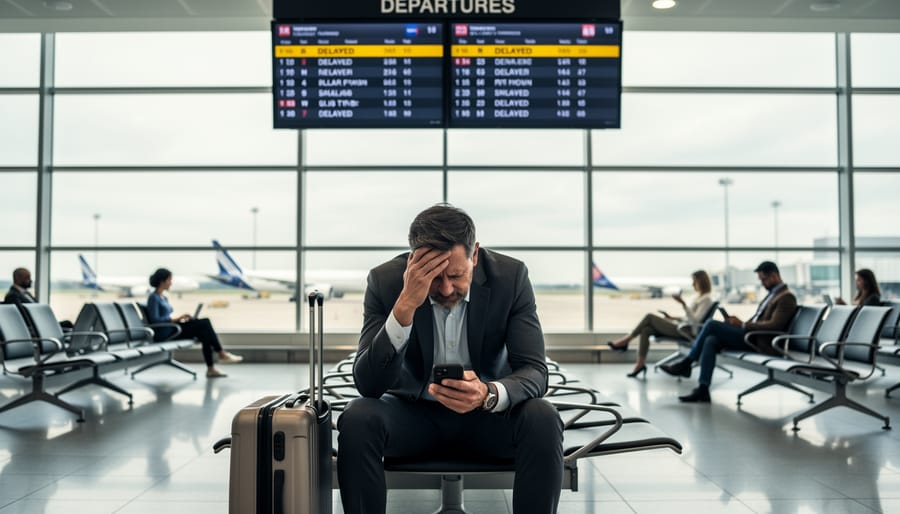
Before you leave for the airport or stand staring at the departures board, confirm your flight’s actual status. I learned this the hard way on a trip to Toronto when I drove 45 minutes to Trudeau only to discover my flight had been delayed three hours, information that popped up on my phone the moment I parked.
Start with the Aéroports de Montréal website, which provides live departure and arrival flight status information directly from the airport’s systems. Enter your flight number or destination to see current status. Next, open your airline’s app, whether you’re flying Jazz, Air Canada, Porter, or another carrier. Airlines update their apps quickly when disruptions happen, often before airport displays change.
For a third perspective, check FlightAware, which aggregates data from multiple sources and shows delay patterns across the airport. On a recent July day in 2026, FlightAware reported 234 total delays at Montreal-Trudeau, giving travelers a sense of how widespread disruptions were that day.
| Resource | What It Shows | Best Used For | Update Speed |
|---|---|---|---|
| Aéroports de Montréal | Official departure/arrival times | Authoritative airport status | Real-time |
| Airline App | Flight-specific updates, rebooking | Your exact flight details | Very fast |
| FlightAware | Historical data, airport-wide patterns | Context and delay trends | Near real-time |
| Airport Display Boards | Gate assignments, current times | On-site confirmation | Moderate |
Understanding what you’re seeing matters. A 15-30 minute delay is minor and rarely changes your plans. Delays exceeding an hour qualify as significant and may trigger airline assistance obligations. A cancellation means the flight won’t operate at all, requiring rebooking on the next available service. Knowing which category your disruption falls into determines your next steps and what support you can request.
What’s Causing Montreal Airport Delays in 2026?
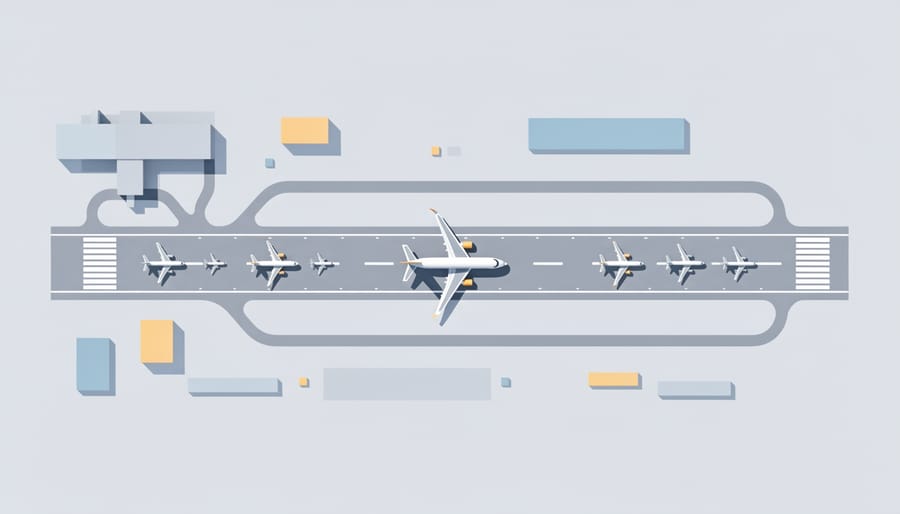
Montreal’s spike in delays isn’t random, it’s the result of several converging pressures hitting Montréal-Trudeau simultaneously this summer. Understanding what’s actually causing the disruption helps you plan smarter and set realistic expectations for your journey.
The numbers tell the story: FlightAware reported 234 delays at Montreal-Trudeau on a single day in July 2026, with July 6 seeing 146 total disruptions (124 delays and 22 cancellations). That’s not a minor hiccup, that’s a system under strain.
Weather remains the most unpredictable factor. Summer thunderstorms can ground departures for hours, and Montreal’s position means fronts moving across the Great Lakes often catch multiple flight paths. I’ve sat through a two-hour tarmac delay at YUL while lightning circled overhead, watching the radar on my phone and knowing there was simply nowhere for planes to go safely.
Airline operational challenges have hit Jazz, Air Canada, and Porter Airlines particularly hard. Crew scheduling issues ripple through the day, when pilots or flight attendants hit their regulated duty time limits, flights get delayed or canceled. A mechanical problem on an incoming aircraft doesn’t just affect that flight; it cascades through every subsequent leg that plane was scheduled to fly.
Air traffic congestion adds another layer. Montreal-Trudeau handles significant international and domestic volume, and when slots back up, delays compound quickly. Routes to Toronto, Vancouver, and destinations in the northeastern United States have seen repeated disruptions, partly because these are high-frequency corridors where a single delayed departure throws off tight turnaround schedules.
The most frustrating cause? Knock-on effects from other airports. Your Montreal flight might be delayed not because of anything happening at YUL, but because your inbound aircraft is stuck in Toronto, Chicago, or Newark. These interconnected delays are why a problem at one hub can paralyze operations hundreds of miles away.
Common factors behind Montreal Airport delays include:
- Severe weather events (thunderstorms, fog, winter precipitation)
- Crew scheduling conflicts and duty-time limitations
- Air traffic control restrictions and congestion management
- Aircraft mechanical issues requiring inspection or repair
- Cascade effects from delays at connecting airports
Most delays stem from a combination of these factors rather than a single cause. An aircraft might arrive late due to weather elsewhere, then discover a minor mechanical issue during turnaround, pushing departure back further while crews approach their duty limits. That’s why recovery takes time, each problem layer needs resolution before the flight can leave.
Your Step-by-Step Action Plan When Delays Hit

The moment you see “delayed” flash on the departure board, your stomach drops and your mind races. I remember standing at Gate 53 in Montreal-Trudeau last winter, watching my connection time evaporate as the delay stretched from 30 minutes to three hours. That experience taught me exactly what to do, and what not to waste time on, when delays hit.
Here’s your action plan the second you discover a delay:
- Confirm the delay immediately. Don’t rely solely on the departure board. Open your airline app and check the Aéroports de Montréal live flight status page. Screenshot the official delay notice with the timestamp. This documentation starts now, not later.
- Contact your airline before the gate agents get swamped. Call the customer service number while simultaneously approaching the desk. The agent who answers your call from another location might have more rebooking options than the overwhelmed gate staff. I’ve secured better rebookings on the phone while still standing in the gate line.
- Document everything as it happens. Note the original departure time, each announced delay extension, and every expense you incur. Take photos of airport announcements, save text notifications, and keep every receipt, meals, phone calls, even parking extensions. Your phone’s timestamp proves when costs occurred.
- Ask specific rebooking questions immediately. Don’t just accept “we’ll get you on the next flight.” Ask about alternative routes, different airlines if available, and whether an earlier departure on another carrier is possible. Request these options clearly: “What’s the absolute earliest I can reach my destination, including flights on partner airlines?”
- Inquire about assistance you’re entitled to receive. Depending on delay length and cause, ask directly: “Am I eligible for meal vouchers? What about hotel accommodation if this extends overnight?” Airlines won’t always volunteer what they must provide under Canadian passenger protection rules, so you need to ask.
- Know when to escalate beyond the gate. If you’re getting nowhere with frontline staff, politely but firmly ask to speak with a supervisor or airport duty manager. When my three-hour delay threatened to strand me overnight, a supervisor found a seat on a partner airline that the gate agent said didn’t exist.
The key is acting fast while staying organized. Every minute counts when rebooking options are disappearing and meal voucher eligibility windows are ticking. Keep your documentation obsessive and your questions direct. This methodical approach transforms a chaotic delay into a manageable problem you can actually solve.
What Airlines Must Provide: Your Passenger Rights Explained
Canadian regulations require airlines to be transparent and provide assistance when delays disrupt your travel plans, but what you’re owed depends on why the delay happened and how long you wait. Understanding these rights puts you in a stronger position when stuck at the airport.
Airlines classify delays into two categories that determine their obligations. Controllable delays, like crew shortages, maintenance issues within the airline’s control, or scheduling problems, trigger the most comprehensive passenger protections. Uncontrollable delays stem from factors outside airline management, such as weather, security threats, or air traffic control decisions. The distinction matters because airlines must offer more assistance and potential compensation when the disruption is within their control.
- Controllable delays
- Disruptions caused by issues within the airline’s control, such as crew shortages, scheduled maintenance, or overbooking, which trigger full passenger protection obligations.
- Uncontrollable delays
- Disruptions caused by safety concerns, weather, airport operations, or security threats, where airlines must still communicate and assist but compensation requirements differ.
- Duty of care
- The airline’s obligation to provide food, drink, and accommodation during lengthy delays, regardless of whether the delay is controllable or not.
- Rebooking obligations
- Airlines must rebook you on their next available flight or a partner airline at no extra cost when significant delays or cancellations occur.
- Compensation eligibility
- You may qualify for monetary compensation when controllable delays exceed certain time thresholds, calculated based on both delay length and flight distance.
When delays stretch beyond three hours, airlines must provide what regulations call “standards of treatment.” You’re entitled to food and drink in reasonable quantities based on how long you wait. If the delay extends overnight, the airline must arrange hotel accommodation and transportation between the airport and hotel. These provisions apply to both controllable and uncontrollable delays, the airline can’t leave you stranded regardless of why the flight is late.
Airlines must also keep you informed. They’re required to provide timely updates about the delay, the reason behind it, and your compensation rights. If communication breaks down, something I’ve experienced when airline staff couldn’t explain why we were waiting, document the lack of information for any future claim.
For rebooking, you have options. The airline can put you on their next available flight, book you on a partner carrier, or reroute you through different airports if that gets you to your destination faster. If none of these alternatives work or you no longer want to travel, you can request a full refund for the unused portion of your ticket.
Compensation amounts vary based on delay duration and flight distance, and the specific thresholds matter. Rather than cite figures that might change, check the current Air Canada delay compensation guidelines for the most accurate compensation tiers. Airlines won’t automatically pay, you need to file a claim within one year, providing your booking reference, flight details, and documentation of the delay.
The airline decides assistance levels based on delay length and whether alternative arrangements exist. A two-hour delay probably won’t trigger meal vouchers, but six hours should. If the airline doesn’t proactively offer what regulations require, ask directly and keep receipts for any reasonable expenses you cover yourself. While airlines aren’t obligated to match the in-flight meals options you might have enjoyed on board, they must ensure you don’t go hungry during extended waits.
Routes and Airlines Most Affected Right Now
Based on the verified disruption data, Jazz Aviation, Air Canada, and Porter Airlines have shouldered the bulk of delays and cancellations at Montreal-Trudeau over recent weeks. In June 2026, these three carriers accounted for more than a dozen cancellations and over 100 delays, disrupting thousands of passengers. The July numbers tell a similar story, on July 6 alone, the airport logged 146 disruptions (124 delays and 22 cancellations), with FlightAware reporting 234 total delays across the facility on that day.
Routes to Toronto, Vancouver, and New have been hit particularly hard during this period. One major disruption day saw 77 flights delayed and 11 cancelled on these corridors specifically, creating ripple effects across the network. If you’re traveling these routes or flying with any of the affected carriers, our Air Canada service review offers insight into what you can typically expect from the airline’s handling of irregular operations.
The 63 U.S.-bound or U.S.-originating delays reported by FlightAware highlight how cross-border routes face additional complexity, as disruptions at American airports can cascade into Montreal schedules. Understanding which airlines and destinations are experiencing the most turbulence helps you plan smarter, whether that means booking alternative carriers, adjusting connection windows, or simply preparing for potential hiccups on high-impact routes.
How to Prevent Delay Headaches on Future Trips
You can’t prevent every delay, but you can seriously reduce the stress when one hits. After years of bouncing between airports (including more than a few white-knuckle sprints through Trudeau), I’ve learned that a bit of preparation transforms frustration into inconvenience.
Smart travelers stack the odds in their favour with these tactics:
- Book the earliest flight of the day, fewer cascading delays because your plane didn’t arrive late from somewhere else
- Build at least three hours between connections at Montreal, especially during summer storm season
- Choose best airlines for amenities that communicate proactively and handle disruptions smoothly
- Download your airline’s app before you leave home and turn on push notifications
- Pack a change of clothes, medications, and essentials in your carry-on, always
- Sign up for flight status alerts through services like FlightAware for updates the airline might miss
- Consider travel insurance that covers delay-related expenses like meals and hotels
The first-flight strategy alone has saved me countless headaches. Morning departures face fewer ripple effects from earlier delays, and airlines staff fresh crews who haven’t already worked through previous disruptions. When weather or operational issues do strike, you’ve got the whole day to get rebooked instead of scrambling for the last seat out.
I also keep a digital folder with screenshots of my itinerary, booking confirmations, and frequent flyer details. When a gate agent needs proof of your original flight time or connection, you’re ready instantly instead of fumbling through email on airport WiFi.
Will these steps guarantee smooth sailing? Not with Montreal averaging over 100 delays some days this summer. But they’ll put you in control when things go sideways, and that’s worth its weight in airport lounge snacks.
Common Questions About Montreal Airport Delays
What should I do immediately when my Montreal flight gets delayed?
Contact your airline right away through their app or customer service desk to understand your options. Document the delay announcement time and any expenses you incur, then ask about rebooking possibilities and whether the airline will provide meals or accommodation depending on the delay length and cause.
How do airlines decide what assistance to offer during delays?
Airlines assess whether the delay was within their control (crew scheduling, maintenance, overbooking) or outside their control (weather, air traffic restrictions, security threats). Controllable delays trigger stronger obligations under Canadian regulations, including rebooking, meals, and potentially accommodation, while uncontrollable delays may limit what the airline must provide.
What are my passenger rights when my travel plans fall apart?
Canadian Air Passenger Protection Regulations require airlines to communicate clearly about disruptions, offer rebooking or refunds for significant delays, and provide assistance like meals and hotel rooms in certain situations. Your specific entitlements depend on delay length, whether it was controllable, and how much notice you received.
Can I claim expenses if my flight delay costs me money?
Yes, you can submit claims for reasonable expenses like meals and accommodation if the airline didn’t provide assistance when they should have. Keep all receipts and documentation, and file your claim with the airline first; if they deny it and you believe you’re entitled, you can escalate to the Canadian Transportation Agency.
Most passengers dealing with Montreal Airport delays have the same urgent questions racing through their minds. I’ve been there myself, standing at a departure board with a suddenly changed status, wondering what happens next and whether I’m entitled to anything beyond frustration.
Airlines don’t always broadcast how frequently they send disruption notifications, but in my experience, you’ll typically receive alerts if you’ve registered your contact information when booking. Some carriers push updates through their apps within minutes of schedule changes, while others may take longer. Don’t wait passively for notifications, checking Aéroports de Montréal’s live status tools and your airline’s app directly gives you faster, more reliable information than hoping a text message arrives in time.
The key to protecting yourself is acting quickly and keeping thorough records. The moment you confirm a delay, start documenting everything: screenshot the status board, save email confirmations, photograph gate announcements, and keep every receipt if you need to buy food or arrange alternate accommodation. This documentation becomes your leverage if you need to file a claim later, turning a chaotic situation into one where you’ve got the evidence to support your case.
Montreal Airport delays are undeniably frustrating, and the summer of 2026 has thrown more than its fair share of disruptions at travelers passing through Montréal-Trudeau. But here’s what I’ve learned from years of navigating airport chaos: knowledge is your best travel companion. You now know where to check real-time status before you even leave home, what’s driving these delays, and what assistance you’re entitled to when things go sideways.
Bookmark those flight tracking tools. Keep screenshots of delay notifications. Pack those granola bars in your carry-on. Document everything the moment a delay hits. These small habits transform you from a frustrated passenger waiting for answers into someone who can take immediate, effective action.
The disruptions won’t vanish overnight, but you’re no longer flying blind. You’ve got the tools to stay informed, the knowledge to advocate for yourself, and a clear action plan for when delays strike. That’s control, even when the departure board isn’t cooperating. Safe travels, and may your next Montreal connection be blissfully on time.