Flying with Hemp-Derived CBD? Here’s What Actually Happens at Security
Yes, you can legally travel with hemp-derived CBD within the United States, provided your product contains no more than 0.3% THC and complies with TSA regulations. I’ve carried Exhale Wellness products through dozens of airport security checkpoints without issue, and the process is surprisingly straightforward once you understand the ground rules.
The 2018 Farm Bill federally legalized hemp-derived CBD, which should make traveling simple. But here’s the catch: state laws vary wildly, and what’s perfectly legal at your departure gate might land you in trouble at your destination. I learned this the hard way during a layover in Idaho, where all CBD remains illegal regardless of THC content. The confusion stems from overlapping federal, state, and local regulations that rarely sync up neatly.
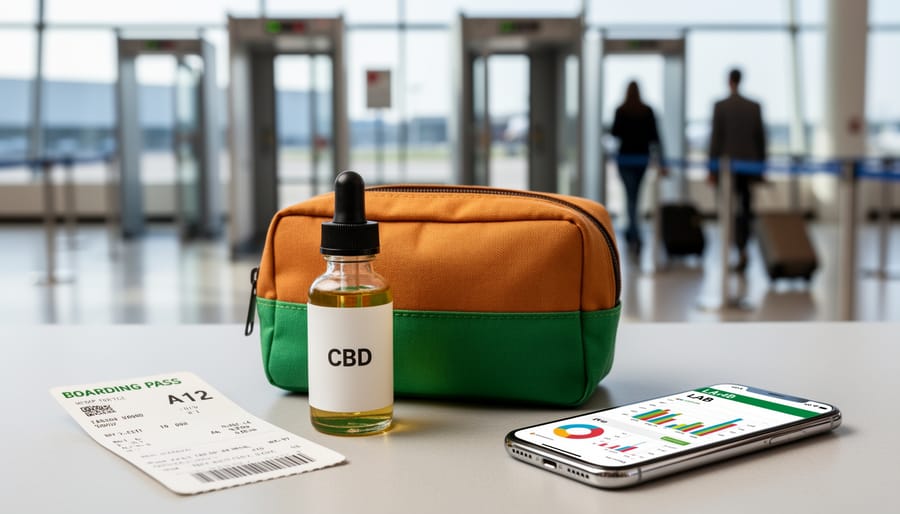
Airport security doesn’t typically flag CBD oils, gummies, or topicals during screening. TSA agents focus on safety threats, not hunting down legal hemp products. Still, I always pack my CBD in original packaging with lab reports accessible on my phone. This simple habit has saved me from awkward conversations more than once.
International travel introduces an entirely different rulebook. Many countries ban CBD outright, and customs officers won’t care about your domestic legality arguments. Before any trip, I research destination laws, check airline policies, and honestly assess whether bringing CBD is worth potential legal complications. Sometimes the smartest move is leaving it home.
Understanding Hemp-Derived CBD vs. Other Cannabis Products
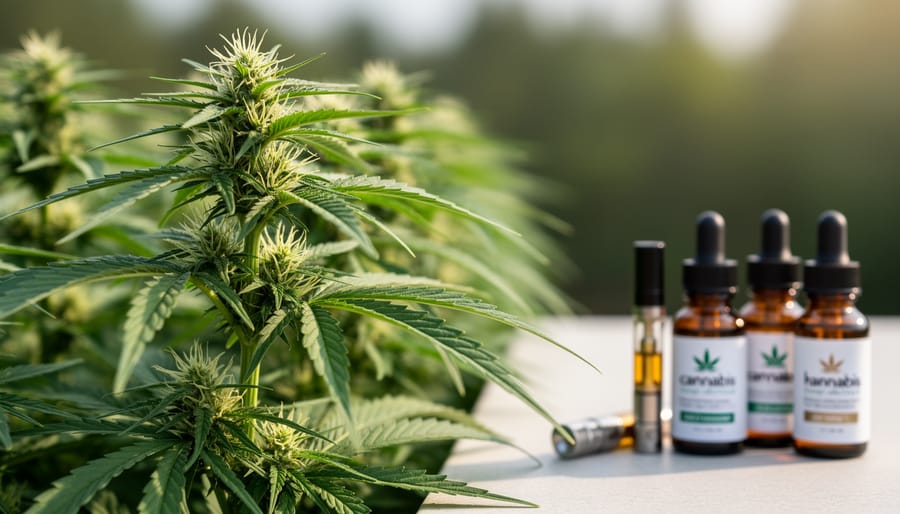
When I started traveling with CBD, I’ll admit the terminology confused me. Hemp, marijuana, cannabis, weren’t they all the same plant? Turns out, understanding the distinction between hemp-derived CBD and other cannabis products is crucial for legal travel, and it’s simpler than it sounds.
Hemp-derived CBD comes from industrial hemp plants specifically cultivated to contain minimal THC, the compound that gets you high. The key legal threshold is 0.3% delta-9 THC by dry weight. If a cannabis plant stays under that limit, it’s classified as hemp under federal law. Above that threshold, it’s marijuana, and marijuana remains federally illegal regardless of CBD content.
This distinction became official with the 2018 Farm Bill, which reclassified hemp as an agricultural commodity rather than a controlled substance. That single piece of legislation is why you can walk into stores across the country and buy hemp-derived CBD products without a prescription. It’s also why I could confidently pack my CBD gummies for that flight to Colorado without worrying about federal drug charges.
- Hemp-Derived CBD
- CBD extracted from cannabis plants containing less than 0.3% delta-9 THC, making it federally legal under the 2018 Farm Bill. This is what you’ll find in most commercial CBD products.
- THC Threshold (0.3% delta-9 THC definition)
- The legal dividing line between hemp and marijuana. Cannabis plants testing below this concentration are classified as hemp; above it, they’re marijuana under federal law.
- Full-Spectrum vs. Isolate
- Full-spectrum CBD contains trace amounts of THC and other cannabinoids, while CBD isolate is pure CBD with everything else removed. For travel, isolate reduces legal ambiguity.
- Marijuana-Derived Cannabis
- Cannabis products from plants exceeding the 0.3% THC threshold, which remain federally illegal. Even if they’re legal in your state, crossing state lines or flying with them is prohibited.
Here’s what matters for travelers: marijuana-derived products are still federally illegal, even CBD products extracted from high-THC plants. That bottle of CBD oil from a recreational dispensary in California? Different legal status than hemp-derived CBD from a health food store, even if the CBD content is identical.
The THC percentage is everything. I always check the Certificate of Analysis, a lab report showing cannabinoid content, before traveling with any CBD product. If it doesn’t confirm the THC level stays under 0.3%, I leave it home. That small detail is the difference between legal hemp and illegal marijuana in the eyes of federal law.
The Current Legal Landscape in 2026
The federal landscape for hemp-derived CBD remains largely unchanged since the 2018 Farm Bill made it legal nationwide, defining hemp as cannabis containing 0.3% THC or less. This means that at the federal level, you can legally purchase, possess, and travel with hemp-derived CBD products throughout the United States. The Drug Enforcement Administration and FDA continue to recognize this distinction, which is crucial for travelers to understand.
However, federal legality creates a false sense of security that I learned about the hard way.
State laws add significant complexity to what seems like a straightforward federal framework. While most states align with federal regulations, several have enacted their own restrictions. Idaho, for instance, maintains extremely strict cannabis laws that don’t always distinguish between hemp-derived and marijuana-derived products. South Dakota has historically been unfriendly to CBD, though enforcement varies. Nebraska’s laws remain murky enough that some travelers report uncertainty even with compliant products.
The bigger issue isn’t outright bans but rather the patchwork of state-level interpretations. Some states require specific testing standards or registration programs for CBD products. Others have unclear enforcement policies where local law enforcement may not distinguish between legal hemp CBD and illegal cannabis products during a traffic stop or random inspection.
This creates real travel complications. You might board a plane in California with a perfectly legal CBD tincture, fly over states where that same product exists in a legal gray area, and land in a state where you’re completely protected again. The product never changed, but the legal framework around you did three times.
Internationally, the situation gets considerably more complicated. Many countries maintain blanket bans on all cannabis products regardless of THC content or hemp derivation. Japan, Singapore, and the United Arab Emirates enforce zero-tolerance policies with serious legal consequences. Even CBD-friendly nations like Canada and many European countries have their own testing standards, THC thresholds, and documentation requirements that don’t necessarily match U.S. regulations.
The European Union, for example, generally allows CBD but individual member states set their own THC limits, some stricter than the U.S. standard. France has different requirements than Germany, which differs from Spain.
This complexity is exactly why legality doesn’t equal simplicity when traveling with hemp-derived CBD.
Traveling with CBD on Domestic Flights
What TSA Really Looks For (And What They Ignore)
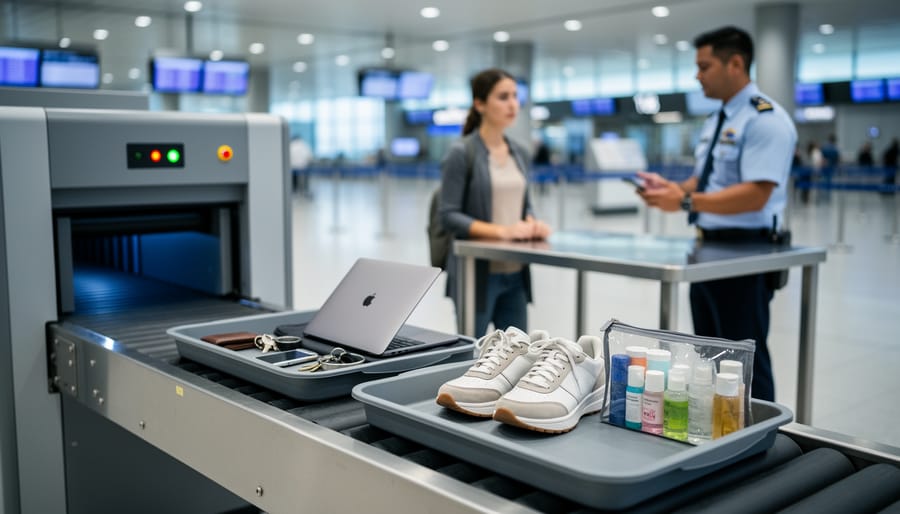
I’ll be honest, the first time I flew with a CBD tincture, I was convinced TSA would flag me. I watched the agent’s face as my bag went through the scanner, mentally preparing my explanation about the 2018 Farm Bill. She didn’t even glance up. My bottle sailed through without a second look, wedged between my toiletries and laptop charger.
Here’s what I’ve learned from dozens of flights since: TSA agents aren’t hunting for your CBD. They’re scanning for genuine security threats, weapons, explosives, large quantities of liquids. The TSA CBD carry-on rules explicitly state that hemp-derived products with less than 0.3% THC are permitted, but most screeners aren’t even thinking about cannabinoids. They’re looking at the shape and density of objects on their monitors, not analyzing botanical extracts.
That doesn’t mean you should be cavalier. If your bag gets selected for additional screening, having your CBD in its original packaging with clear labeling makes the interaction smoother. But the reality? Most travelers who follow basic guidelines breeze through security without their CBD products triggering any interest whatsoever. The agents have bigger concerns than your legally compliant tincture or gummies.
How to Pack Your CBD Products
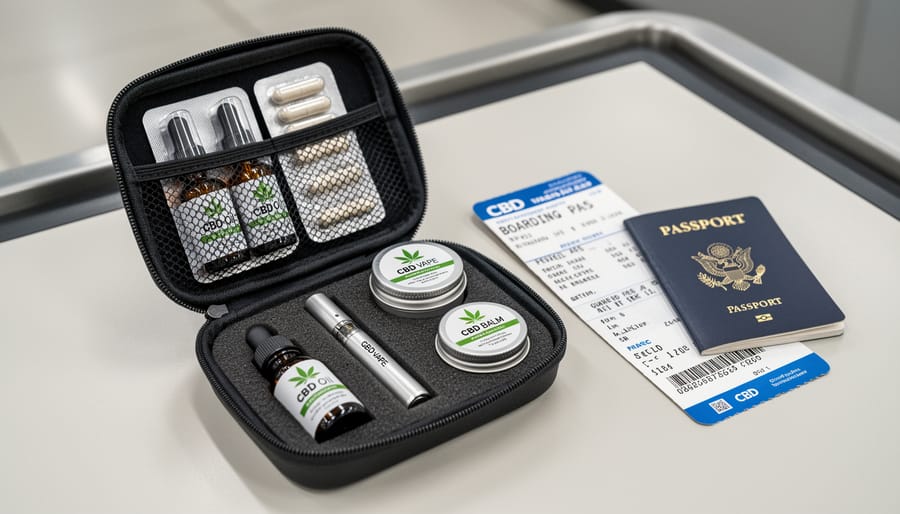
After learning what TSA actually looks for, the next question is obvious: how should you physically pack your CBD products? The packaging matters more than you’d think, and a few simple steps can save you from unnecessary stress at security.
Keep everything in its original container. I can’t stress this enough. That manufacturer’s packaging includes crucial information, product name, ingredients, CBD and THC content, batch numbers, and company details. A random unlabeled bottle or a baggie of gummies screams “unknown substance” to screeners, even if it’s completely legal. Original packaging instantly signals legitimacy.
Your Certificate of Analysis is your best friend. This lab report proves your product meets federal requirements, specifically that it contains 0.3% THC or less. Most reputable CBD companies provide COAs either in the package or downloadable from their website. I keep a printed copy folded inside my toiletry bag and a digital version on my phone. It’s like showing your homework: you probably won’t need it, but if someone asks, you’ve got proof.
Before you leave, gather these essentials:
- Original packaging with visible labels and ingredient lists
- Certificate of Analysis clearly showing THC content below 0.3%
- Purchase receipt from a legitimate retailer
- Liquids in TSA-compliant containers (3.4 oz/100ml or smaller for carry-on)
Speaking of liquids, standard TSA rules apply. CBD oils and tinctures must follow the 3-1-1 rule for carry-on bags: containers no larger than 3.4 ounces, fitting in a single quart-sized clear plastic bag. Larger bottles go in checked luggage, though I prefer keeping mine in my carry-on where I can monitor it. Capsules, gummies, and other solid forms don’t face liquid restrictions, making them arguably the easiest option for travel.
Don’t transfer products into unmarked containers to save space. That innocent efficiency move creates problems. Security sees an unidentified substance, and you’ve lost the documentation that would immediately clarify the situation. The minor convenience isn’t worth the potential headache.
If You’re Pulled Aside for Additional Screening
Getting pulled aside doesn’t mean you’ve done something wrong. TSA officers screen thousands of bags daily, and sometimes they just need a closer look at an unfamiliar item.
If it happens, stay calm and polite. When asked about the product, simply explain it’s hemp-derived CBD with less than 0.3% THC. Don’t over-explain or act nervous, that only raises suspicion. Have your COA ready on your phone if they want verification.
I’ve watched this scenario play out several times. Officers typically glance at the label, maybe ask one question, then wave you through. The interaction rarely lasts more than a minute. Remember, they’re checking for security threats, not judging your wellness choices. A straightforward, confident response is your best approach.
International Travel Considerations
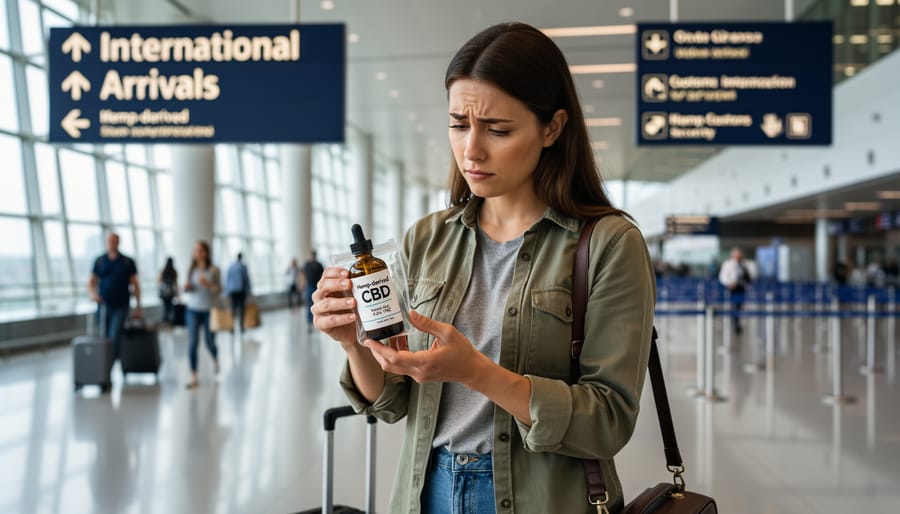
Countries Where CBD Is Welcome (and Where It’s Not)
CBD laws shift constantly, and what’s legal in one country can land you in serious trouble in another. I’ve learned to triple-check before any international trip.
CBD-Friendly Destinations:
Most of Europe welcomes hemp-derived CBD, particularly the UK, Switzerland, Netherlands, and Germany. These countries typically allow CBD products containing less than 0.2-0.3% THC. Canada permits CBD nationwide, though their regulations focus on different thresholds than U.S. standards. Several Latin American countries, including Mexico and Costa Rica, have relaxed attitudes toward hemp-derived CBD, though official regulations often lag behind actual enforcement.
Proceed with Extreme Caution:
Asian countries remain the riskiest region for CBD travelers. Japan, Singapore, South Korea, and Thailand enforce zero-tolerance policies toward cannabis products, and CBD often gets lumped into their strict drug laws regardless of THC content. Middle Eastern nations including the UAE and Saudi Arabia similarly prohibit CBD entirely. Australia requires prescriptions for CBD products, making tourist use complicated.
The Reality Check:
Even in “friendly” countries, local law enforcement may not distinguish between hemp and marijuana products. Border agents might confiscate your CBD despite its legality, simply because they’re unfamiliar with current laws.
Before any international trip, I check the destination country’s embassy website and recent traveler experiences. When there’s any doubt, I leave my CBD at home. No wellness routine is worth risking international legal complications.
My Rule for International Trips
I learned this lesson the hard way before a trip to Singapore in 2024. I’d done my research, saw the country’s strict drug laws, and still caught myself packing my CBD tincture out of habit. Then I read about a traveler who spent days detained over a small amount of cannabis oil. That was my wake-up call.
Now I follow one simple rule: when in doubt, leave it out.
If I’m traveling somewhere with unclear laws, conflicting online information, or a reputation for strict enforcement, my CBD stays home. It’s just not worth the stress of worrying whether I’ll face questioning, confiscation, or worse. I’ve skipped bringing CBD to Japan, UAE, Thailand, and several other destinations where the legal status seemed murky or outright prohibited.
The honest truth? I survived those trips just fine without it. Yes, CBD helps me with travel anxiety and sleep, but dealing with potential legal trouble in a foreign country creates far more anxiety than any flight or unfamiliar bed ever could.
Before any international trip, I spend time researching the specific country’s current laws. If I can’t find clear, recent confirmation that hemp-derived CBD is explicitly legal and I can find official government sources backing that up, I don’t risk it. Sometimes that means I bring alternative solutions like melatonin for sleep or practice breathing exercises for anxiety instead.
For countries where CBD is clearly legal and welcomed, I pack it confidently with all proper documentation. But that list is shorter than you’d think.
CBD and Hotel Stays
I’ve checked into hundreds of hotel rooms over the years with CBD products in my bag, and I’ve never had an issue, but that’s because I follow some simple courtesies that keep both me and hotel management happy.
Most hotels treat CBD like any other wellness supplement when it comes to possession. You can keep CBD oils, capsules, or edibles in your room without concern. The real considerations come down to how you use your products and respecting property policies.
If you’re using CBD flower or vaping, smoke-free policies absolutely apply. Hotels that prohibit smoking don’t make exceptions for legal hemp products, and the smell from smoking or vaping CBD flower is indistinguishable from marijuana to most people. I learned this the hard way at one of the luxury hotels in Vancouver when housekeeping knocked on my door after I’d vaped in the bathroom with the fan running. No penalty that time, but it was embarrassing and avoidable.
Stick to edibles, tinctures, or capsules in your room, and save any smoking or vaping for designated outdoor areas if the hotel permits smoking anywhere on property. Even then, be discreet and mindful of other guests.
Don’t leave CBD products scattered obviously around your room. I keep mine in my toiletry bag, which housekeeping respects as personal items. It’s not about hiding anything illegal, it’s about being a considerate guest and not creating confusion for staff who might not be familiar with hemp-derived products.
If you’re using topicals or tinctures with strong hemp scents, crack a window or use them before bed rather than right before housekeeping arrives. Common courtesy goes a long way.
Visiting Tourist Attractions with CBD
Most tourist attractions won’t give you trouble for carrying CBD products, but I’ve learned to evaluate each situation individually rather than automatically bringing my CBD everywhere.
Theme parks and major museums typically have bag checks at entrance points. Security staff are looking for weapons, outside food, and prohibited items, not your CBD tincture. I’ve walked through Disney, Universal, and countless museums with CBD oil in my bag without a single question. The key is keeping products clearly labeled in their original packaging. If a security guard does ask, a simple “It’s legal hemp-derived CBD” has always been sufficient in my experience.
However, federal properties operate under different rules. National parks, government buildings, and federal monuments technically prohibit all cannabis products, including hemp-derived CBD. While enforcement is rare for personal-use amounts, I leave mine at the hotel when visiting these locations. It’s not worth the potential headache.
For outdoor activities like hiking or exploring things to do in natural areas, CBD products travel fine in a backpack. Just ensure everything stays secure and doesn’t leak.
My general rule: if an attraction involves federal jurisdiction or has posted cannabis prohibitions, leave your CBD behind. For commercial venues, standard tourist sites, and most public spaces, keeping products discreetly packed in their original containers rarely causes issues.
Common Mistakes Travelers Make (And How to Avoid Them)
I’ve seen travelers stumble over the same CBD-related issues time and again, and honestly, many are easily preventable. The difference between smooth sailing and a confiscated product often comes down to simple preparation.
Here are the most common mistakes I’ve witnessed, ranked by how often they cause actual problems:
- Traveling without a Certificate of Analysis (COA)This document proves your product is legal hemp-derived CBD, not marijuana. Authorities can’t visually tell the difference, and without this paper trail, you’re banking on luck.
- Transferring CBD to unmarked containersThat generic tin or unlabeled bottle raises immediate red flags. Security personnel need to see what they’re looking at, and original packaging with clear labeling eliminates 90% of potential questions.
- Skipping destination-specific researchAssuming federal legality means universal acceptance is dangerous. I’ve watched people confidently declare “CBD is legal everywhere in the U.S.” only to discover their destination state has stricter interpretations or enforcement practices.
- Accidentally packing marijuana-derived productsThis happens more than you’d think, especially if you travel with a friend who uses both types and products get mixed up. Check THC percentages carefully before your trip.
Another mistake I’ve noticed: bringing excessive quantities that suggest commercial intent rather than personal use. A single bottle or package reads as personal; five bottles might trigger different questions, even if everything’s legal.
The overarching error? Treating CBD casually because “it’s legal now.” Legal doesn’t mean invisible to security protocols. Approach it like you would prescription medication: documented, properly packaged, and carried with awareness that you might need to explain it. That mindset shift alone prevents most traveler headaches.
What to Do If Your CBD Gets Confiscated
If your CBD gets confiscated, take a deep breath. It happens, and it’s rarely as dramatic as you might fear.
First, don’t argue with the officer who’s confiscating it. Whether it’s TSA, customs, or local authorities, getting defensive won’t help. They’re following protocols, and your product is already gone the moment they’ve decided to take it. Politely acknowledge their decision and move on. I watched a traveler at security turn a simple confiscation into a 45-minute ordeal by insisting the officer was wrong about the rules. He still lost the CBD, but also missed his flight.
In most cases, confiscation isn’t treated as a criminal matter. You’re not getting arrested for a bottle of legal CBD oil. TSA, for example, might simply dispose of it if they’re uncertain about its THC content or if you can’t produce proper documentation. You won’t face charges unless there’s clear evidence of illegal cannabis products.
Ask if you can retrieve documentation from your bag if you have a certificate of analysis. Sometimes showing proof of hemp derivation resolves the issue on the spot. If not, accept the loss and don’t let it derail your trip.
Consider the financial hit a learning experience. Replace what you lost at your destination if CBD is legal there, or adjust your plans. The inconvenience is temporary, and you’ll be more prepared next time.
Traveling with hemp-derived CBD doesn’t have to be stressful once you understand the rules and take a few simple precautions. The key is treating it like any other regulated item in your luggage: know what you’re carrying, keep it properly documented, and stay informed about where you’re going.
Before any trip, check the current laws for your destination. Print or save digital copies of your product’s certificate of analysis. Keep CBD in its original packaging with clear labeling. These steps take minutes but can save you headaches at security checkpoints or border crossings.
For domestic travel, the process is usually straightforward. TSA agents aren’t targeting legal hemp products, and most will wave you through without a second glance if everything looks legitimate. International travel requires more homework, but the same principle applies: preparation beats assumption every time.
I’ve traveled with CBD across multiple states and countries, and the times I felt most confident were when I’d done my research beforehand. The times I felt anxious were when I’d cut corners or made assumptions. The difference between those experiences came down to preparation, not luck.
If you’re uncertain about a particular destination, err on the side of caution. Sometimes the smartest choice is leaving your CBD at home and enjoying your trip without the worry. But for most domestic travel and CBD-friendly international destinations, bringing your hemp products is entirely manageable with the right approach.