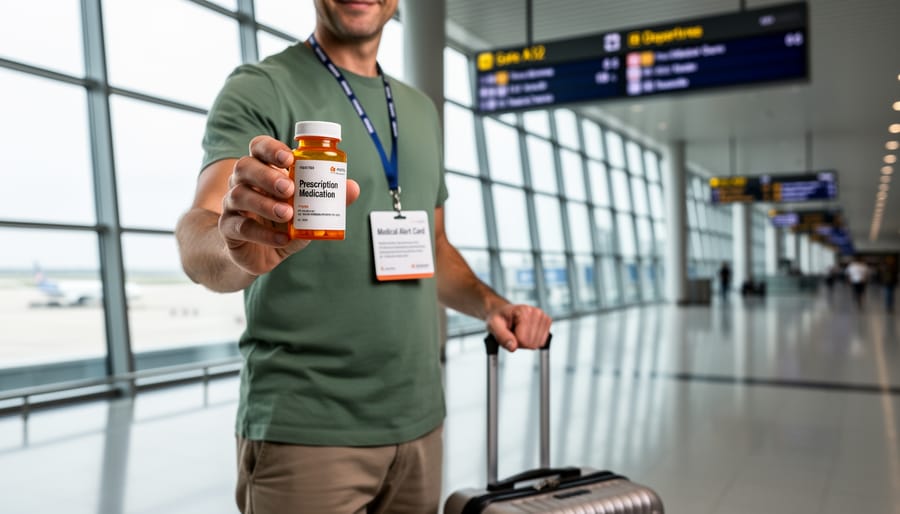
Can You Travel With Medical Marijuana? What the Rules Actually Say
Yes, you can travel with medical marijuana, but only if you plan around where you’re going and how you’re getting there. Within the United States, it comes down to one awkward fact: cannabis is still illegal under federal law, even when your state has approved it. That matters the moment you step into an airport, because TSA screens for security threats, not drugs, yet officers can refer anything they find to local law enforcement. Cross a state line and the rules change again. Cross an international border and you’re almost always in trouble.
Here’s the practical picture. Keep your product in its original labeled packaging, carry your medical card and any doctor’s documentation, and check the laws at your departure point, your destination, and any stops in between. Never mail it or pack it without a plan, and never assume a friendly state means a friendly airline or hotel.
I learned this the hard way on a trip where I’d checked one state’s rules and completely forgot about my layover in another. Nothing happened, but I spent that whole connection with a knot in my stomach. A few minutes of research would have fixed that.
Below, we’ll walk through flying, border rules, packing, lodging, and CBD and vape products, so you can travel with confidence. Always confirm current rules with official sources before you go, since laws shift.
The Short Answer: Why It Depends on Where You’re Going
Here’s the thing that trips up almost everyone: there isn’t one rulebook for cannabis. There are several, and they don’t always agree.
A national government might treat cannabis as illegal while a state or province inside that country allows it for medical use. An airline can set its own policy on top of that, even when local law is relaxed. And once you cross into another country, you’re playing by that country’s rules, not the ones you follow at home. So a medical card that works perfectly in your hometown can mean very little the moment you step onto a plane.
If you’ve never flown with a medical product before, don’t worry. You only need to answer three simple questions before you pack anything:
1. Is it legal where I’m departing from?
2. Is it legal where I’m landing?
3. Am I crossing a border, or staying within one country?
Each answer matters on its own. Even if the first two are a yes, a border crossing can change the whole picture, and a layover in a third place can add one more set of rules you didn’t plan for. Think of it like checking the weather for every stop on your route, not just where you start and finish.
Once you’ve answered those three questions, you’ll know whether you’re dealing with a simple domestic trip or something that needs a lot more research.
Flying With Medical Marijuana: Airport Security and Airline Rules
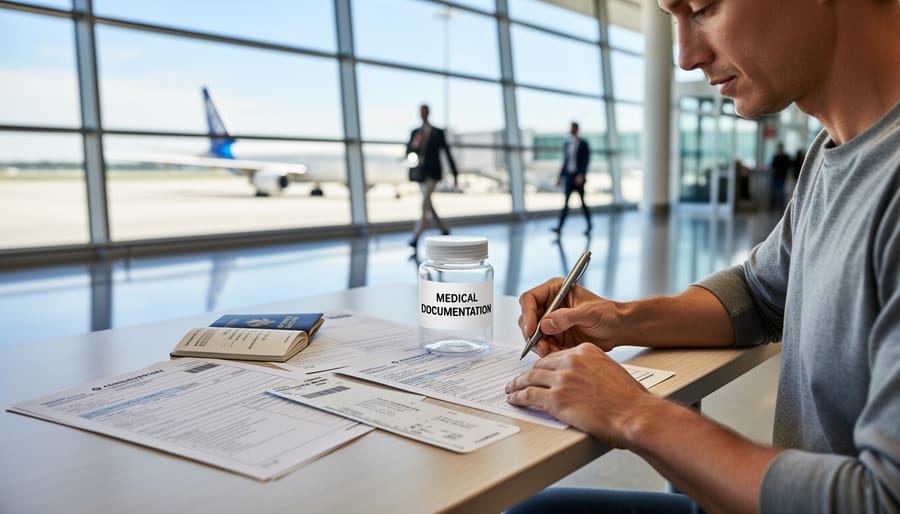
Domestic Flights Within One Country
Flying inside one country sounds simple. You’re not crossing a border, so the rules should be the same everywhere, right? Not quite.
In many countries, regions or states set their own cannabis laws. One area might allow medical use with a valid authorization, while the next one over might not recognize it at all. If your trip crosses those lines, you can end up with a product that’s perfectly fine at home and a problem at your destination.
Here’s the part that surprises people. Even when your departure and arrival regions both allow medical cannabis, aviation security is often handled at the national level. Airports, airspace, and the screening process typically fall under national rules, and those can differ from what your local laws say. So a product that’s legal on the ground in both places may still be treated differently once you’re inside an airport or on an aircraft.
Airlines add another layer. Each carrier sets its own policies about what it will carry, and those can be stricter than local law.
A few things I’d do before any domestic trip:
– Check the rules for your departure region, your arrival region, and any layover.
– Look up the national aviation security guidance for your country.
– Read your airline’s policy on medical products.
Rules change and this isn’t legal advice, so treat official government and airline sources as the final word. A few minutes of checking beats a stressful surprise at the security line.
International Flights and Border Crossings
International travel is where the rules get strictest. Crossing a border with cannabis is generally prohibited, and that holds even when your medical authorization is valid at home. A prescription or medical card from one country usually carries no legal weight in another. It also doesn’t matter if both your departure point and your destination allow cannabis. Moving it across a border is treated as import or export, and that is a separate offense in most places.
Some countries take this very seriously. Penalties can include large fines, long prison sentences, and in a handful of places, far worse. “I have a doctor’s note” is not a defense you want to be relying on at a customs desk. If you’re curious about what actually happens when cannabis is discovered during screening, it’s worth reading up before you ever pack a bag.
I learned this the hard way, or almost did. A few years ago I was planning a trip and had already mentally packed my usual medical items. Then, a week before departure, I decided to double-check the destination’s rules, mostly out of habit. What I found made me stop cold. The country had a zero-tolerance approach, and nothing about my situation would have been treated as an exception. I ended up rearranging my plans, talking to my healthcare provider about alternatives, and traveling without the product. It was inconvenient, but it beat the alternative.
Here’s the practical tip: before you book anything, look up the destination country’s official government travel guidance. Most governments publish advice for their citizens traveling abroad, including notes on prohibited and restricted items. Check the destination’s own customs or embassy pages too, and look at any country you’ll pass through on a layover. Rules change, so verify close to your travel date.
Paperwork and Packing: How to Prepare Before You Leave
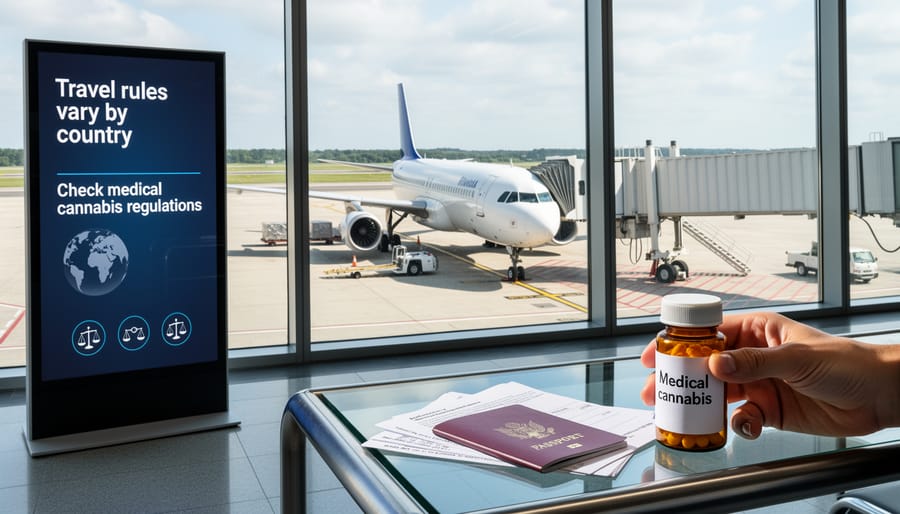
Preparation is where most of the stress gets removed. A little paperwork and some thoughtful packing go a long way, and you’ll be glad you did it when someone asks you a question at a checkpoint.
Here’s the order I follow before any trip:
- Research the rules at your departure point, your destination, and any layover, since each can be different.
- Check your airline’s policy on medical cannabis and related items, and note anything about carry-on limits.
- Gather your documentation, such as a prescription, medical authorization, or card, plus a printed copy in case your phone dies.
- Pack products in their original, labeled packaging so the name, dosage, and your details are visible.
- Bring only the amount you’ll need for the trip, with a small buffer for delays rather than a “just in case” stockpile.
- Keep everything in your carry-on, where you can monitor it and reach it easily.
- Store your products and paperwork together in one pouch so you can show them quickly if asked.
If you’re also bringing other gear, a general packing checklist can help you cover the practical details without forgetting something small.
One lesson I learned the hard way: I once tossed my medical items into a random side pocket and spent a frantic few minutes digging for them while a line grew behind me. Nothing went wrong, but I felt flustered and unprepared. Now I use a single, clearly organized pouch for everything medical, and it makes the whole process feel calmer.
Finally, talk with your healthcare provider about your travel plans. They can help you think through dosing, timing, and what documentation might be useful. Treat that conversation as part of your prep, not an afterthought.
Where You’re Staying: Hotels, Rentals, and Tourist Attractions
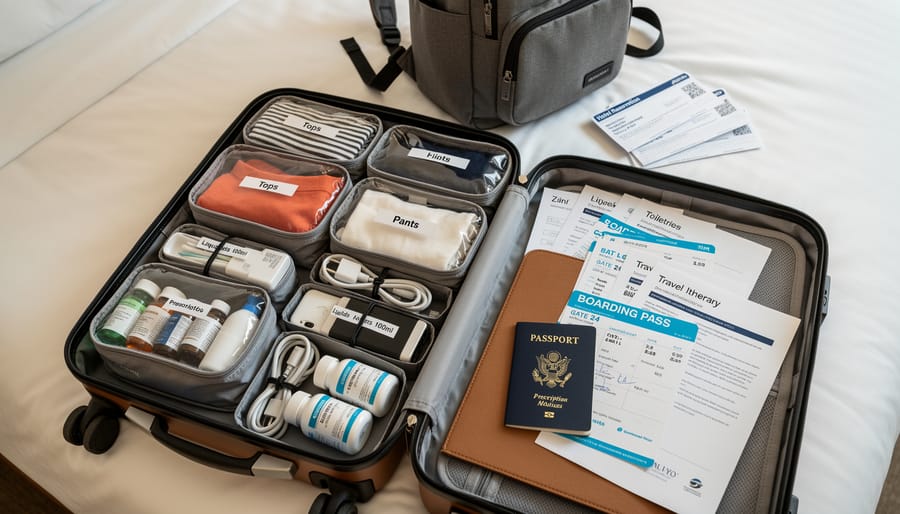
Getting through the airport is only half the picture. Once you arrive, your accommodation and the places you visit each have their own rules, and they often differ from local law.
Many hotels and vacation rentals are strictly no-smoking and no-vaping, and some go further by prohibiting cannabis use on the property altogether, even in places where medical use is allowed. That can mean cleaning fees, penalties, or even being asked to leave. Rules that seem relaxed in one city can be quite firm at the specific property you booked.
The easiest fix is to ask before you book. A short email or message to the host or front desk works well: “I’m traveling with a medical product that I use as directed by my healthcare provider. Can you tell me your policy on consumption and storage on the property?” You’ll usually get a clear answer, and it saves you an awkward surprise at check-in. I’ve found that properties with a written policy listed on their booking page tend to be the easiest to plan around, so look for one that spells out its rules.
Think about consumption methods too. Odor-free or low-profile options are often easier to manage discreetly and compliantly than anything involving smoke or visible vapor. Whatever you choose, keep products in their original labeled packaging and stored out of sight.
Don’t forget the places you’ll visit. Many parks, beaches, theme parks, museums, and public transit systems have their own policies, and these can apply even if local law is permissive. Check each attraction’s website or call ahead, especially for national or state parks, which often follow different rules than the surrounding area. A little research here keeps the trip focused on enjoying the destination rather than worrying about what’s allowed.
Medical Marijuana vs. CBD and Vape Products: Does It Change the Rules?
Here’s where things get a little more nuanced. Medical marijuana, CBD, and vape gear don’t all get treated the same way at the airport, and a few key terms explain why.
- THC
- The compound in cannabis that causes a “high.” Its level often decides whether a product is treated as a controlled substance.
- CBD
- A non-intoxicating compound found in cannabis and hemp. It’s usually regulated more loosely than THC, but not everywhere.
- Hemp-derived
- Made from hemp, a cannabis plant bred to contain only trace amounts of THC. These products often face fewer restrictions, though limits vary by country.
- Medical authorization
- A prescription, doctor’s letter, or medical card showing a product was recommended for a health condition.
- Carry-on battery rules
- Airline requirements that lithium batteries and vape devices travel in your cabin bag, never checked luggage, because of fire risk.
The big takeaway is that THC content usually sets the legal tone. A hemp-derived CBD oil with trace THC may pass without fuss in one country and still raise eyebrows in another. When I first packed CBD for a trip, I assumed “natural” meant “no problem.” It didn’t, and I spent an evening reading customs rules I should have checked before leaving.
Vape devices add a separate layer. Even if your oil is perfectly legal, the battery follows its own safety rules, which is why it’s worth reading up on how to travel with vape gear before you pack, and brushing up on carry-on vape rules so your device isn’t pulled aside at security. If you’re crossing borders with CBD, our guide to international CBD travel covers the details.
Common Mistakes Travelers Make (and How to Avoid Them)
I learned one of these the hard way. A few years ago I packed my medical products for a trip, felt totally prepared, and then realized the night before that my connecting flight stopped in a place with very different rules than home. I’d only researched my departure and arrival. That layover nearly derailed everything, and it taught me to check every stop, not just the endpoints.
Here are the mistakes I see most often, with a quick fix for each:
Assuming the rules match everywhere. Legal at home doesn’t mean legal at your destination. Fix: look up the official government guidance for every place you’ll touch down.
Packing it in checked luggage. Bags that leave your sight can be lost, delayed, or searched without you there. Fix: keep medical items in your carry-on, close at hand, where you can explain them if asked.
Moving products into unlabeled containers. A random jar or baggie looks suspicious and strips away proof that it’s yours. Fix: keep everything in its original labeled packaging, with your documentation alongside it.
Forgetting about layovers. A short stop in a different jurisdiction can still put you under its rules. Fix: map out every airport on your itinerary and check each one before you pack.
Skipping the return trip. It’s easy to plan the way there and forget the way back. Fix: research your return route as carefully as your outbound one, including any new stops.
Taking an extra ten minutes per leg to verify the rules beats a stressful surprise at a gate.
Frequently Asked Questions About Traveling With Medical Marijuana
Can I bring medical marijuana on a plane?
Sometimes, but it depends on your departure point, your destination, and the airline’s own policy. Airport security is focused on safety threats, yet agents must refer anything illegal they find to law enforcement, so check the rules for every leg of your trip first.
Do I need a prescription or medical card?
Carrying your medical authorization and keeping products in their original labeled packaging is a smart habit. It won’t override a local ban, but it shows your product is medical and helps you explain yourself if questions come up.
Can I travel internationally with medical marijuana?
Generally no. Crossing a border with cannabis is usually prohibited even between two places where it’s legal, and some countries impose very severe penalties, so read your destination’s official government travel guidance before you pack.
Should it go in my carry-on or checked bag?
Most travelers keep medical products in their carry-on so they stay with them and within reach. Whichever you choose, keep everything in original packaging and bring only what you need for the trip.
Can I use it in a hotel room?
Don’t assume so. Many hotels and rentals ban smoking and vaping, and some prohibit cannabis use entirely even where it’s legal, so ask about the policy when you book.
What should I do if security finds it?
Stay calm, be honest, and cooperate politely. Show your documentation if you have it, and don’t argue or try to hide anything.
Laws, airline policies, and airport procedures change often, so treat these answers as general guidance and confirm the current rules with official government and airline sources before every trip. A quick check beforehand is far easier than sorting out a problem at the gate.
So, can you travel with medical marijuana? Sometimes, yes. But it never comes down to a simple yes or no. It comes down to where you’re leaving from, where you’re landing, and whether a border sits in between. The travelers who get through without a hitch are the ones who did their homework first: they checked the rules at both ends, carried proper documentation, kept everything in its original labeled packaging, and respected the policies of their airline and hotel.
Because laws and policies change, make it a habit to confirm the current rules with official government and airline sources before every single trip, even if you’ve flown with your medication before. A quick check beats a stressful surprise at the airport.
Have you traveled with medical cannabis, or are you planning a trip and feeling unsure? I’d love to hear your stories, tips, and questions. Share them, and let’s help each other travel a little more confidently.