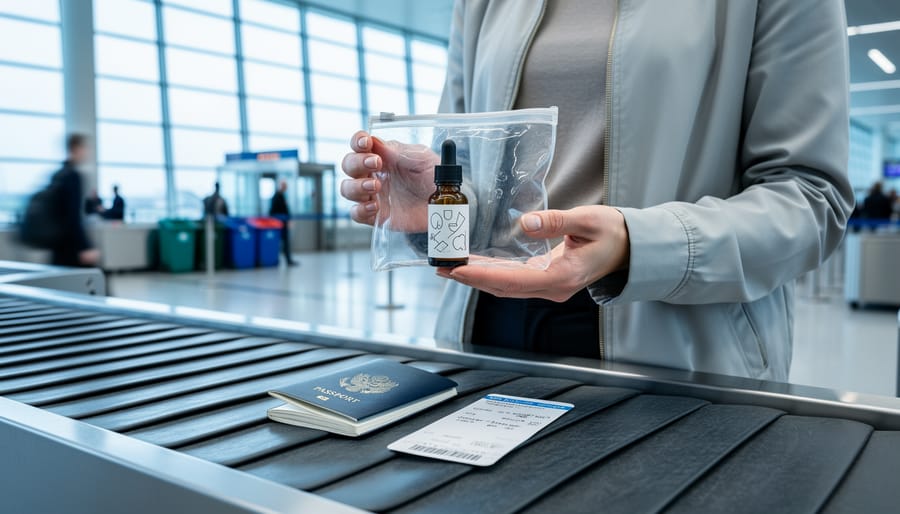
How to Travel Internationally with CBD Oil (Without Legal Headaches)
Can you travel internationally with CBD? The short answer: maybe. Whether you can legally pack that CBD oil depends entirely on your departure country, destination, and every transit point in between. CBD’s legal status varies wildly across borders. A bottle that’s perfectly legal in Colorado could land you in serious trouble in Singapore or the UAE, where CBD remains classified alongside harder substances. Even within generally CBD-friendly regions like Europe, THC thresholds and documentation requirements differ from country to country.
I’ve watched travelers get pulled aside at customs over confusion about hemp-derived products. The stress isn’t worth it unless you know exactly what you’re doing. But here’s the thing: with proper research and preparation, traveling internationally with CBD is possible. You just need to understand the specific rules at every point of your journey and have the documentation to back up your compliance.
The process isn’t as simple as tossing a bottle in your toiletry bag. You’ll need to verify the legal status in both countries, confirm your product meets all requirements (THC content, lab testing, packaging), understand airline policies, and know how to present your CBD at security and customs checkpoints. Some destinations require prescriptions or special permits. Others have zero-tolerance policies where ignorance genuinely isn’t a defense.
This guide walks you through each step to help you make an informed decision about whether to bring CBD on your international trip, and if so, exactly how to do it legally and safely.
Understanding CBD Oil Laws: The International Legal Landscape
CBD oil exists in a legal gray zone that shifts dramatically the moment you cross international borders. What’s perfectly legal in one country can land you in serious trouble in another, and the differences aren’t always intuitive.
The single biggest factor determining whether your CBD oil is legal abroad is its THC content. Most countries that allow CBD set strict THC limits. The European Union and the United Kingdom permit CBD products with up to 0.2% THC. The United States allows 0.3%. Some countries, particularly in Scandinavia and parts of Asia, enforce zero-tolerance policies where any detectable THC makes the product illegal, regardless of how trace the amount. This matters because even products labeled “THC-free” sometimes contain trace amounts that sophisticated customs testing can detect.
Where your CBD comes from also matters legally. Hemp-derived CBD (from plants with less than 0.3% THC) faces fewer restrictions in many countries than marijuana-derived CBD, even when the final products are chemically identical. Some nations draw this distinction clearly in their laws. Others ban all cannabis-derived products regardless of source.
Prescription requirements add another layer. Australia, for instance, classifies CBD as prescription-only. Poland requires medical authorization. France recently relaxed its rules but maintains strict oversight. Countries with prescription requirements typically won’t accept foreign prescriptions, meaning even legitimate medical users can face confiscation or legal consequences.
Then there are countries where CBD in any form remains completely illegal. Much of the Middle East, including the United Arab Emirates and Saudi Arabia, treats CBD oil the same as any cannabis product, with severe penalties. Singapore, Indonesia, and Japan maintain similar zero-tolerance stances. China’s position is complex and enforcement varies, but carrying CBD there is risky. Russia bans CBD despite being a major hemp producer.
Laws also change frequently. Thailand legalized CBD in 2022, then reversed course with new restrictions in 2024. New Zealand shifted from prescription-only to more relaxed rules. What was true six months ago may not apply to your upcoming trip. This volatility is exactly why checking current regulations through official government sources before every international journey with CBD is essential, not optional.
What You Need Before You Fly: Documentation and Preparation
Before you pack your CBD oil, gather your documentation arsenal. Customs officers don’t take your word for it, and “I thought it was legal” won’t cut it if you’re caught unprepared. Think of these documents as your legal shield at the border.
Certificate of Analysis (COA): Your Non-Negotiable Proof
A COA is a lab report showing your CBD product’s exact chemical composition, especially THC content. Most reputable CBD manufacturers provide COAs on their websites or by request. Download and print it before your trip. This single document can make the difference between walking through customs freely and having your product confiscated, or worse.
To get a COA, check the manufacturer’s website first. Look for a QR code on your product packaging that links to test results, or search the batch number in the company’s lab results database. If you can’t find it online, email customer service with your batch number and request the COA directly. Legitimate companies will send it within a day or two.
Why does this matter so much? Because customs officers in strict countries may test your product on the spot. If your “zero THC” CBD actually contains 0.5%, you’re now carrying an illegal substance. The COA proves your product meets legal limits before anyone starts testing.
Your Pre-Flight Documentation Checklist
Before heading to the airport, verify you have:
- Printed COA showing THC content below destination country limits
- Doctor’s prescription or medical recommendation letter (if using CBD for health conditions)
- Original product packaging with clear labels listing ingredients and manufacturer details
- Written confirmation of your airline’s CBD policy (email or screenshot from their website)
- Printed summary of destination country CBD laws from official government sources
Keep everything together in a clear folder you can quickly access. Store this folder in your carry-on bag with your CBD product, never in checked luggage where you can’t access it if questioned.
Airline Policies: Check Before You Book
Airlines set their own rules regardless of government law. Some prohibit CBD entirely, others allow it with restrictions. Visit your airline’s website and search for “CBD policy” or “cannabis policy.” Can’t find it? Contact customer service directly through chat or email and get their response in writing. Save that email. Screenshot that chat.
Purchase receipts also help establish legitimacy. They prove you bought the product from a legal retailer, not some questionable source. Staple receipts to your COA for easy reference.
Critical Safety Warnings: When Not to Travel with CBD
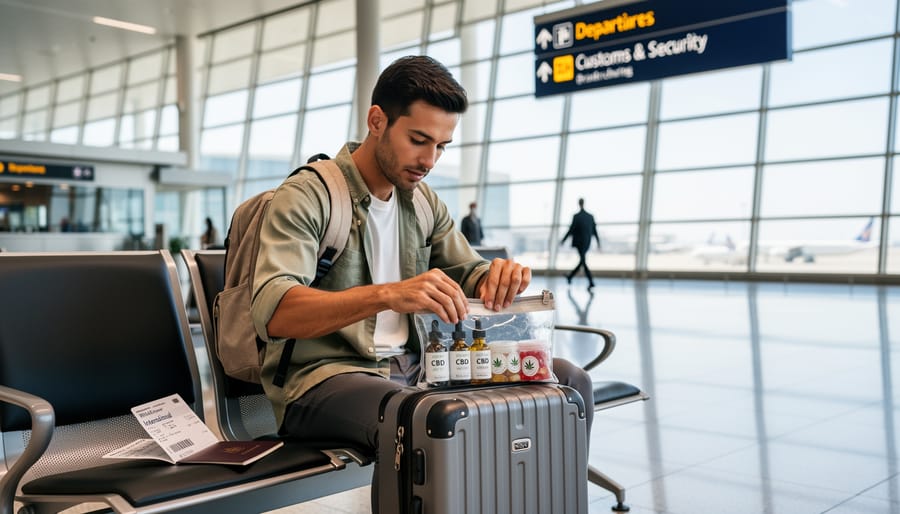
Some countries treat CBD oil the same as heroin, cocaine, or methamphetamine. This isn’t an exaggeration or scare tactic. In nations with zero-tolerance drug policies, possession of even trace amounts of THC can result in arrest, imprisonment, lengthy detention, or in extreme cases, capital punishment. You won’t get a warning, a fine, or a chance to dispose of the product. You’ll be arrested.
The Middle East presents particularly severe risks. Countries like the United Arab Emirates, Saudi Arabia, Qatar, and Kuwait maintain strict laws that classify all cannabis-derived products, including CBD, as illegal narcotics. These nations do not distinguish between THC content levels. A bottle of CBD oil with 0.3% THC carries the same legal weight as recreational marijuana. Enforcement is aggressive, and penalties range from multi-year prison sentences to deportation with permanent travel bans.
Southeast Asia follows similar zero-tolerance approaches. Thailand recently adjusted its cannabis laws, but enforcement remains inconsistent and CBD’s legal status can be murky. Singapore, Malaysia, Indonesia, and the Philippines maintain harsh drug laws with severe consequences. Japan prohibits all cannabis products regardless of THC content, and customs enforcement is thorough.
Parts of Eastern Europe and Asia also present risks. Russia and several former Soviet republics ban CBD entirely. China permits only government-approved CBD for limited medical use. South Korea prosecutes its own citizens for cannabis use even when it occurred legally in another country.
Here’s what makes this particularly dangerous: you can be detained during a layover without ever intending to enter that country. If you’re flying from the U.S. to Europe with a connection in Dubai, UAE law applies during your transit. Security screenings at connecting airports can reveal CBD products in your luggage.
“I didn’t know it was illegal” has never successfully defended anyone at customs. Ignorance of local law is not a legal defense anywhere in the world. Border agents and customs officers are not obligated to warn you or give you a chance to dispose of prohibited items before charging you.
The safer approach in these regions is simple: don’t bring CBD. Consider purchasing at your final destination if it’s legal there, or plan to go without during your trip. The risk of carrying CBD through high-risk countries or transit points far outweighs any benefit.
Step-by-Step: How to Travel Internationally with CBD Oil
Start by treating this journey like any border crossing: you need to know the rules before you pack. I’ve watched too many travelers at customs desperately scrolling through their phones trying to prove their CBD oil is legal, and that’s exactly the situation you want to avoid.
- Research your destination country’s CBD laws using official government sources. Go straight to the embassy website or the country’s customs authority page. Look specifically for THC limits (is it 0.2%, 0.3%, or zero tolerance?), whether CBD requires a prescription, and if there are quantity restrictions. Don’t rely on travel blogs or Reddit posts for this information.
- Check every transit country if you have layovers. Even if you’re not leaving the airport, you’re technically on that country’s soil and subject to their laws. A three-hour layover in a country with strict cannabis laws can turn into a nightmare if security decides to inspect your bag.
- Verify your airline’s specific policy on CBD products. Call the airline directly or use their online chat to get a clear answer, and save a screenshot or email confirmation. Some carriers have blanket bans regardless of legality, while others defer to destination laws.
- Gather your documentation before you pack. Request a Certificate of Analysis from your CBD manufacturer showing the exact THC content (it should be dated within the past few months). If you have a prescription or doctor’s letter, bring the original. Print everything out, even if you have digital copies, because not every customs agent will wait while you fumble with your phone.
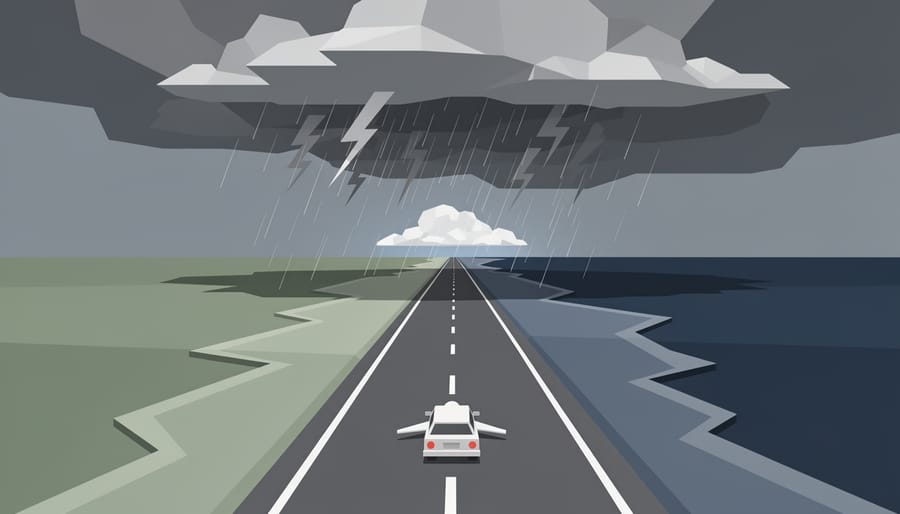
- Pack your CBD oil in your carry-on bag with all paperwork easily accessible. Keep products in their original packaging with labels clearly visible. Place the COA, any prescriptions, and purchase receipts in a clear plastic bag right next to your CBD. This makes inspections faster and shows you’ve done your homework.
- Declare your CBD at customs if the country requires it or if you’re unsure. Some countries have “nothing to declare” and “goods to declare” lines. When in doubt, choose the declaration line. It’s better to have a two-minute conversation where they wave you through than to get pulled aside for not declaring something you should have.
- Be ready to explain what you’re carrying and why. Have a short, clear explanation prepared: “This is CBD oil with less than 0.3% THC, which I use for [condition]. Here’s the lab certificate showing the THC content and my doctor’s letter.” Stay calm, cooperative, and factual. Don’t oversell or get defensive.
The key to all of this is documentation. Customs officers see thousands of bottles and packages every day. What separates legal CBD from a problem is paper proof that shows exactly what’s in your bottle. I keep my COA folded around my CBD bottle with a rubber band, so even if my bag gets searched without me present, everything’s together.
One practical tip that’s saved me time: take photos of all your documentation and email them to yourself before you leave. If you lose your paperwork during the trip, you’ve got backup. Also, know the local word for CBD or hemp extract in your destination country’s language. In some places, showing a translated label gets you through faster than trying to explain in English.
If you complete these seven steps and still feel uncertain about a particular destination, that uncertainty is valuable information. It might be telling you that this particular trip isn’t worth the risk, or that you should plan to purchase CBD at your destination instead of carrying it across borders.
Navigating Airport Security and Customs
Airport security and customs are two distinct checkpoints, and understanding the difference helps you prepare for each. Security screening, think TSA in the US or similar agencies elsewhere, focuses on safety threats like weapons and explosives, not on enforcing drug laws. In most Western countries, security officers won’t confiscate your CBD oil if it meets liquid restrictions and poses no safety risk. They’re looking for bombs, not botanicals.
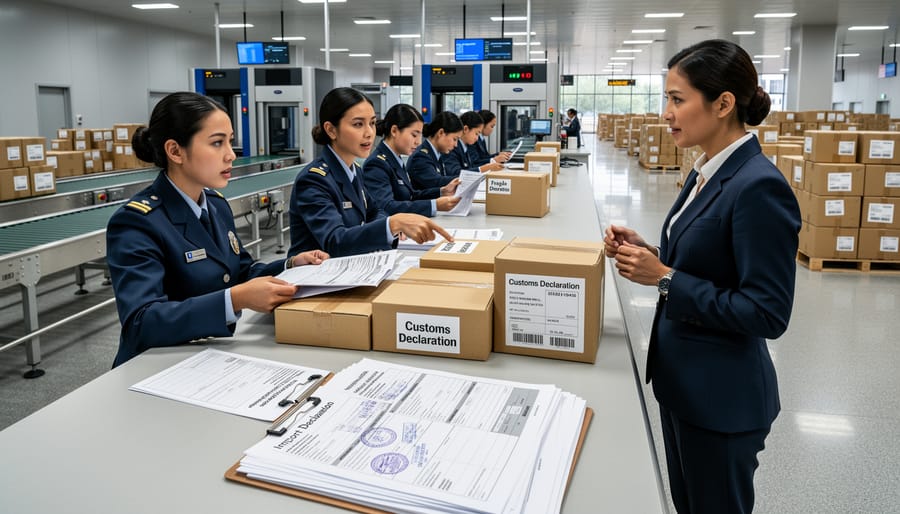
Customs is where things get serious. Customs officers enforce import laws and check for prohibited items, including substances banned in their country. This is where your CBD gets scrutinized. If you’re entering a country where CBD is legal, customs may wave you through without a second glance. If it’s restricted or banned, they’ll stop you.
When to speak up? If the country requires declarations for supplements or medications, declare your CBD. Better to volunteer the information with your documentation ready than get caught hiding it. If there’s no specific declaration requirement and you’re confident your CBD is legal, you can wait to be asked. Never lie if questioned directly, cooperation matters.
Customs officers can test your product. They may use field test kits to check THC content or send samples to a lab. If your CBD exceeds the country’s THC limit, even by a fraction, you’ll face consequences ranging from confiscation to fines or detention. Your certificate of analysis won’t override a failed test, but it can help explain a discrepancy or prove you made a good-faith effort to comply.
Stay calm and polite. Have your paperwork accessible in a clear folder. Answer questions directly without over-explaining. Don’t joke about drugs or contraband, customs officers hear it constantly and don’t find it funny. If you’ve followed the earlier airport security tips about packing and documentation, you’re already ahead of most travelers. Respect the process, and you’ll likely clear customs without drama.
Verification and Next Steps: Confirming You’re Good to Go
Before you head to the airport, take time to verify everything you’ve prepared, it’s far better to discover a problem now than at customs.
Start by contacting the destination country’s embassy or consulate directly. Don’t just rely on general web searches or forum posts. Email or call with your specific product details: the CBD oil brand, THC content from your certificate of analysis, and intended use. Request a written response if possible, which you can print and pack with your documentation. Some embassies maintain updated lists of controlled substances or can direct you to the relevant government agency that regulates CBD imports.
For your airline, don’t assume their website tells the whole story. Reach out through their official customer service channels, email, chat, or social media, and ask specifically about CBD oil in carry-on luggage. Save the conversation thread or take screenshots. Airline policies can differ from what TSA or airport security allows, and gate agents have final say on what boards the aircraft.
Before you finalize your packing, run through this verification checklist:
- Embassy or consulate has confirmed CBD oil status in writing
- Airline policy confirmation saved digitally and printed
- Backup plan identified if CBD must be abandoned
- Emergency contact information for your embassy or consulate at destination
Speaking of backup plans, consider your alternatives. Can you ship CBD to your destination address in advance through a service that specializes in legal cannabis products? Is CBD available for purchase where you’re going, even if it costs more? Would going without for the trip duration be manageable? These aren’t admissions of defeat, they’re sensible risk management, especially for countries with unclear or strict regulations. The stakes matter more when you travel with medical marijuana but CBD travelers face similar considerations.
If customs denies your CBD at your destination, stay calm and cooperative. Don’t argue about legality or insist you researched thoroughly. Customs officers have authority to seize items they deem prohibited, and challenging them risks escalating the situation. Politely ask if you can surrender the product rather than face penalties. If they insist on confiscation or fines, comply, document everything, and contact your embassy afterward if you believe your rights were violated. Know that in most Western countries, first-time CBD issues result in product seizure rather than arrest, but that’s not universal.
Common Questions About International CBD Travel
Travelers consistently ask the same questions when planning international trips with CBD, and the answers often determine whether they pack it or leave it behind. Here’s what you need to know about the most common scenarios.
Can I travel with CBD gummies or edibles internationally?
CBD gummies and edibles face stricter scrutiny than oils because they’re harder to verify and easier to confuse with regular THC edibles. Many countries that allow CBD oil specifically prohibit edibles, and customs officers can’t easily test them on-site, making confiscation more likely even with proper documentation.
What about CBD vape products?
CBD vape products carry double legal risk: CBD restrictions plus vaping device regulations. Some countries ban vaping entirely, while others have specific rules about liquid volumes and battery transport. Check both your destination’s CBD laws and general vaping regulations before you pack and fly compliant.
Do I need a prescription to travel internationally with CBD?
Requirements vary by country. Some nations only permit CBD with a valid prescription or medical documentation, while others allow it without one if THC content meets their limits. Always research your specific destination’s requirements and carry any relevant medical documentation even if not strictly required.
What happens if I accidentally forget CBD in my bag?
If you discover CBD in your bag before security, remove it. If found during screening, outcomes range from simple confiscation to potential arrest depending on the country. In zero-tolerance nations, claiming you forgot won’t prevent serious legal consequences.
The form of CBD matters more than many travelers realize. Capsules and tinctures typically receive more lenient treatment than edibles or topicals because they’re easier to test and verify. Pure CBD isolate powder is often the safest form for international travel since it contains no other cannabinoids, but it also raises more questions at customs because of its appearance.
Mailing CBD internationally is almost never advisable. International mail crosses customs just like checked luggage, and postal inspections can be more thorough. Many countries specifically prohibit importing cannabis products through mail, and you won’t be present to explain or provide documentation if your package gets flagged. Seizure is the best-case scenario; criminal charges can follow in strict jurisdictions.
One crucial point: transit countries apply their laws even if you never leave the airport. Your layover country’s CBD regulations matter as much as your final destination’s. A product legal at both your departure and arrival cities can still get you arrested during a connection if that country bans CBD.
The safest approach when unsure? Purchase CBD at your destination if it’s legal there, or go without during your trip. The inconvenience of doing without CBD for a week beats the potential consequences of violating international drug laws, which can include arrest, detention, fines, and travel bans that affect future trips.
Traveling internationally with CBD oil isn’t impossible, but it demands serious homework. Laws shift constantly, and what’s legal today might not be tomorrow, or might never have been legal in your transit country. Before you pack that bottle, verify current regulations through official government sources, not forums or outdated blog posts. Weigh whether bringing CBD is worth the potential consequences, because getting detained at customs isn’t a minor inconvenience.
If you’re uncertain about any aspect of your journey, err on the side of caution. Consider alternatives like purchasing at your destination or simply going without for the trip. The same careful approach applies to flying with vape devices or any product that sits in legal gray areas. Ultimately, respecting local laws isn’t just about avoiding trouble, it’s about being a responsible traveler who understands that your home country’s rules don’t apply everywhere.