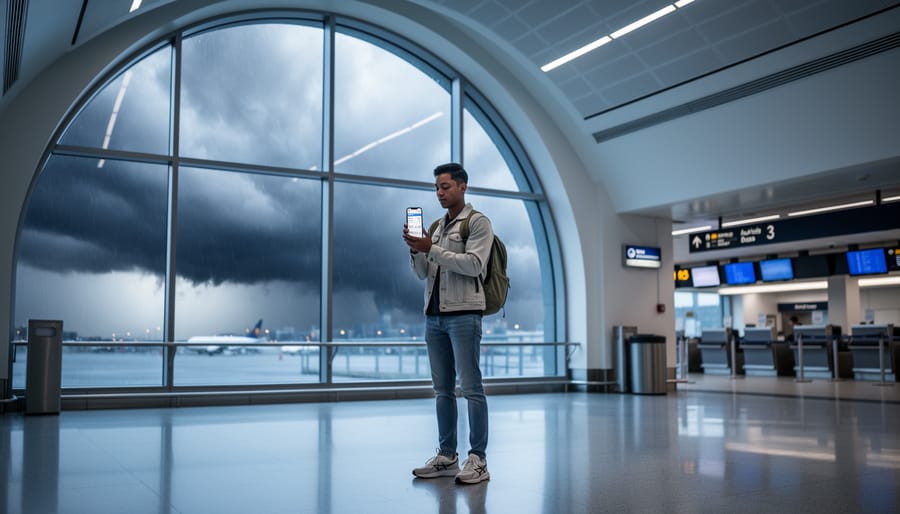
How to Check Your NYC Flight Status and Rebook During Delays
If your flight is touching down at or taking off from a New York City airport today, you need to know this: JFK is experiencing departure delays of 31 to 45 minutes (and climbing) due to thunderstorms, while arrival delays are holding at 15 minutes or less. LaGuardia and Newark are also on the FAA’s weather watch list, with Delta issuing advisories for summer weather impacts across all three airports plus several others in the Northeast corridor.
I’ve been stuck in enough airport delays to know that the hardest part isn’t the wait itself, it’s the uncertainty. You’re wondering if you should leave for the airport early, if your connection is toast, or if you should just reschedule altogether. Right now, the FAA has a Traffic Management Program active at JFK specifically because of weather and thunderstorms, meaning they’re actively controlling the flow of planes in and out.
The key is checking your specific flight status directly with your airline, not just the airport-wide reports. JFK’s real-time status page won’t tell you about your individual flight, and general delay numbers don’t account for which gates or routes are most affected. I learned this the hard way on a Boston-bound connection last summer when the airport board showed “normal operations” but my airline app had already canceled my flight two hours earlier.
Here’s what you can do right now to get ahead of the chaos, rebook if needed, and actually make it to your destination without camping out at the gate.
What You Need Before You Start
I learned this lesson the hard way during a snowstorm delay at LaGuardia three winters ago. I stood in a rebooking line for forty minutes before realizing I didn’t have my confirmation number memorized, my phone was at 12% battery, and I had no idea which other NYC airports might have available flights. Don’t be that traveler.
Before you start checking flight status or exploring rebooking options, gather these essentials:
- Your flight confirmation number (6-character alphanumeric code from your booking email)
- The airline’s mobile app downloaded and logged in, or their website bookmarked
- Your three-letter airport code: JFK, LGA, or EWR
- Customer service phone numbers for your airline saved in your contacts
- A list of alternative departure airports in the NYC area
- Your frequent flyer number if you have elite status (it helps with rebooking priority)
Keep your phone charger accessible. During weather delays affecting multiple NYC airports simultaneously, you’ll be refreshing status pages and potentially spending time on hold with customer service. A dead phone turns a manageable delay into a crisis.
If you’re traveling with companions on separate reservations, make sure you have their confirmation numbers too. Airlines can’t always see or modify bookings that aren’t linked, and splitting up to tackle different rebooking options works better when everyone has the necessary information ready.
When Not to Wait: Recognizing Serious Delay Situations
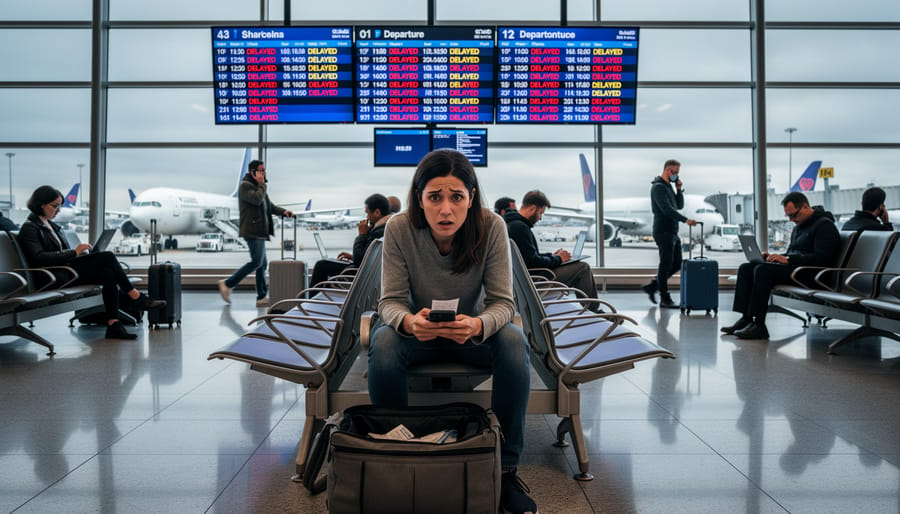
Not every delay means you should stick around the airport. Sometimes the smartest move is cutting your losses early and switching to Plan B.
A ground delay means flights are held at their origin airport, usually at the gate or on the taxiway. Your plane is there, your crew is ready, but air traffic control won’t let you take off yet because of weather or congestion at your destination. These typically resolve within hours. A cancellation means the flight isn’t happening at all, and the airline has pulled it from the schedule. Once you see “cancelled” instead of “delayed,” you’re no longer waiting for the same flight, you’re fighting for a seat on a different one entirely.
If your delay hits the three-hour mark with no concrete departure time, stop waiting and start exploring refunds. Airlines won’t advertise this, but you have leverage once delays stretch that long. Same goes if you see multiple delays stacking up throughout the day on your route, that’s a sign of cascading problems that won’t fix themselves quickly. When crews time out (pilots and flight attendants max out their legally allowed work hours), your delay can instantly become a cancellation with no replacement crew available for hours or even until the next day.
Watch for severe weather advisories that specifically mention prolonged impact. The current thunderstorm situation affecting JFK, LGA, and EWR is creating delays between 31 and 45 minutes, which is manageable. But if you see advisories predicting severe conditions lasting six-plus hours or expanding to cover the entire Northeast corridor, that’s different. During a previous East Coast weather event, I watched passengers rebook onto evening flights that also got cancelled because the storm system hadn’t moved. Similar patterns happen with NYC’s notorious summer thunderstorms, they can park over the region and create problems that last well into the next day.
Crew timeout issues are your biggest red flag. If gate agents mention crew availability problems or you notice multiple flights on the departure board showing “crew” as the delay reason, that’s structural trouble the airline can’t quickly fix. Unlike thunderstorm delay help where weather eventually clears, crew shortages require flying in replacement staff or waiting for mandatory rest periods to end. At that point, pursuing a refund and alternative transportation makes more sense than hoping for a miraculous turnaround.
Step-by-Step: Checking Your Flight Status During NYC Delays
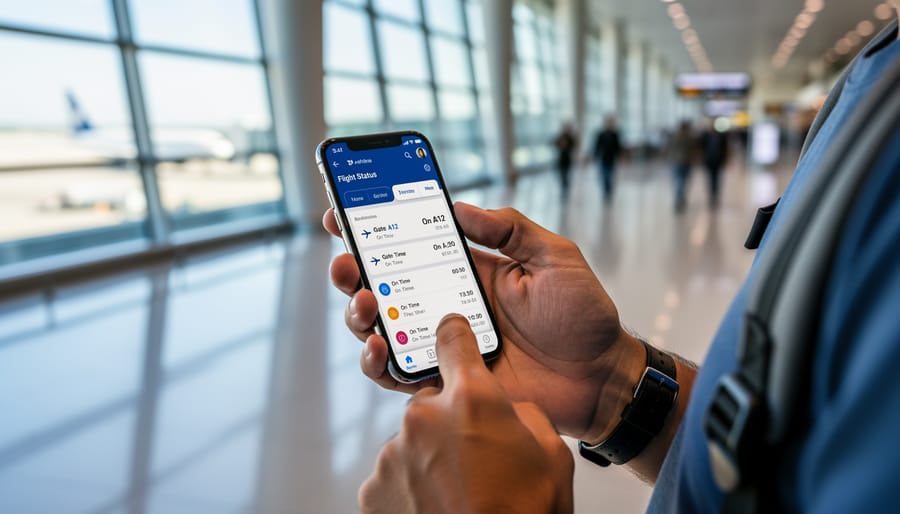
Check the Airport-Wide Status First
Before diving into your specific flight, start with the big picture: is there a systemic issue affecting all NYC-area airports right now? Head to the FAA’s Air Traffic Control System Command Center website and look for the “Delays by Destination” section. As of today, August 11, 2026, thunderstorms have triggered a Traffic Management Program at JFK, with departure delays ranging from 31 to 45 minutes and climbing. Arrival delays are lighter at 15 minutes or less, but that gap tells you the ground operations are overwhelmed.
The FAA groups New York delays under three airports: JFK, LaGuardia, and Newark. If you’re flying out of Newark specifically, you can check Newark status separately since each airport handles weather differently. The current alert mentions “TM Initiatives:SWAP:WX,” which is FAA shorthand for weather-related swap programs that reroute traffic around storm cells. This system-wide view won’t tell you if your individual flight is delayed, but it confirms whether the disruption is real and how severe it’s gotten across the region.
Confirm Your Specific Flight Is Affected
Just because JFK is experiencing system-wide delays doesn’t guarantee your specific flight is stuck on the ground. I learned this the hard way years ago when I rushed to rebook during a weather alert, only to discover my airline had swapped aircraft and my flight departed on time while I was on hold with customer service.
The FAA’s airport status page shows general conditions, but JFK status not flight-specific means you need to verify with your airline directly. Head to your carrier’s website or app and search for your flight number. Delta, for instance, currently has weather advisories covering JFK, LGA, and EWR, but that doesn’t mean every Delta departure is delayed equally.
Your airline’s flight status tool will show whether your particular aircraft is caught in the taxi delays or if it’s exempt from the current ground stop. Download your airline’s app if you haven’t already, it’s the fastest way to track flight delays and get push notifications when your status changes. Check both the departure and arrival airports, since delays can originate from either end.
Understanding Delay Times and Causes
When you see “TM Initiatives:SWAP:WX” on the FAA website, you’re looking at shorthand that tells you exactly why flights are delayed. “TM” stands for Traffic Management, “SWAP” means a Severe Weather Avoidance Plan is active, and “WX” is aviation speak for weather. Basically, air traffic control is rerouting planes around thunderstorms, which slows everything down.
Understanding the difference between delay types matters for planning. Gate hold delays mean your plane is stuck at the gate waiting for clearance, currently 31 to 45 minutes at JFK and increasing as weather persists. Taxi delays happen after pushback when aircraft queue for takeoff. Airborne delays affect incoming flights already in the air, currently running 15 minutes or less at JFK, which sounds minor but compounds when you have a tight connection.
Set realistic expectations: if the FAA lists delays as “increasing,” don’t assume your 45-minute delay stays at 45 minutes. Weather patterns shift, and what starts as a brief hold can stretch into hours if thunderstorms stall over the region.
Your Rebooking and Alternative Options
Once you’ve confirmed your flight is delayed, don’t just sit at the gate refreshing the departure board. You have more options than you think, and acting quickly gives you the best shot at getting out today.
Your first move should be opening your airline’s app or calling their customer service line while you’re still checking the status. Most carriers let you request same-day flight changes when weather causes delays, often waiving change fees. The key is acting before everyone else in your terminal has the same idea. I learned this the hard way during a summer storm at LaGuardia three years ago, when I waited too long and ended up on a standby list with forty other people.
- Request a same-day flight change to a later departure from the same airport, which many airlines allow without fees during weather events
- Ask to be placed on standby for earlier flights that might have open seats from cancellations
- Consider switching to a different NYC airport: JFK, LaGuardia, and Newark are only 15-30 miles apart, and one might have better conditions
- Check if your airline flies your route from multiple NYC airports and request a transfer to the less-affected one
- Look at alternative transportation for shorter trips: Amtrak runs frequently to Boston, Philadelphia, and Washington when flights to those cities are delayed
The airport-switching strategy saved me during that LaGuardia storm. When I saw the delays mounting, I called and switched my LGA flight to a JFK departure three hours later. LaGuardia stayed socked in all evening, but JFK cleared up by late afternoon, and I made it home that night instead of sleeping in the terminal.
If you’re heading to Boston, Philadelphia, or anywhere else the FAA listed in today’s thunderstorm advisory, consider that those destinations are dealing with the same weather system. Sometimes it makes more sense to wait out the storms entirely rather than jumping to an earlier flight that will just circle the destination airport burning fuel. Ask the gate agent or phone representative about conditions at your arrival airport before you commit to a new flight.
How to Verify Your New Flight and Confirm You’re Set
Getting a new flight number isn’t the finish line. I learned this the hard way when I thought I’d successfully rebooked during a Chicago snowstorm, only to arrive at the gate and discover the system never processed my change.
Once you’ve rebooked, you should receive an email or text confirmation within 5-10 minutes. If nothing arrives, pull up your airline’s app or website and navigate to “Manage Trips” or “My Trips.” Your new flight details should appear there, replacing the old ones. If you still see your original delayed flight listed, the rebooking didn’t complete. Call the airline immediately rather than assuming it went through.
Next, check whether your replacement flight is experiencing delays too. Since the FAA’s current Traffic Management Program affects multiple NYC airports due to thunderstorms, your new flight could be caught in the same weather pattern. Use the same FAA “Delays by Destination” tool you used earlier to verify general airport conditions, then confirm your specific flight status with your airline.
Set up flight status alerts through your airline’s app so you’ll get real-time updates if conditions change. Given that JFK is currently seeing gate hold delays increasing beyond 31-45 minutes and the FAA predicts continued thunderstorm activity across JFK, LGA, and EWR, monitoring is essential.
Check weather forecasts for the NYC area throughout the day. If thunderstorms are expected to persist or intensify, your replacement flight may face similar issues. While you can’t claim weather delay compensation knowing what to expect helps you plan backup options rather than getting stranded at the airport again.
Common Questions About NYC Flight Delays
How long do weather delays typically last at NYC airports?
Most thunderstorm-related delays like the current ones at JFK, LGA, and EWR last between one and three hours, though they can stretch longer if weather systems stall over the region. The current taxi delays at JFK are running 31 to 45 minutes and increasing, which gives you a realistic baseline for planning.
Can I get compensation for weather delays?
No, airlines aren’t required to compensate passengers for weather delays since they’re considered extraordinary circumstances beyond the carrier’s control. However, many airlines will waive change fees and help you rebook without penalty when weather advisories are in effect, like Delta’s current flexibility for NYC-area airports.
What’s the difference between delays at JFK, LGA, and EWR?
All three airports often experience similar weather delays since they’re geographically close, but JFK typically handles more international flights and has longer taxi times even without delays. Right now the FAA lists all three NYC airports under the same thunderstorm warning, though JFK’s current delays are specifically cited at 31-45 minutes while the others may vary.
Should I still go to the airport during a delay?
Yes, unless your flight is explicitly cancelled. Airlines can release delayed flights earlier than expected if weather clears, and you risk losing your seat entirely if you’re not present when they’re ready to board. I’ve seen delays shrink from two hours to twenty minutes when storms pass quickly.
The timing question matters most when you’re deciding whether to leave for the airport or wait at home. During my Philadelphia connection nightmare a few years back, I watched passengers miss their rebooked flights because they assumed delays would hold steady. Weather patterns shift fast, especially summer thunderstorms that roll through the NYC area. If your flight shows any delay under three hours, treat your original departure time as the moment you need to be at the gate.
The compensation question frustrates travelers, but understanding the distinction helps set realistic expectations. Weather delays fall into the “act of God” category that releases airlines from financial responsibility. What you can push for is flexibility on rebooking fees and change penalties, which most carriers waive automatically during widespread weather events like the current Traffic Management Program affecting JFK. Don’t waste energy demanding meal vouchers or hotel rooms for weather delays, focus instead on getting yourself onto the next available flight without paying extra for the privilege.
NYC flight delays don’t have to derail your entire trip. The difference between a minor inconvenience and a travel nightmare usually comes down to how quickly you check your status and how many backup options you know about. I’ve watched travelers panic at JFK because they waited until they arrived at the airport to discover their flight was delayed three hours, while those who checked the FAA website from home already had standby seats on earlier flights.
Weather delays like the current thunderstorms affecting JFK, LGA, and EWR are frustrating precisely because they’re unpredictable, but you can control your response. Stay flexible, keep your airline’s customer service number saved in your phone (not buried in an email confirmation), and remember that switching airports or rebooking for the next day sometimes beats sitting in a terminal for six hours. You’ve got the tools now to handle whatever NYC’s skies throw at you.