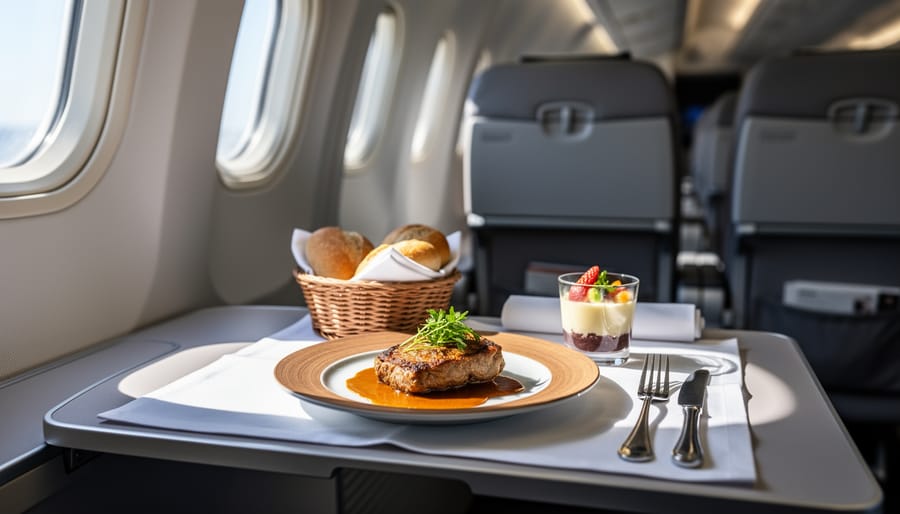
What Airlines Serve Meals? 9 Airlines with the Best In-Flight Dining in 2026
If you’re wondering which airlines still serve complimentary meals in 2026, Air Canada and Emirates lead the pack for travelers who want full-service dining without reaching for their wallet. We’ve flown with dozens of carriers to evaluate meal policies, food quality, and advance ordering options, and the results make it clear: the gap between complimentary and buy-on-board airlines has widened dramatically.
Air Canada stands out for North American routes, offering complimentary hot meals with warm bread and dessert on flights into or out of Canada, plus a rotating menu of more than 100 seasonal recipes. Their pre-order window (24 hours before departure) gives you control over dietary preferences without the last-minute scramble. For transatlantic and long-haul routes, carriers like Emirates, Singapore Airlines, and Japan Airlines deliver restaurant-quality dishes that justify the higher ticket price, especially in premium cabins where meal service becomes part of the experience.
Budget carriers and many U.S. domestic airlines have shifted entirely to purchase-only models, so knowing who serves what before you book matters more than ever. We’ve tested meal quality across economy and business cabins, compared advance ordering systems, and cataloged which airlines treat food as an amenity versus an upsell. This guide breaks down nine top-performing carriers with transparent policies, real menu examples, and practical advice for securing the best meal on your next flight.
How We Chose This List
We built this list by evaluating airlines across seven criteria that directly impact the meal experience passengers actually receive on board. First, we examined meal inclusion policies, whether food is complimentary or purchase-only, and on which routes. This matters because discovering mid-flight that your carrier charges for sandwiches can sour an otherwise pleasant journey.
Quality and freshness standards came next. We looked at how airlines source ingredients, rotate menus, and maintain consistency across flights. Air Canada’s 100-plus new seasonal recipes and the careful selection standards for their Bistro items set a benchmark we used when assessing other carriers.
Menu variety and special dietary accommodations proved crucial. Airlines that offer rotating options, regional cuisine, and genuine choice for vegetarian, vegan, gluten-free, and religious diets scored higher than those serving identical meals month after month.
We also weighted pre-order flexibility, examining advance booking windows like Air Transat’s 72-hour meal selection and Air Canada’s 24-hour special meal requests. Finally, we considered cabin class differences and verified passenger feedback to ensure our picks deliver consistently across the routes they serve, not just in premium cabins on flagship flights.
What to Watch For
Route length matters more than you might expect when it comes to airline meals. Most carriers reserve complimentary hot meals for flights over a certain distance, typically three to four hours, while shorter hops offer snacks or purchase-only options. We’ve found that the same airline can deliver vastly different experiences depending on whether you’re flying domestic or international.
Pre-ordering windows are another critical detail that catches travelers off guard. Air Canada requires special meal requests 24 hours in advance, while Air Transat extends that to 72 hours for departures before October 31, 2026. Missing these cutoffs means you’re stuck with standard options or whatever’s left after other passengers choose. We recommend setting a calendar reminder as soon as you book your ticket, especially if you have dietary restrictions or strong preferences about your meal selection.
I still remember the first time an airline meal genuinely impressed me. On a long-haul flight back from Tokyo, I was served a beautifully plated dish with fresh ingredients, thoughtful seasoning, and a presentation that rivaled some restaurants on the ground. That experience transformed what could have been an exhausting journey into something memorable, and it taught me an important lesson: the right meal service doesn’t just fill your stomach, it makes the flight itself part of the experience.
In 2026, not all airlines approach in-flight dining the same way. Some carriers have elevated their offerings with rotating seasonal menus and chef-curated selections, while others have scaled back to purchase-only models or minimal service. For travelers planning their next trip, understanding which airlines serve meals, and more importantly, which ones serve them well, can make a real difference in comfort and satisfaction.
After evaluating meal policies, menu innovations, and passenger feedback across major carriers, we’ve identified nine airlines that consistently deliver exceptional in-flight dining experiences. Air Canada stands out for its complimentary full-service approach with over 100 new seasonal recipes launched this year, while Air Transat excels with a generous 72-hour meal pre-order window for Club Class passengers. Emirates and Singapore Airlines continue setting the standard for premium cabin luxury and culinary excellence, respectively.
This guide breaks down the best in-flight meals across carriers, examining what each airline offers, how their service models work, and which routes provide complimentary versus purchase options. Whether you’re booking long-haul international travel or shorter regional flights, you’ll find practical insights to help you choose airlines where the food genuinely adds value to your journey.
Quick Comparison: Airlines That Serve Meals
After testing in-flight dining across these carriers, we’ve compiled a side-by-side breakdown that cuts through the marketing and shows you what each airline actually delivers. This table captures the essential differences in meal policies, service scope, and flexibility.
| Airline | Complimentary Meals | Cabin Classes | Pre-Order Window | Menu Highlights |
|---|---|---|---|---|
| Air Canada | Yes (flights into/out of Canada) | All classes; purchase available | 24 hours | 100+ rotating seasonal recipes |
| Air Transat | Club Class | Club Class only | 72 hours | Vegetarian and non-vegetarian options |
| Emirates | Yes (international long-haul) | All classes; premium standout | Varies by route | Multi-course luxury dining |
| Singapore Airlines | Yes (long-haul) | All classes; Book the Cook | 24 hours minimum | Chef-curated regional cuisine |
| Japan Airlines | Yes (international) | All classes | 24 hours minimum | Authentic Japanese seasonal dishes |
| Turkish Airlines | Yes (most routes) | All classes | 24 hours | European-Middle Eastern fusion |
The carriers in the lower half of our rankings, Cathay Pacific, Lufthansa, and Etihad, also offer complimentary service on applicable routes, with strong showings in premium cabins. What stands out most from our testing is the dramatic difference in pre-order flexibility, with Air Transat’s 72-hour window giving travelers meaningful time to plan while others require last-minute decisions.
How We Ranked These Airlines
We ranked these airlines by evaluating eight specific factors that matter most when you’re hungry at 35,000 feet. Our assessment started with the most fundamental question: does the airline provide meals as part of your ticket, or do you have to pay extra? We then dug into quality markers that separate memorable dining from forgettable trays.
Meal inclusion policies topped our list because nobody wants surprise charges mid-flight. We prioritized carriers offering complimentary service, though we also recognized airlines with thoughtfully curated purchase options when the quality justified the cost. Air Canada’s model illustrates this well: complimentary full meals on routes into or out of Canada (salad, warm bread, hot entrée, dessert) plus their carefully selected Bistro menu for purchase on other flights.
- Complimentary service vs. purchase model
- Whether meals are included in your ticket price or available only for purchase. Airlines with complimentary service typically offer better value and eliminate mid-flight payment hassles.
- Pre-order window
- How far in advance you can request your meal, ranging from 24 hours (Air Canada’s special meal deadline) to 72 hours (Air Transat’s selection window for departures before October 31, 2026). Longer windows give you better choice and reduce onboard disappointment.
- Special meals
- Accommodations for dietary restrictions including vegetarian, vegan, gluten-free, and religious requirements. The best airlines make ordering these straightforward and deliver them reliably.
- Cabin-class dining
- Differences in meal service between economy, premium economy, business, and first class. Some carriers reserve their best offerings for premium cabins while others maintain high standards across all classes.
- Seasonal menu rotation
- How frequently airlines refresh their offerings to prevent monotony for frequent travelers. Air Canada’s launch of over 100 new rotating seasonal recipes in 2026 exemplifies this commitment to variety.
Quality and freshness standards mattered enormously in our evaluation. We looked for airlines using fresh ingredients, preparing food shortly before service rather than relying on heavily processed meals, and maintaining proper temperature control. Menu variety counted heavily too, carriers rotating their selections monthly or seasonally scored higher than those serving identical options year-round.
We weighted cabin-class differences because your ticket determines your dining experience. Air Transat’s Club Class, for instance, offers choice between vegetarian and non-vegetarian options for breakfast, lunch, and dinner, while economy passengers receive a different service level. The best airlines maintain respectable standards even in economy rather than reserving all culinary effort for premium cabins.
Pre-order flexibility proved critical for travelers with dietary restrictions or strong preferences. We favored airlines allowing advance meal selection with reasonable notice periods, giving you control rather than accepting whatever’s left when the cart reaches your row.
Finally, we consulted real passenger feedback from travelers who’ve actually eaten these meals. Online reviews, travel forums, and firsthand accounts helped us separate marketing promises from plate reality. This combination of policy research and lived experience shaped our final rankings.
Top 9 Airlines for In-Flight Meals
1. Air Canada, Best for Complimentary Full-Service Dining
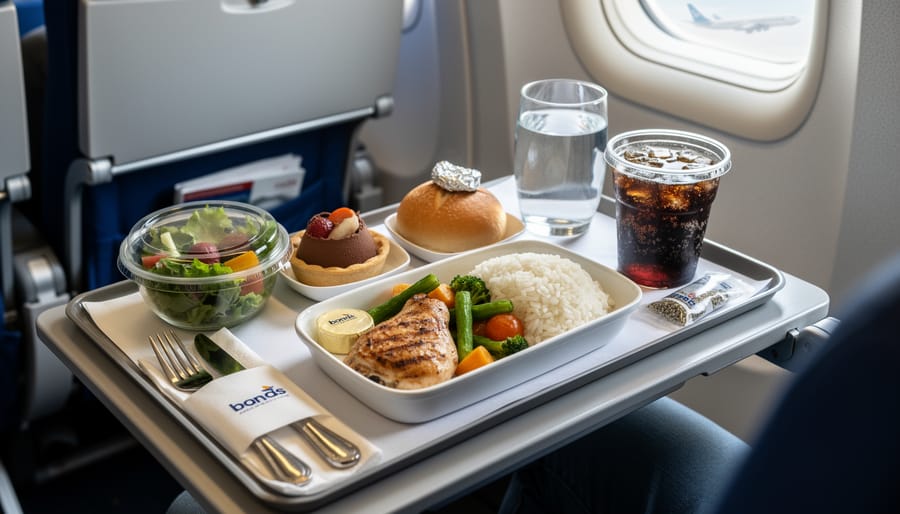
I’ll never forget the flight from Toronto to London when the cabin crew placed a tray in front of me with a proper linen napkin and real cutlery. What followed was a three-course meal that honestly rivaled some restaurants I’ve visited, crisp salad, warm bread with butter, a perfectly-seasoned chicken entrée, and a decadent chocolate dessert. That was Air Canada, and it reminded me that complimentary doesn’t have to mean mediocre.
Air Canada stands out because they’ve made full-service dining standard on flights into or out of Canada, no matter which economy cabin you’re sitting in. You’re not choosing between a bag of pretzels and going hungry. Instead, you get salad, warm bread, a hot entrée, and dessert as part of your ticket. The presentation feels intentional, and the portions are generous enough that you’re not left searching for snacks an hour later.
What impressed me most during recent flights was the variety. Air Canada launched more than 100 new rotating seasonal recipes in 2026, which means you’re less likely to encounter the same reheated pasta on every trip. The menu changes keep things interesting, especially for frequent travelers who’d otherwise face culinary monotony at 35,000 feet. On applicable routes, they also serve a light meal or hot snack before landing, a thoughtful touch that prevents you from arriving famished at your destination.
If you have dietary restrictions, Air Canada allows you to pre-order special meals up to 24 hours before departure. That window is tighter than some competitors, so you need to plan ahead, but it’s manageable if you’re organized. I’ve seen vegetarian, vegan, gluten-free, and religious meal options accommodated without fuss.
For routes where complimentary service isn’t offered, the Air Canada Bistro provides meals and snacks for purchase. The airline emphasizes that these items are carefully selected for quality and freshness, which I’ve found holds true, the Bistro options taste leagues better than the stale sandwiches you might find elsewhere. You’re paying out of pocket, but at least the food is decent.
Air Canada won’t dazzle you with caviar service or tableside presentations, but they deliver consistent, satisfying meals that make long flights feel less grueling. That’s exactly what most travelers actually need.
2. Air Transat, Best for Pre-Flight Meal Selection
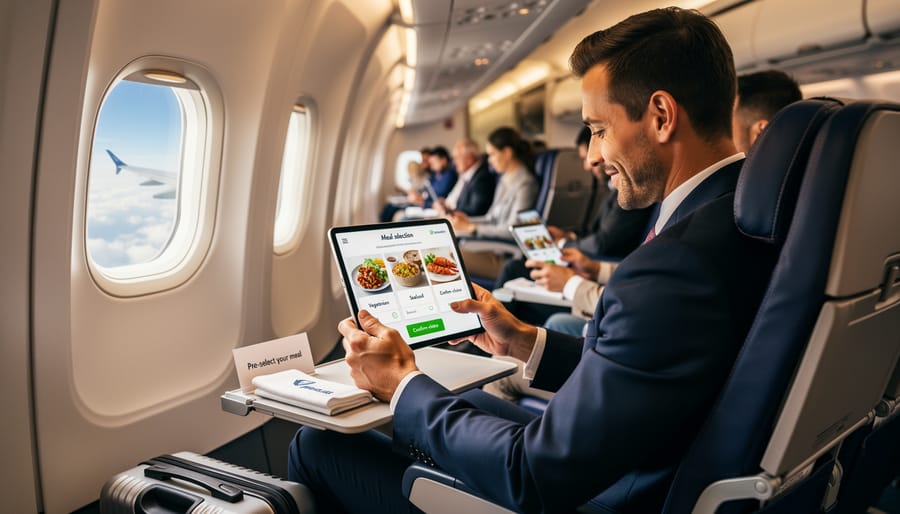
Air Transat stands out for giving passengers genuine control over their dining experience. We found their advance meal selection process remarkably straightforward, eliminating the usual gamble of whether you’ll end up with a meal you actually want to eat.
In Club Class, you’ll choose between vegetarian and non-vegetarian options for breakfast, lunch, or dinner depending on your flight timing. The selection isn’t vast, but it covers the essentials well. What makes this system work is the timing: you can pre-order meals 72 hours before departure on flights leaving before October 31, 2026. That three-day window beats the industry standard by a comfortable margin, giving you time to think about your choice rather than rushing a decision during online check-in.
The vegetarian options deserve mention because they’re proper meals, not afterthoughts. We’ve had quinoa bowls with roasted vegetables that actually tasted fresh, and pasta dishes with real seasoning. The non-vegetarian selections typically include chicken, beef, or fish prepared with care rather than the generic “chicken or pasta” monotony many carriers offer.
Here’s how to make the most of this system: log into your booking at least 72 hours out and browse the available choices. If you have dietary restrictions beyond vegetarian, contact Air Transat’s customer service when you book rather than hoping something suitable appears in the pre-order menu. The airline accommodates special needs, but they need advance notice to prepare properly.
One practical advantage we noticed: pre-ordering guarantees you’ll get a meal, full stop. On flights where meal service runs short, passengers who selected in advance are served first. That certainty is worth the two minutes it takes to make your choice online.
3. Emirates, Best for Premium Cabin Luxury
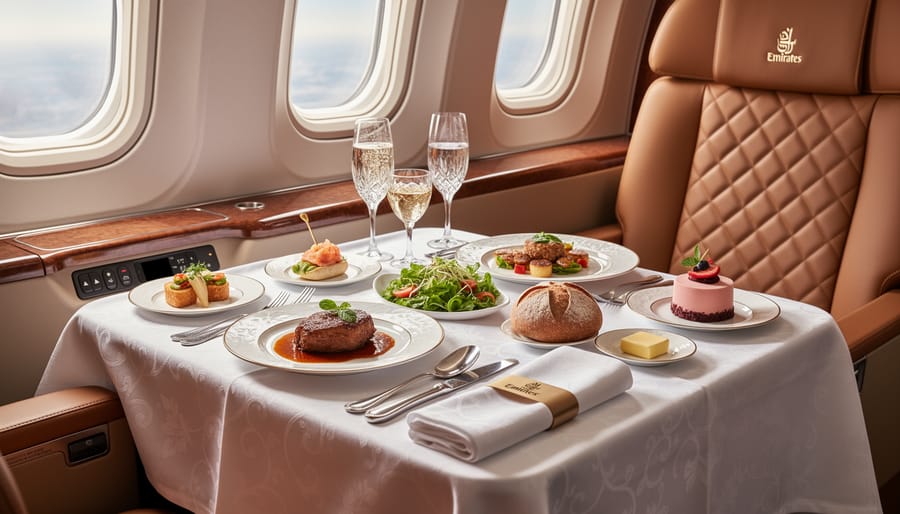
When we think about airlines that have truly elevated in-flight dining into an art form, Emirates consistently stands at the top. Flying their business or first class on long-haul international routes feels less like airline travel and more like dining at a high-end restaurant that happens to be cruising at 40,000 feet.
We’ve found that Emirates doesn’t just serve meals, they orchestrate multi-course dining experiences. In business class, you’ll start with a selection of appetizers, move through a substantial main course with several protein options, and finish with a proper dessert course and cheese selection. First class takes this further with dine-on-demand service, meaning you order what you want, when you want it, throughout the flight. The onboard lounge in their A380 aircraft adds another dimension entirely, where passengers can socialize over canapés and premium beverages between courses.
The quality consistently impresses us. Emirates partners with top chefs to design their menus, and the presentation rivals what you’d find in upscale restaurants on the ground. Ingredients are fresh, proteins are cooked properly (a rarity at altitude), and flavor profiles show careful attention to both Western and Middle Eastern culinary traditions. Vegetables maintain their texture, sauces have depth, and breads arrive warm.
What sets Emirates apart isn’t just the food itself but the complete premium cabin experience they’ve built around it. White tablecloths, real glassware, attentive service that feels genuine rather than scripted, these details matter on flights that can stretch twelve hours or longer. If you’re investing in a premium cabin ticket for a major international journey, Emirates delivers meal service that justifies the cost. Their reputation for culinary excellence isn’t marketing hype; it’s what we’ve consistently experienced in the air.
4. Singapore Airlines, Best for Culinary Excellence
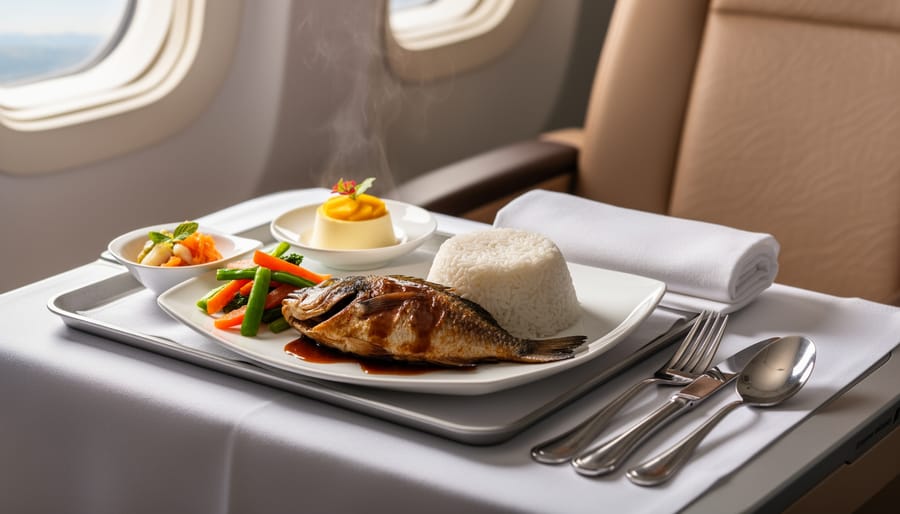
Singapore Airlines has earned its place among aviation’s culinary elite by treating in-flight dining as an art form rather than an afterthought. We’ve consistently found their meal service transforms long-haul flights into anticipated dining events, and that reputation rests on genuine substance.
The carrier’s signature Book the Cook service sets them apart. Available in premium cabins on most long-haul routes, this program lets you browse an extended menu of chef-crafted dishes weeks before departure and reserve your exact entrée. Instead of hoping the crew doesn’t run out of your preferred option mid-service, you’re guaranteed your first choice. The selections go far beyond typical airline fare: think lobster thermidor, Indian curries with proper depth of flavour, and Japanese dishes that respect traditional preparation methods.
Singapore Airlines partners with a rotating panel of internationally acclaimed chefs who design menus that change seasonally. These aren’t celebrity endorsements slapped on generic meals. The chefs work directly with the airline’s culinary team to develop recipes that hold up at altitude, where taste perception shifts and logistical constraints multiply. We’ve noticed the attention to regional authenticity, whether that’s a proper rendang with complex spice layers or French dishes that don’t taste like they’ve been dumbed down for mass production.
Even in economy, the standard meal service outpaces many competitors. Portions feel generous without being excessive, ingredients taste fresh rather than freezer-burned, and the presentation shows care. The carrier understands that good food does more than fill stomachs on a twelve-hour flight. It turns a cramped seat into something closer to an experience worth remembering.
5. Japan Airlines, Best for Authentic Regional Cuisine
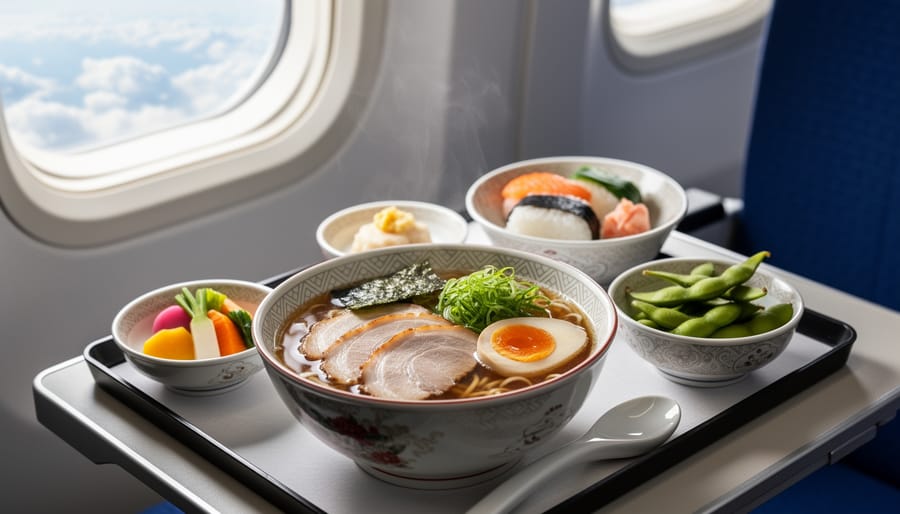
Japan Airlines stands out for passengers seeking an authentic taste of Japan at 35,000 feet. We found their commitment to regional cuisine transforms the typical airline meal into a genuine cultural experience, particularly on long-haul international routes where the carrier showcases its culinary heritage.
The airline’s signature approach centers on seasonal ingredients sourced from Japanese suppliers, ensuring dishes reflect what’s fresh and traditional in different times of the year. Rather than simply offering generic Asian options, JAL partners with established Japanese chefs who design menus around authentic preparation methods and flavor profiles. The difference shows immediately: presentations mirror what you’d find in a quality Tokyo restaurant, and the attention to detail extends from the ceramic dishware to the way rice is prepared.
JAL’s SkyTime dining program deserves special mention. It allows premium cabin passengers to order main courses when they’re actually ready to eat rather than following a rigid service schedule. This flexibility means you can sleep through the initial meal service and still enjoy a hot, freshly prepared dish later in the flight. The program works particularly well for travelers adjusting to time zone changes who might not be hungry when the cart first rolls by.
What elevates JAL’s service beyond novelty is the balance between authenticity and accessibility. The menus include familiar Japanese staples such as grilled fish with seasonal vegetables, soba noodles, and carefully seasoned chicken, but they’re prepared in ways that honor traditional techniques. Even Western options on their menus often incorporate Japanese touches.
For travelers who appreciate food as part of the journey rather than just fuel, JAL delivers a meal experience that feels intentional and culturally grounded rather than mass-produced.
6. Turkish Airlines, Best for Menu Variety
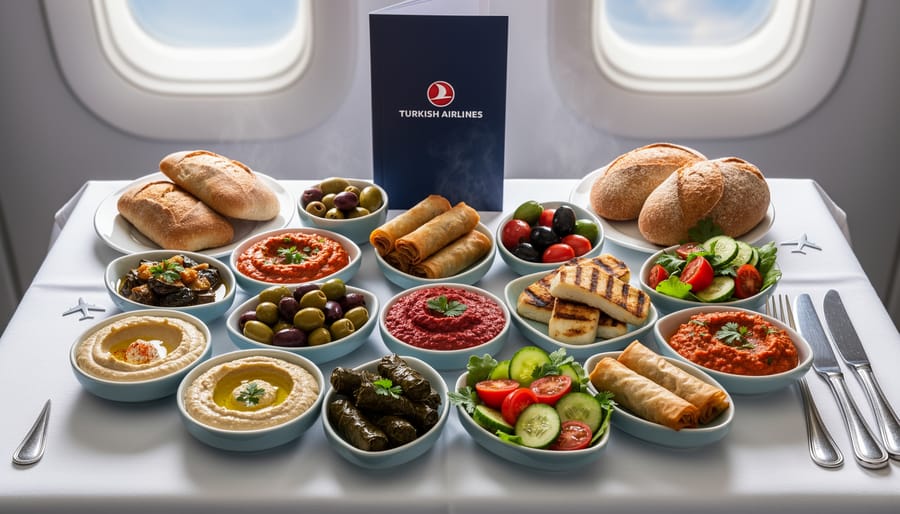
Turkish Airlines consistently earns recognition for one of the most diverse in-flight dining programs we’ve encountered, with menus that rotate monthly to keep frequent flyers from experiencing meal fatigue. Unlike carriers that settle into predictable patterns, Turkish approaches each month as an opportunity to showcase different dishes, meaning you’re unlikely to see the same entrée twice if you fly them regularly throughout the year.
What sets Turkish apart is their confident fusion of European and Middle Eastern culinary traditions. We’ve enjoyed meals that pair familiar Western cooking techniques with Turkish spices and ingredients, creating dishes that feel both approachable and distinctly regional. Their meze-style appetizers often feature authentic Turkish flavors, think stuffed grape leaves, hummus variations, and marinated vegetables, while main courses might include anything from herb-crusted lamb to seafood prepared with Mediterranean influences. Breakfast service typically offers both continental options and traditional Turkish items like simit bread and white cheese.
The carrier extends complimentary meal service across economy, business, and first class on international flights, with portion sizes and presentation varying by cabin but quality remaining consistent. Business class passengers receive multi-course service with more elaborate plating, while economy travelers still get a full meal with bread, salad, hot entrée, and dessert, not the scaled-back trays some competitors offer.
Our practical tip: don’t skip the Turkish-specific dishes in favor of safer Western choices. The airline takes pride in their regional offerings, and these are typically where the kitchen’s strengths shine brightest. The köfte, börek, and kebab variations we’ve tried onboard have been genuinely flavorful rather than watered-down airline versions.
7. Cathay Pacific, Best for Asian-Fusion Options
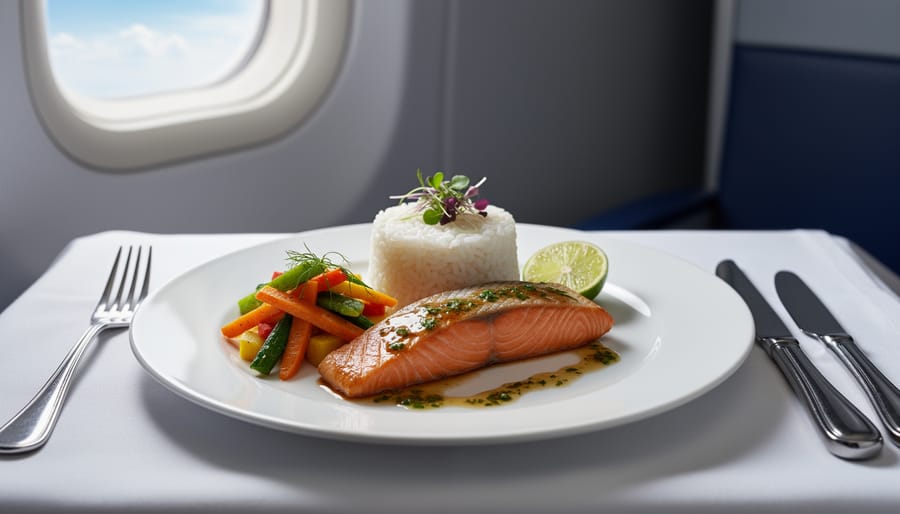
We’ve flown Cathay Pacific dozens of times across their network, and what keeps us coming back is how they’ve mastered the balance between East and West on a plate. While other carriers choose one culinary direction or the other, Cathay weaves both traditions together in ways that actually work.
Their economy menu might pair a classic beef bourguignon with jasmine rice and Asian greens, or offer congee alongside a Western omelette at breakfast. Business class takes this fusion approach further, we’ve enjoyed dishes like pan-seared cod with miso glaze served alongside roasted vegetables, and wok-fried noodles that sit comfortably next to European-style appetizers on the same tray. The kitchen doesn’t force the combination; they let each dish speak in its own voice while creating a coherent meal experience.
What sets Cathay apart in our testing is their ingredient sourcing philosophy. The carrier works directly with regional suppliers to secure fresh produce, proteins, and pantry staples that match their quality standards. You taste the difference in sharper vegetables, more flavorful sauces, and proteins that haven’t been processed into oblivion. Their chicken actually tastes like chicken, their bok choy has bite, and their noodles maintain proper texture even at altitude.
Special dietary needs get serious attention. We’ve seen vegetarian passengers receive genuinely appealing meals, not afterthoughts, featuring tofu and vegetable preparations that would stand alone in any context. Cathay accommodates vegan, gluten-free, Hindu, Muslim, kosher, and other dietary requirements when you request them during booking. The advance notice matters; these aren’t pulled from a freezer but prepared as part of the regular galley workflow.
If you value meals that respect multiple culinary traditions without diluting either, Cathay delivers consistently across their route network.
8. Lufthansa, Best for European Travelers
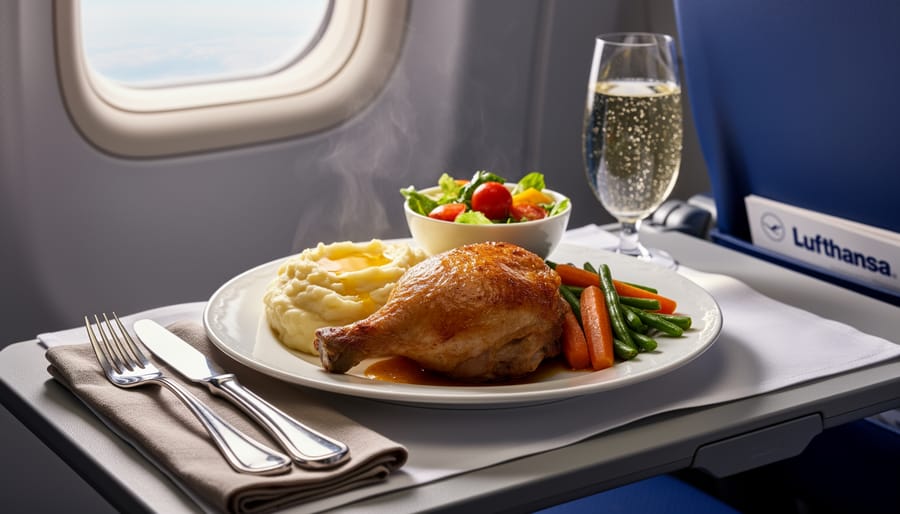
Lufthansa brings a distinctly European sensibility to airline dining, and if you’re flying across the Atlantic or to destinations throughout Europe, their approach to in-flight meals strikes a practical balance between quality and efficiency. We found their long-haul service particularly reliable for travelers who appreciate German culinary traditions without excessive fuss.
On intercontinental flights, Lufthansa provides complimentary meal service that reflects both European and international tastes. Expect warm bread, seasonal salads, and entrées that often incorporate German favorites like sausages, spaetzle, or schnitzel alongside more universal options. The presentation is straightforward rather than theatrical, but the ingredients are consistently fresh and the portions satisfying. Their wine selection leans toward European vineyards, which pairs well with the menu’s overall character.
What sets Lufthansa apart is the FlyingChef program on select long-haul routes. Trained onboard chefs prepare certain dishes during the flight, which makes a noticeable difference in taste and temperature compared to fully pre-plated meals. It’s not available on every flight, but when you encounter it, the difference is clear, especially for dishes that benefit from last-minute finishing touches.
Shorter European flights operate differently. Lufthansa shifted many intra-European routes to a purchase model where you buy snacks, sandwiches, and beverages from an onboard menu. The quality remains decent for buy-on-board service, though it won’t match the complimentary long-haul experience. Check your specific route beforehand so you’re not caught off guard.
For travelers with dietary restrictions, Lufthansa accommodates special meal requests when ordered in advance. The airline handles vegetarian, vegan, gluten-free, and religious meal options, though selection varies by route length and cabin class.
9. Etihad Airways, Best for Innovation
We’ve flown Etihad several times over the past few years, and what consistently stands out is their willingness to push boundaries with in-flight dining. While many carriers stick to tried-and-true formulas, Etihad treats meals as an opportunity to experiment with presentation, ingredients, and passenger choice in ways we haven’t seen elsewhere.
In premium cabins, Etihad offers genuinely customizable dining. You’re not just picking from three pre-set entrées. We’ve selected components of our meal, choosing proteins, sides, and preparation styles that actually matched what we wanted to eat at that moment rather than settling for the closest approximation. This flexibility extends to timing, too. The airline’s “dine on demand” concept in business and first class means you eat when you’re hungry, not when the cart reaches your row.
What impressed us most was Etihad’s approach to special dietary requirements. They go beyond the standard vegetarian or gluten-free options that most airlines grudgingly accommodate. We’ve seen them handle complex requests, including specific allergen concerns and cultural dietary laws, with the kind of attention that suggests they genuinely care rather than checking a compliance box. The crew seemed knowledgeable about ingredients and preparation methods, which made the whole experience feel safer for passengers with serious restrictions.
Etihad also experiments with menu concepts that other carriers wouldn’t touch. They’ve introduced regional Middle Eastern dishes that actually taste authentic, partnered with nutritionists to offer health-focused options, and rotated seasonal ingredients in ways that keep the menu feeling fresh rather than stale. It’s not perfect every time, but their commitment to innovation means you’re more likely to be pleasantly surprised than disappointed.
Understanding Airline Meal Service: What to Expect
Airline meal service in 2026 falls into two distinct models, and knowing which you’re facing can save frustration mid-flight. Some carriers provide complimentary food and drinks as part of your ticket price, while others operate on a purchase-only basis where every snack and sandwich costs extra. Full-service airlines like Air Canada typically offer complimentary meals on international routes and flights into or out of Canada, expect salad, warm bread, a hot entrée, and dessert, but may switch to a buy-onboard menu for shorter domestic hops. Budget carriers, by contrast, rarely include anything free beyond water.
Route length dramatically shapes what lands on your tray table. Flights under two hours usually mean no hot meal at all, even on premium carriers. You might get a small snack or the option to purchase from a café menu featuring items carefully selected for quality and freshness. Once you cross the three-hour mark, especially on intercontinental routes, meal service becomes standard. Long-haul flights often include multiple services: a full meal after takeoff, light refreshments mid-flight, and a hot snack or light meal before landing.
Cabin class creates the most visible service gap. Economy passengers on full-service airlines receive basic complimentary meals, usually one entrée choice, a side, and dessert. Premium economy adds better ingredients and more selection. Business and first class transform dining into a multi-course affair with chef-curated menus, fresh ingredients, and pre-order options. Air Transat’s Club Class, for instance, lets travelers choose between vegetarian or non-vegetarian options for breakfast, lunch, or dinner up to 72 hours before departure.
We’ve found these strategies make a real difference in securing good meals:
- Check the airline’s meal policy on your specific route before booking, not just their general reputation
- Pre-order special meals when the window opens, usually 24 to 72 hours ahead, rather than accepting the default
- Consider a cabin upgrade on long flights where dining quality matters to your comfort
- Pack backup snacks that travel well, especially protein bars or nuts for flights with purchase-only service
- Request dietary accommodations early; most carriers need at least 24 hours’ notice for vegetarian, vegan, or allergy-safe options
The shift to rotating seasonal menus, Air Canada launched over 100 new recipes this year, means repeat travelers face less meal fatigue. Still, your best defense is research. Pull up the airline’s website, navigate to the meal service section for your route and cabin, and you’ll know exactly what to expect before you board.
How to Pre-Order Special Meals
Pre-ordering a special meal takes just a few minutes and can make the difference between enjoying your flight and going hungry. We’ve found the process straightforward once you know the timelines, and those windows vary more than you might expect.
Most airlines make special meal options visible during the booking process, usually on the seat selection or passenger details page. If you’ve already booked, head to the “Manage My Booking” section of the airline’s website or mobile app. You’ll typically find special meal requests under a “Dietary Preferences” or “Special Services” tab.
Here’s the step-by-step process we follow when ordering:
- Check the airline’s special meal options during your initial booking or immediately after purchasing your ticket. Look for categories like vegetarian, vegan, gluten-free, kosher, halal, Hindu, or low-sodium meals.
- Note the pre-order deadline carefully. Air Canada requires requests at least 24 hours before departure, while Air Transat allows meal selection up to 72 hours in advance for flights departing before October 31, 2026. Most international carriers set their cutoff between 24 and 48 hours.
- Submit your request through the airline’s website or mobile app. You’ll need your booking reference and last name. Select your meal type for each flight segment if you have connections.
- Confirm your selection appears in your booking details 24 to 48 hours before departure. Airlines occasionally lose requests during system updates, so a quick check prevents surprises.
- Remind the flight attendant about your special meal when you board. They’ll usually deliver special meals first, but a polite heads-up ensures nothing gets overlooked during service.
Keep in mind that special meal quality mirrors the airline’s standard offerings. A carrier known for excellent regular meals will likely deliver equally good vegetarian or gluten-free options, while budget airlines offering purchase-only service may charge extra for special requests or simply not accommodate them on shorter flights.
If you have severe allergies rather than dietary preferences, call the airline directly after booking. Written documentation and direct communication with the cabin crew provide an extra layer of safety that online forms alone can’t guarantee.
Frequently Asked Questions
We’ve covered a lot of ground on which carriers deliver great meals, but you probably still have questions about the practicalities of airline dining. Here are answers to the most common queries we hear from travelers.
Which airlines serve free meals?
Air Canada offers complimentary meal service on flights into or out of Canada with salad, warm bread, hot entrée, and dessert. Most full-service international carriers like Emirates, Singapore Airlines, Japan Airlines, Turkish Airlines, Cathay Pacific, Lufthansa, and Etihad also provide complimentary meals on long-haul routes, though short-haul flights within Europe often require purchase.
How far in advance can I order a special meal?
Timing varies by airline. Air Canada accepts special meal orders up to 24 hours before departure, while Air Transat allows meal selection up to 72 hours in advance for departures before October 31, 2026. Most carriers require at least 24 hours’ notice, though some premium airlines offer longer windows.
What if I have food allergies or dietary restrictions?
Nearly all the airlines on our list accommodate vegetarian, vegan, gluten-free, kosher, halal, and other dietary needs when you pre-order. Contact the airline directly for severe allergies since they can’t guarantee zero cross-contamination in galley kitchens, and always carry your own safe snacks as backup.
Can I bring my own food on a flight?
Yes, you’re generally allowed to bring solid food items through security and onto the plane. Just avoid anything that could be considered a liquid or gel, and be mindful of strong odors in the confined cabin space.
When meal service doesn’t go as planned, it helps to know your options. If you’re concerned about timing or potential disruptions, you can track your flight status in advance. Should something go wrong with your journey, knowing where to find flight delay help can save you frustration. We’ve also written about practical strategies to handle delays smartly when you’re stuck at the airport.
One last tip from experience: if you’re flying an airline with purchase-only meals, check the menu and prices on their website before boarding. Air Canada Bistro, for instance, offers carefully selected meals and snacks for purchase. Knowing what’s available helps you decide whether to grab something at the terminal or wait for the onboard service. Some carriers accept credit cards only, while others still take cash, so it’s worth confirming payment options ahead of time.
After comparing nine carriers with standout meal service, one thing becomes clear: airline dining in 2026 isn’t a one-size-fits-all experience. The quality, variety, and availability of in-flight meals depend heavily on which carrier you book, what cabin you’re seated in, and where you’re flying. Some airlines like Air Canada and Singapore Airlines have elevated complimentary service to an art form, while others reserve their best offerings for premium cabins or specific routes.
I’ve flown enough mediocre airline meals to genuinely appreciate when a carrier gets it right. There’s something about settling into your seat with a well-prepared entrée and fresh bread that transforms a long-haul flight from an endurance test into something almost pleasant. It’s not just about filling your stomach, it’s about comfort, distraction, and feeling cared for at 35,000 feet.
Before your next trip, take a few minutes to research your specific route and cabin class. Check whether meals are complimentary or purchase-only, and look into what’s actually being served rather than assuming all airlines operate the same way. If you have dietary restrictions or just want to secure something you’ll enjoy, use that pre-order window, whether it’s Air Canada’s 24-hour cutoff or Air Transat’s 72-hour option. A little advance planning means you’ll actually look forward to mealtime instead of grimacing through whatever’s left.