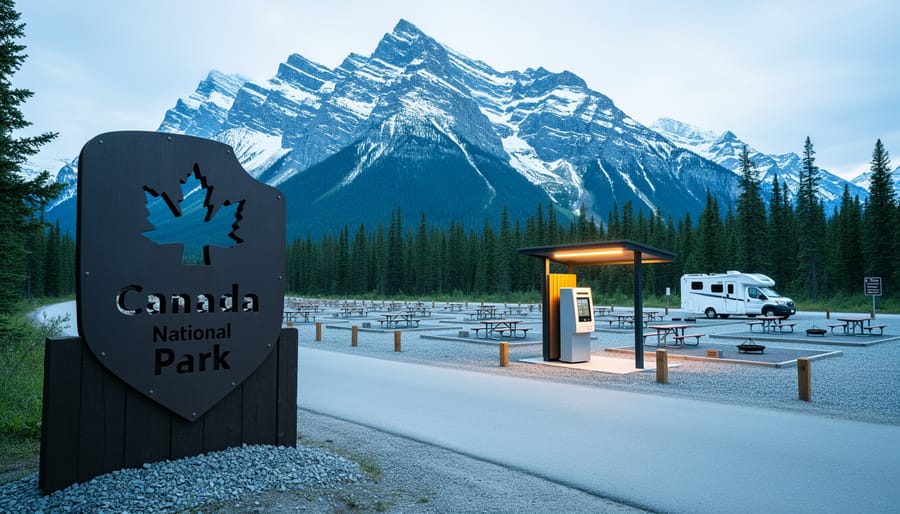
What Is Parks Canada Reservation (and How Does the System Work)?
Parks Canada Reservation is the official booking platform that manages access to campsites, backcountry permits, timed-entry experiences, and select accommodations across Canada’s national parks and historic sites. The system exists to balance visitor demand with conservation, ensuring fragile ecosystems aren’t overwhelmed while giving travelers a fair shot at securing their spots.
I learned this the hard way during a 2024 trip to Banff. I thought I could just roll up to a frontcountry campground on a Friday afternoon in July. Big mistake. Every site was booked weeks in advance through the reservation system, and I ended up scrambling for last-minute options an hour outside the park. That frustration taught me what thousands of others are now discovering: Parks Canada isn’t first-come, first-served anymore, at least not for the experiences people actually want.
The reservation system covers far more than camping. Depending on which park you’re visiting, you might need to book a backcountry permit months ahead, secure a timed-entry window for popular trails or attractions, or reserve roofed accommodations like oTENTiks and yurts. Some parks have capacity limits on certain hiking routes. Others require advance bookings for guided experiences or boat launches.
This guide breaks down what actually requires a reservation, how booking windows work across different experiences, what fees you’ll encounter, and the practical steps to improve your odds of snagging the permits or campsites you’re after. If you’ve felt locked out of Parks Canada’s best destinations or confused by competing reservation rules, you’re about to get clarity.
What Parks Canada Reservation Means
The Parks Canada reservation system is a coordinated booking platform that manages access to high-demand experiences across Canada’s national parks, historic sites, and marine conservation areas. It covers a range of visitor activities that require advance planning, from overnight stays to time-specific access at busy locations.
The system exists for three interconnected reasons: protecting sensitive natural and cultural sites from overuse, ensuring visitors have a quality experience without overcrowding, and distributing use across available capacity. Parks Canada introduced reservations as certain destinations reached unsustainable visitor levels, where unchecked access was damaging ecosystems and creating congested, frustrating experiences for travelers.
What the reservation system covers varies by location and season, but it typically includes:
- Reservation System
- The centralized Parks Canada booking platform where travelers secure advance access to camping, accommodations, permits, and select day-use experiences across participating parks and sites.
- Timed Entry
- A reservation type that controls when visitors can arrive at specific trails or attractions, assigning arrival windows to spread out crowds and prevent parking lot gridlock at popular destinations.
- Backcountry Permits
- Required reservations for overnight trips into wilderness areas, specifying which campsites or zones you can use and ensuring groups stay within the land’s carrying capacity.
- oTENTik
- A Parks Canada accommodation blending tent and rustic cabin features, available only through advance reservation and offering a middle ground between traditional camping and indoor lodging.
Frontcountry camping reservations secure drive-in campsites at developed campgrounds, while backcountry permits control overnight trips into wilderness areas. Timed-entry reservations manage arrival times at high-traffic trailheads and attractions where parking and trail capacity are limited. The system also handles bookings for equipped accommodations like oTENTiks, yurts, and cabins within park boundaries.
Not every Parks Canada property requires reservations, and some operate on a first-come, first-served basis. The reservation requirement depends on demand, infrastructure limits, and conservation priorities at each specific location. Understanding which experiences need advance booking, and which remain accessible without one, is key to planning a successful Canadian park trip.
How the Parks Canada Reservation System Works
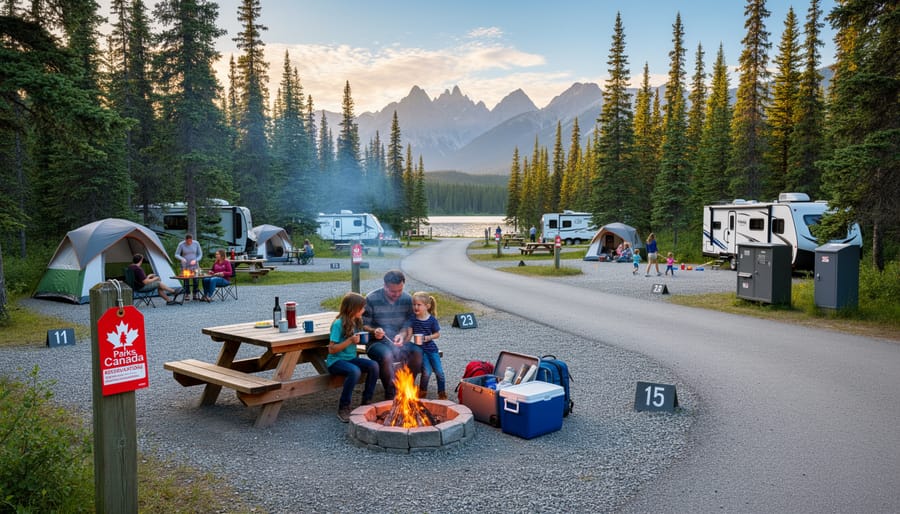
The Parks Canada reservation system lives entirely online, which means you’ll handle everything digitally from start to finish. I learned this the hard way when I showed up at a park entrance expecting to book on-site, only to discover I needed to have reserved weeks earlier.
Start by visiting the Parks Canada website or downloading their mobile app. Both platforms access the same reservation database, so use whichever feels easier. The search function lets you browse by park name, activity type, or date range. If you’re planning a camping trip to Jasper, for example, you’d search for Jasper campgrounds and see what’s available for your dates. The system displays real-time availability, which updates constantly as other travelers book or cancel.
Once you’ve found an available spot, the booking process follows a standard e-commerce flow. You’ll select your dates, choose your specific site or time slot, and provide traveler details. The system walks you through each step, prompting you for the information it needs. Some reservations require you to acknowledge specific park rules or capacity limits before proceeding. You’ll pay online using a credit card, which locks in your reservation immediately.
After booking, you receive a confirmation email containing your reservation number, the details of what you’ve booked, and instructions for your arrival. Save this confirmation. Many parks require you to show it on your phone or as a printout when you arrive. For camping reservations, you’ll typically check in at a gate or visitor center where staff verify your booking against their records. For timed-entry experiences like popular trails, you may need to display your confirmation at a trailhead checkpoint.
The whole system connects to your account, so you can log back in anytime to view upcoming reservations, make changes if the system allows, or access past bookings. This centralized approach means one account manages everything across all Parks Canada properties you visit.
Types of Reservations You’ll Encounter
Camping Reservations
Camping reservations fall into two main categories: frontcountry sites with vehicle access and amenities like fire pits and picnic tables, and backcountry sites requiring hikes or paddles to reach. Frontcountry reservations secure a specific campsite number at established campgrounds, typically including a tent pad, parking spot, and access to washroom facilities. Backcountry permits reserve your access to a designated camping zone or numbered site deep in the wilderness, often with minimal infrastructure beyond a cleared tent area.
The key difference from walk-up availability is certainty. Reserved sites guarantee you a spot during busy periods when campgrounds fill by mid-morning. Walk-up sites operate on a first-come basis and may disappear within hours during summer weekends or holiday periods. Some Parks Canada campgrounds hold back a portion of sites for same-day walk-ups, but popular locations often require advance reservations to secure any overnight stay.
Timed-Entry and Day-Use Permits
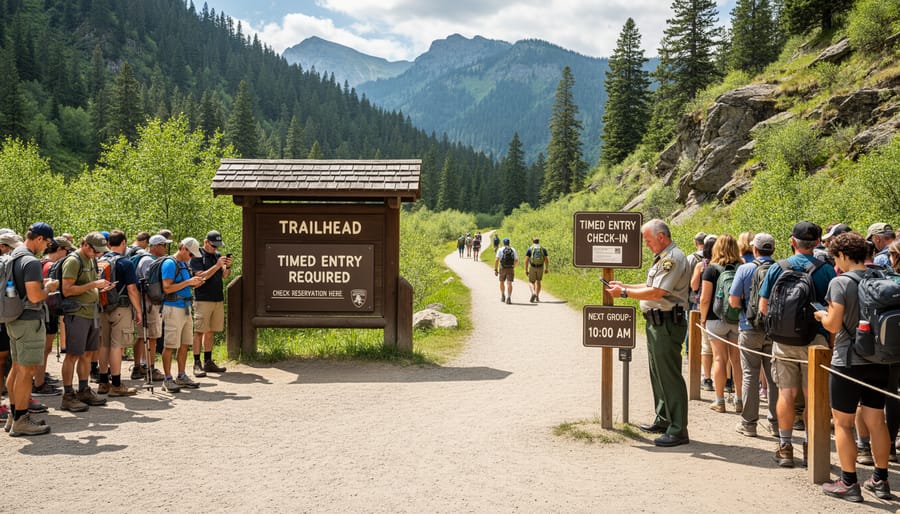
Timed-entry permits control when you can start specific trails or visit certain attractions during the day. Parks Canada introduced these at a handful of high-traffic spots, think popular trailheads where parking lots overflow by 8 a.m. and fragile ecosystems suffer from overcrowding. You book a time slot, show up during that window, and you’re guaranteed access without circling for parking or finding gates closed.
This isn’t a sweeping requirement across all parks. It’s targeted: pilot programs at bottleneck trails, busy lakeshores, or iconic viewpoints where visitor numbers exceed what the site can handle safely. The permit doesn’t cost you park entry separately; it regulates your arrival time. I’ve found these systems frustrating when they first appear, another hoop to jump through, but they genuinely work. Arriving at a trailhead during my reserved slot meant I actually got to hike, rather than turning around disappointed after driving three hours to find no space left.
Equipped Accommodations
Parks Canada offers several types of equipped accommodations that require advance reservations, giving visitors comfortable camping alternatives without bringing their own gear. oTENTiks, a blend of tent and rustic cabin, are perhaps the most recognizable option, featuring beds, furniture, and electricity at many locations. You’ll also find yurts with similar amenities in select parks, along with more traditional cabins that range from basic shelter to fully-equipped units with kitchens and bathrooms.
These accommodations book up quickly during summer months because they appeal to families and travelers who want the national park experience without sleeping on the ground. When I stayed in an oTENTik at Fundy, the reservation secured not just the structure but also a designated site with picnic table and fire pit, essentially a hybrid between hotel booking and campsite reservation. Each accommodation type has different capacity limits and amenities, so checking what’s actually included before you book prevents surprises on arrival.
When and How to Use Parks Canada Reservations
Reservations become mandatory whenever Parks Canada implements capacity controls, most commonly at high-traffic campgrounds, popular backcountry routes, and specific trails or attractions with timed-entry pilots. If a site requires advance booking, you won’t gain access without one. Many parks still welcome walk-up visitors for day use, but checking the individual park’s website before you travel prevents surprises at the gate.
Timing matters. For sought-after spots like campgrounds in Banff or Jasper during summer, reservations open months ahead and can fill within hours. I learned this the hard way planning Canadian Rockies itineraries one July, by the time I checked availability two months out, prime weekends were gone. Start searching at least three to four months before peak season trips, and be ready to book the moment your preferred window opens.
If your first-choice dates are full, stay flexible. Check back regularly, especially a few weeks before your trip, when cancellations tend to surface. Some travelers book tentatively then refine plans, freeing up spots. Having alternate parks or shifted dates in mind keeps your trip viable. Availability updates appear on the Parks Canada reservation platform in real time, so persistence pays off.
For multi-park itineraries involving overnight stays and possible transport connections, cross-reference your reservation dates with public transport maps and regional bus schedules to ensure your bookings align with actual travel logistics. Planning the full picture before locking in reservations saves headaches later.
What to Know About Fees, Cancellations, and Changes
Understanding the cost structure upfront prevents surprises when you’re ready to book your Parks Canada experience. Reservation fees and park entry fees are separate charges, and both typically apply to your visit. The reservation fee covers the administrative cost of securing your spot, whether that’s a campsite, backcountry permit, or timed-entry slot. Your park entry pass (daily or annual Discovery Pass) is an additional charge that grants you access to the park itself.
Reservation fees vary depending on what you’re booking. Camping reservations, equipped accommodations, and backcountry permits each carry their own fee structure. Some timed-entry systems may be free or included with park entry, while others require a separate reservation fee. The key is checking the specific requirements for your chosen park and activity before you start the booking process.
Cancellation policies across Parks Canada generally allow refunds up to a certain number of days before your reservation date, though a processing fee usually applies. The closer you get to your reservation date, the less you’ll recover if you need to cancel. Some reservations are non-refundable past specific cutoff dates, particularly during peak summer season.
Modifications to existing reservations, like changing dates or switching campsites, are often possible through your booking account, though they may incur additional fees. During my own planning, I’ve found that making changes early costs less than waiting until the last minute.
Because fee structures and policies can shift between seasons and booking categories, always review the current terms on the Parks Canada reservation website before finalizing any booking.
Common Challenges and How to Navigate Them
I’ve tried booking multiple Parks Canada trips at peak times, and I can tell you the system isn’t always smooth. When the booking window opens for popular camping spots or timed-entry trails, you’re often competing with thousands of other people hitting refresh at the same moment.
Sold-out dates are the most frustrating issue. Everything books solid within minutes for places like Banff or Cape Breton during summer. I learned to check the system daily around 5 a.m. Eastern, when cancellations from the previous day get released back into the pool. Setting calendar reminders for two weeks before your trip helps, since that’s when people often cancel to avoid full fees. Weekday arrivals have better availability than Friday and Saturday, and shoulder seasons (late May or September) offer the same experience with far less competition.
Technical glitches spike during high-demand releases. The platform crashed on me twice while booking backcountry permits, and by the time it reloaded, my desired dates were gone. Now I keep two browsers ready, clear my cache beforehand, and have my account information saved so I’m not fumbling with passwords when every second counts.
Here’s what works when things go wrong:
- Sold-out dates: Check for cancellations daily before 6 a.m., shift to weekdays instead of weekends, try shoulder season
- Technical glitches: Clear browser cache, switch to a different browser, use a desktop instead of mobile
- Unclear requirements: Call the specific park directly, review the official park page rather than the general reservation site
- Multi-park confusion: Book each park separately with buffer days, treat each reservation as independent
Confusion about what’s included trips people up constantly. Your reservation might cover a campsite but not your vehicle pass, or secure your accommodation but require separate permits for specific activities. Read the confirmation email completely. When planning a trip through multiple parks, I treat each as its own reservation system rather than assuming continuity. The trail access tips I picked up at popular sites taught me to always verify parking and entry requirements separately from your reservation.
If you miss your check-in window by more than an hour without calling ahead, parks sometimes release your spot. I always save the park’s direct phone number and call if delays happen on the road.
Frequently Asked Questions
Do I need a reservation for every Parks Canada site?
No. Most parks operate without reservations for general day-use. Reservations typically apply to camping, backcountry permits, equipped accommodations, and specific high-traffic trails or attractions with timed-entry systems.
Can I visit a park without a reservation?
Yes, in most cases. You can enter parks for day-use without reservations unless you’re accessing restricted trails or attractions. Some busy locations may implement timed-entry during peak season, so check the specific park’s website before you go.
How do I know if my park requires timed entry?
Visit the Parks Canada website and search for your specific park or trail. Locations with timed-entry requirements display prominent notices with booking instructions and the dates when restrictions apply.
What if I miss my reservation time?
Policies vary by location. Some parks enforce strict time windows, while others provide brief grace periods. If delays occur, contact the park directly or apply the same flexibility you’d handle delays in other travel situations, communicating early when possible.
Are there alternatives if reservations are full?
Check for last-minute cancellations, which often appear within a week of the date. Some parks maintain first-come, first-served sites or walk-up permits for certain activities. Visiting during shoulder season or weekdays also increases availability.
What about group camping or special permits?
Group sites require advance reservations through the Parks Canada system. Special activities like backcountry camping, climbing, or filming typically need separate permits with their own booking processes and approval timelines.
The FAQ format helps you quickly assess whether the reservation system affects your plans. I’ve found that reading park-specific pages saves confusion later, especially when coordinating multi-park itineraries where rules differ dramatically between locations.
The Parks Canada reservation system isn’t going anywhere, and honestly, that’s a good thing. It can feel like one more hoop to jump through when you’re planning a trip, but I’ve come to see it as the trade-off that keeps these incredible places accessible for everyone. Without it, the most popular campsites, trails, and backcountry zones would be overrun, degrading the very experiences we all travel so far to enjoy.
Yes, it requires planning ahead. You’ll need to mark booking windows on your calendar, stay flexible with dates, and sometimes get creative with your itinerary when your first choice is sold out. But that planning pays off when you arrive at a trailhead that isn’t mobbed, a campground that’s well-managed, or a backcountry lake where you’re not competing for tent platforms. The system protects both the land and your experience.
My advice: embrace the process rather than resent it. Check reservation requirements early, book as soon as your window opens for high-demand sites, and keep backup options in mind. Understanding how the system works across camping, day-use, and accommodations transforms it from a frustrating barrier into a straightforward tool. The effort you put into navigating reservations directly translates to smoother arrivals, fewer disappointments, and more time actually enjoying Canada’s parks rather than scrambling for a spot.