What Is Solo Travel (and Why Does It Change You)?
Solo travel means taking a trip alone, without friends, family, or an organized tour group, where you make every decision independently and navigate destinations on your own terms.
If you’ve been sitting on a solo trip idea for months, second-guessing whether traveling alone is actually worth the leap, you’re not imagining the risks or the rewards. Both exist. But the benefits go deeper than Instagram captions about finding yourself. Solo travel reshapes how you problem-solve under pressure, how comfortable you become with uncertainty, and how willing you are to talk to strangers who become unexpected highlights of your journey.
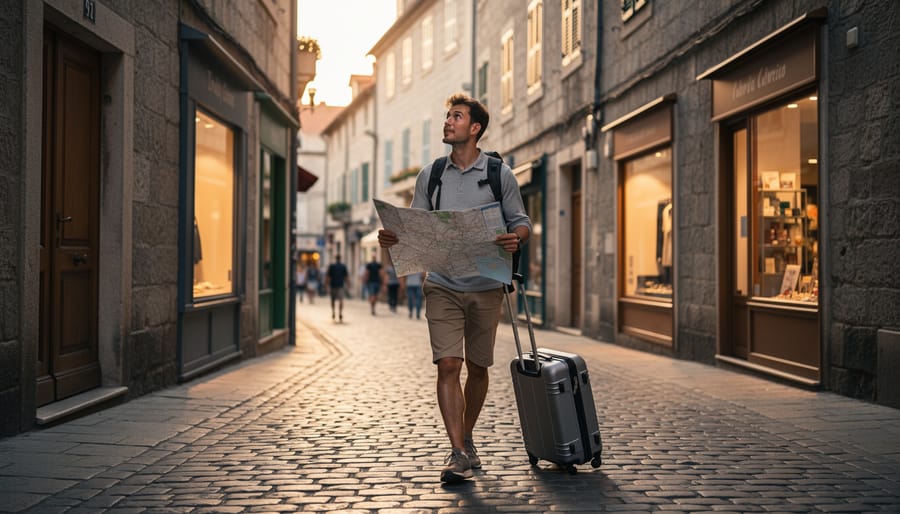
I took my first solo trip to Portugal in 2019 after a work conference fell through. What started as salvaging non-refundable flights turned into five days of complete control over my itinerary. I ate dinner at 10 p.m. because I wanted to. I spent three hours in a tiny bookshop in Porto because no one was waiting outside, annoyed. I also got lost twice and had to ask for directions in broken Portuguese, which felt uncomfortable in the moment but taught me more about navigating foreign cities than a decade of group trips ever did.
This article breaks down the real, practical benefits of solo travel: the personal growth that happens when you’re the only one responsible for getting to the airport on time, the scheduling freedom that lets you skip tourist traps your travel companions would have insisted on, and the surprising social opportunities that emerge when you’re approachable rather than locked into a group. You’ll also find answers to the most common concerns that stop people from booking that first solo flight.
What Solo Travel Actually Means
Solo travel means you’re the only person making decisions about your trip. You book your own ticket, choose your own destinations, and answer to nobody but yourself about where to go, when to eat, or how long to linger in a museum. It’s not about who you physically stand next to at a viewpoint; it’s about who’s calling the shots.
Here’s what matters: solo travel exists on a spectrum. At one end, you might spend a week hiking alone through backcountry trails, barely speaking to another person. At the other, you’re staying in hostels, joining group tours, and making friends at every stop. Both count as solo travel because you’re traveling independently.
- Solo travel
- Traveling without pre-arranged companions where you make all planning and daily decisions independently, regardless of whether you meet people along the way.
- Independent travel
- Self-organized trips where you handle your own logistics rather than joining a packaged tour, often overlapping with solo travel but can include companions.
- Group tours vs. solo exploration
- The difference between following a set itinerary with an organized group versus creating your own route and schedule, even if you occasionally join activities with others.
- Solo but social
- The common experience of traveling alone while regularly connecting with locals and fellow travelers, proving solo doesn’t necessarily mean isolated.
The biggest misconception is that solo travel means lonely travel. Most solo travelers report the opposite: they meet more people precisely because they’re alone and approachable. Another myth is that going alone means reckless adventure or that you must be running from something. Solo travel is simply a deliberate choice to experience the world on your own terms, at your own pace, without negotiating every decision.
It’s also not an all-or-nothing commitment. You can travel solo for a weekend city break or a three-month backpacking trip. The defining feature remains the same: you’re in charge, and that self-directed exploration is what unlocks most of the benefits people associate with traveling alone.
How Solo Travel Works in Practice
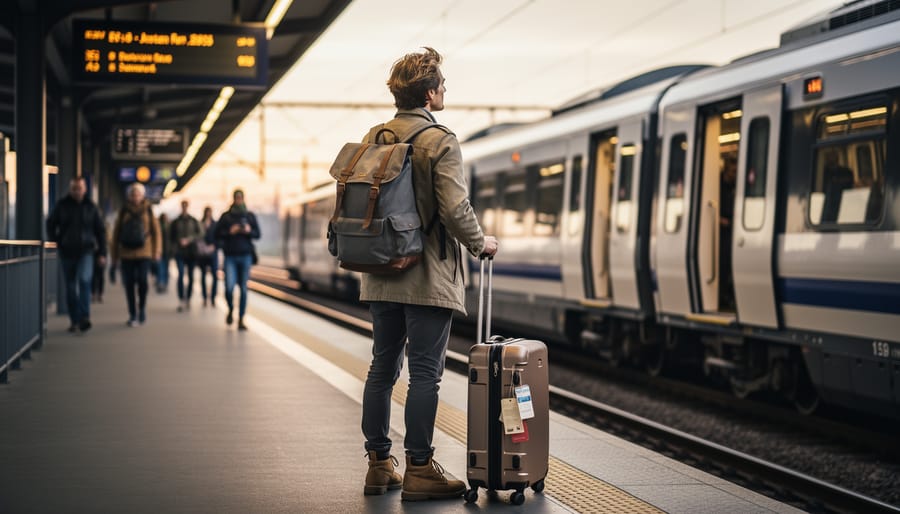
Solo travel isn’t mysterious or complicated. You pick a destination, book your transport and accommodation, show up, and figure out each day as it comes. The mechanics are straightforward: research your destination enough to feel comfortable, book a flight and a place to stay, pack your bag, and go. No group chats about coordinating schedules, no compromises on which hotel to book, no waiting for everyone to agree on dinner plans.
The planning phase looks different when you’re alone. You choose based purely on what interests you, not what works for a partner’s vacation days or fits a friend’s budget. I remember booking my first solo trip to Lisbon on a Tuesday afternoon because flights were cheap and I had nothing stopping me. Three clicks and it was done. When you travel solo, decision paralysis vanishes because there’s only one opinion that matters.
The practical steps break down simply:
- Research your destination for basic safety, transport options, and accommodation in walkable neighborhoods
- Book solo-friendly accommodations like hostels with common areas or hotels in central locations
- Plan a loose itinerary but leave flexibility for spontaneous changes
- Set up safety check-ins with someone back home
- Identify opportunities to meet other travelers through tours, hostel events, or communal dining
The first morning of that Lisbon trip, I woke up in my hostel bunk and realized every single choice was mine. Breakfast now or later? Explore the Alfama district or head straight to Belém? Coffee at this café or that one? It felt overwhelming for about ten minutes, then liberating. I grabbed a pastel de nata from a corner bakery, wandered uphill without checking my map, and stumbled onto a viewpoint I hadn’t planned to visit. That’s solo travel working exactly as designed.
Day-to-day logistics become second nature quickly. You learn to ask locals for directions without a travel companion to hide behind. You eat dinner at the bar instead of waiting for a table for one. You strike up conversations because you’re genuinely curious and there’s nobody else to talk to. The mechanics force you into the experience rather than observing it from inside a travel bubble.
Different Ways to Travel Solo
Budget-Friendly Solo Adventures
Budget-friendly solo travel thrives in hostels, where dorm beds cost a fraction of hotel rooms and common areas naturally foster conversation with fellow travelers. You’ll meet people over shared dinners, spontaneous pub crawls, and impromptu day trips, social connections that emerge precisely because everyone’s traveling alone and open to company. Many hostels organize free walking tours and group activities, giving you built-in itineraries without guide fees. Backpacking amplifies these advantages: cook your own meals, take overnight buses instead of flights, and pack vape gear or personal items in a carry-on to avoid checked bag fees. Shared tours, whether free city walks or affordable day trips, let you split transport costs while traveling independently between activities. The budget constraint becomes an asset, pushing you toward authentic local experiences and genuine interactions rather than isolated luxury.
Comfort-Focused Independent Travel
Solo travel doesn’t require roughing it. I’ve done luxury solo trips where I stayed in boutique hotels with excellent concierge services, booked private guided tours, and ate at restaurants I’d researched for months. The beauty is spending your budget exactly how you want, splurging on that hotel rooftop pool or upgraded room without negotiating with a travel partner.
Private tours work brilliantly solo because you get personalized attention and can ask endless questions without feeling you’re monopolizing the guide. Many tour companies now offer small-group experiences specifically designed for independent travelers seeking structure without sacrificing the solo experience. You’re traveling alone but not necessarily doing everything alone, which strikes a perfect balance for those who value comfort and occasional company.
Off-the-Grid Solo Exploration
Off-the-grid solo travel strips away the social safety net entirely, and that’s exactly the point. When you’re driving empty highways through the Canadian Rockies or hiking multi-day trails where you won’t see another person for hours, you’re forced to rely completely on yourself. This style attracts travelers who want deep solitude and unmediated connection with nature rather than human interaction. The logistics get more serious here: you’re packing all your own gear, navigating without constant Wi-Fi, and making safety decisions with real consequences. Road trips offer the perfect middle ground, you have the security of a vehicle but complete freedom to pull over at unmarked viewpoints or change your route on impulse. For wilderness adventures, securing Parks Canada reservations in advance becomes crucial since backcountry campsites fill fast during peak seasons. The benefit here isn’t just peace and quiet. It’s discovering you can handle genuine isolation, navigate with a paper map when your phone dies, and sit with your thoughts for hours without distraction. You’ll return with stories nobody else was there to witness, and surprising confidence in your ability to manage real uncertainty.
The Personal Growth Benefits

Solo travel strips away the safety nets you didn’t realize you were leaning on. When you’re navigating a foreign train system alone at midnight because you misread the schedule, there’s no travel companion to defer to or share the blame with. You figure it out, or you don’t get where you’re going. That pressure, uncomfortable as it sounds, builds a specific kind of confidence that doesn’t come from reading about independence, it comes from practicing it in real time.
I learned this during my first solo trip to Portugal when I got completely lost hiking the coastal trails near Lagos. My phone died, I’d left the trail map at the hostel, and the sun was setting faster than I’d anticipated. For about twenty minutes, I felt genuine panic. Then something shifted. I stopped catastrophizing and started problem-solving: I retraced my steps to the last junction I remembered, followed voices I heard in the distance, and eventually stumbled onto a local who pointed me toward town. The experience wasn’t fun in the moment, but walking back into that hostel, sweaty and relieved, I felt different. Capable in a way I hadn’t before.
That kind of self-reliance compounds across a trip. You make every decision yourself, which sounds exhausting until you realize how liberating it becomes. Want to spend three hours in a museum everyone else finds boring? You can. Prefer eating dinner at 5 PM or skipping it entirely? No one’s judging. You discover your actual preferences rather than the compromised versions that emerge in group travel. I learned I genuinely enjoy eating breakfast alone with a book, that I’ll wake up for sunrise hikes but never sunset ones, and that I need more downtime between activities than I thought. These aren’t earth-shattering revelations, but they’re mine, and I wouldn’t have uncovered them traveling with others.
The decision-making muscle strengthens too. At home, you might deliberate for days about which restaurant to try. Traveling alone, you learn to gather information quickly, make a call, and move on if it doesn’t work out. Bad meal? You’ll eat again in six hours. Wrong bus? You’ll figure out the next one. The stakes feel high initially, but repetition teaches you that most travel mistakes are fixable and few are catastrophic. That comfort with uncertainty, with making imperfect choices and adapting, transfers back home long after the trip ends.
The Practical Advantages of Going Alone
The logistics of solo travel sound intimidating until you actually try it, then you realize how much simpler everything becomes. I spent three days in Prague once waiting for a travel companion to decide whether she wanted to do the castle tour, the brewery visit, or just sleep in. When I went back alone two years later, I saw twice as much in half the time because every decision took about thirty seconds.
The fundamental advantage is that you’re operating on a single schedule with a single set of preferences. No negotiations, no compromises, no “but we agreed yesterday we’d do this today” conversations. You wake up, assess what you feel like doing, and do it. That spontaneity extends to everything from which restaurant to try to whether you’re spending another night in a city you’re enjoying or moving on a day early because you’ve seen enough.
Budget control becomes straightforward when you’re not splitting costs or accommodating someone else’s spending habits. You decide if you’re eating street food or splurging on that recommended restaurant. You choose the hostel dorm or the boutique hotel without justifying it to anyone. If you want to skip an expensive attraction and spend that money on something else entirely, there’s no one to disappoint.
Practical wins stack up quickly:
- Set your own pace, linger at museums or power through attractions on your schedule
- Change plans instantly without consulting anyone or explaining your reasoning
- Choose exactly what you want to see instead of trading your top picks for theirs
- Easier last-minute bookings since accommodating one person is simpler than two or more
- No waiting for group consensus on where to eat, when to leave, or which route to take
The accommodation piece deserves emphasis because it’s genuinely easier to book as a solo traveler in many situations. Single rooms open up more frequently than doubles, hostels always have bed space, and you’re never trying to find that rare triple room or connecting setup. Hotels often have last-minute single availability even when standard doubles are sold out.
Everything moves faster when you’re alone. Airport security, restaurant seating, deciding whether to take the early train or the late one, all of it happens at your speed without coordination overhead. That efficiency compounds over a trip. What feels like small time savings each day adds up to hours you can spend actually traveling instead of managing group dynamics.
The Social Side of Solo Travel
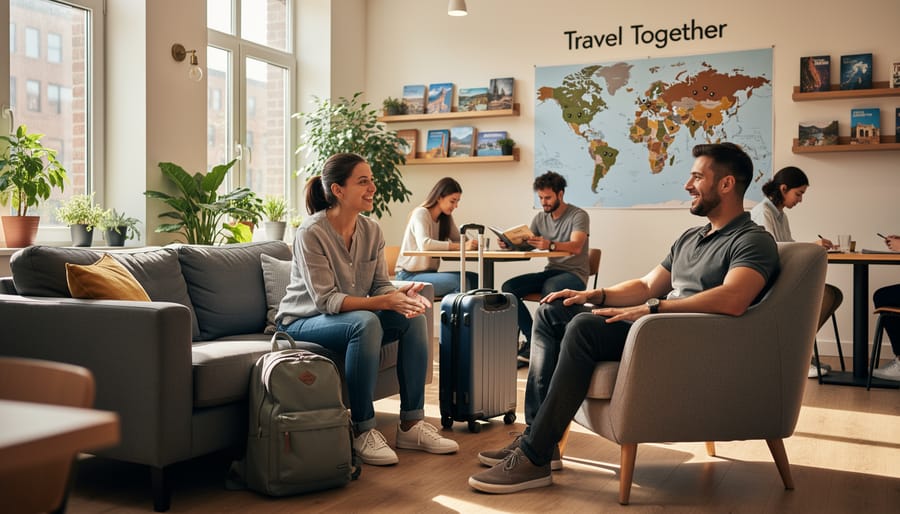
Here’s one of solo travel’s biggest paradoxes: I’ve met more people traveling alone than I ever did with friends. When you arrive somewhere with companions, you’re already a complete social unit. Other travelers glance over and keep walking. Locals see a group and rarely interrupt. You stick together at meals, attractions, and bars because that’s what groups do.
Travel solo and everything shifts. You’re visibly approachable. That couple at the café in Lisbon invited me to join their table because I was eating alone with a map spread out, an invitation they never would have extended if I’d been deep in conversation with a friend. The hostel common room in Chiang Mai pulled me into a spontaneous group dinner because solo travelers naturally gravitate toward each other. You become part of an informal network of people in the same boat, all open to connection without the commitment.
You also control the dial completely. Want to join a group pub crawl? Go. Prefer a quiet evening with a book? No explanations needed. I’ve had nights where I talked to a dozen strangers and mornings where I didn’t speak to anyone for hours, and both felt perfectly right because the choice was mine alone. Traveling with others locks you into their social rhythm, their energy level, their comfort with strangers, their idea of a good time.
The freedom to be social on your own terms, combined with the natural openness solo travel creates, often leads to deeper conversations and unexpected friendships than you’d ever have in a group.
How Solo Travel Applies to Different Trip Types
Flying solo means you control every airport decision. You pick security line strategies, gate changes, and meal stops without negotiating. When delays hit, you handle flight delays on your own timeline, rebooking flights, finding lounges, or exploring the airport at your pace. You can track flight status obsessively or ignore updates until boarding without anyone questioning your approach. If a disruption triggers flight delay compensation you file the claim yourself and pocket the full amount.
Tourist attractions become entirely self-directed. Spend three hours in one museum gallery because it fascinates you, or leave after twenty minutes if it disappoints. Skip the famous viewpoint everyone photographs and wander the neighborhood behind it instead. You’re not killing time while your travel partner shops or rushes someone through an exhibit they’re absorbed in. Solo travelers often connect with strangers at attractions more easily, asking someone to take your photo starts conversations, and you’re free to join tours or chat with locals without pulling a companion along.
Hotels and accommodation shift dramatically solo. Single rooms cost less than doubles in many places, and you control the temperature, TV volume, and checkout time without compromise. You can collapse after a long day or head out at midnight without coordinating. Some travelers find hotels lonelier than hostels, but that’s a choice you make consciously. Front desk staff often give solo guests better service, you’re easier to upgrade, simpler to help, and they remember you. Mornings unfold at your rhythm. No waiting for someone to finish showering or debating breakfast timing.
Common Questions About Solo Travel Benefits
Solo travel sparks a lot of questions, especially if you’ve never done it before. The concerns are valid, you’re considering stepping outside your comfort zone without the familiar safety net of a travel companion. Here are the questions I hear most often, along with honest answers based on real experience.
Is solo travel really better than traveling with others?
It’s not better or worse, just different. Solo travel gives you complete freedom and self-discovery opportunities, while group travel offers shared memories and built-in companionship. Most experienced travelers do both depending on the trip’s purpose.
How do you deal with loneliness when traveling alone?
Loneliness happens occasionally, but it’s usually brief. Staying in social accommodations like hostels, joining group tours or activities, and chatting with locals or fellow travelers at cafes and bars keeps you connected when you want company.
Do you actually save money traveling solo?
Sometimes yes, sometimes no. You save by making your own budget choices without compromise, but you pay more for single hotel rooms and can’t split costs like rental cars or taxis. Hostels and strategic planning help keep costs reasonable.
Is solo travel safe, especially for women?
Solo travel carries the same basic risks as any travel, which you manage through common sense precautions. Millions of people, including women, travel solo safely every year by researching destinations, trusting their instincts, and staying aware of their surroundings.
Do you miss having someone to share experiences with?
You might miss it in certain moments, like witnessing a stunning sunset or a funny interaction. But you can still share through photos, journaling, or stories when you return, and the experiences feel deeply personal in a meaningful way.
What if something goes wrong and I’m alone?
You handle it the same way you’d handle problems at home, by staying calm and finding solutions. Hotels, tourist information centers, and fellow travelers are surprisingly helpful resources, and managing challenges alone builds real confidence.
The underlying question behind most of these concerns is whether you’ll regret going alone. In my experience, regret is rare. What people actually regret is waiting too long to try it or letting fear make the decision for them. Solo travel has rough moments, sure, but those moments teach you something valuable about your own resilience and resourcefulness.
Solo travel isn’t about rejecting companionship or proving something to the world. It’s simply one of the most effective ways to learn what you’re capable of when you strip away the safety net of familiar voices and shared decisions. The benefits stack up quietly: you build confidence by navigating foreign cities alone, gain flexibility to follow curiosity wherever it leads, meet people you’d never approach if you had a travel buddy by your side, and return home knowing yourself a bit better than when you left.
Not every trip needs to be solo, and that’s fine. Some experiences are richer when shared. But taking even one solo journey changes how you see travel, and often, how you see yourself. You learn to trust your instincts, to be comfortable with silence, to solve problems without consensus. These aren’t abstract benefits; they’re skills that carry over into everyday life long after you’ve unpacked your suitcase.
If you’ve been weighing whether to book that flight alone or visit that city by yourself, the answer is simpler than it seems. Buy the ticket. Book the room. Go. The logistics will work themselves out, and the discomfort you’re imagining usually dissolves within the first day. What remains is the discovery that you’re more resourceful, more adaptable, and more capable of enjoying your own company than you thought. That realization alone makes the trip worthwhile.