Why Is My Flight Delayed Due to Smoke? Causes and How to Fix It
If you’re stuck at the airport watching departure boards flip to “delayed,” the most likely culprit right now is wildfire smoke reducing visibility below the minimum standards required for safe takeoff and landing. Major Canadian airports including Toronto Pearson, Montreal, Vancouver, Ottawa, and Calgary have all experienced smoke-related disruptions recently, and understanding what’s happening can help you make better decisions about your next move.
The quickest way to confirm smoke is the cause? Check the airport’s official social media or website for air quality advisories, then look outside. If you can see a hazy orange or grey sky and smell smoke, or if visibility from the terminal windows is noticeably poor, you’re likely facing a weather-related ground stop that’s completely out of the airline’s control.
Here’s what you need to know right away: smoke delays aren’t like mechanical issues or staffing problems. Air traffic control and pilots rely on specific visibility minimums measured in statute miles or meters, and when dense smoke rolls in, departures and arrivals can halt within minutes. I learned this the hard way during a trip to Vancouver a few summers back when what started as a “30-minute delay” turned into an eight-hour wait as wildfire smoke from the interior blanketed the runways.
This guide will walk you through confirming the cause of your delay, understanding why smoke grounds flights even when the airport looks operational, knowing your passenger rights during weather delays, and planning smarter for future trips during wildfire season. The good news? Once you understand the pattern, you can take concrete steps to protect your travel plans before smoke even becomes visible.
Is Smoke Actually Causing Your Flight Delay?
Standing at the gate with a vague “delayed” notice on the board, your first job is figuring out if smoke is actually the problem or if you’re dealing with something else entirely. Here’s how to tell.
Start by checking what the airline is saying. If your flight app, gate announcement, or email mentions “visibility,” “air quality,” or “environmental conditions,” that’s a strong clue. Mechanical issues and crew scheduling problems get different language, usually “maintenance,” “operational requirements,” or “awaiting aircraft.” When multiple flights to or from the same airport show delays at once, especially during wildfire season, smoke is often the thread connecting them all.
Next, look outside. Can you see haze around the terminal or a yellowish tint to the sky? That’s a visual tell. Major Canadian hubs like Toronto Pearson, Montreal, Vancouver, Ottawa, and Calgary have all dealt with smoke disruptions, and when air quality tanks, the evidence is often right there through the window.
For a definitive answer, check official sources. NAV CANADA’s Collaborative Flight Planning Services provides weather and NOTAM alerts that pilots and dispatchers use. NOTAMs (Notices to Airmen) will flag smoke-related restrictions or visibility issues at your departure or arrival airport. You can also search for your airport code plus “air quality” to find local Environment Canada readings, anything above moderate starts affecting operations.
Here’s a quick checklist to confirm smoke as the culprit:
- Airline communication mentions visibility, air quality, or environmental conditions rather than mechanical or crew issues
- Multiple flights departing or arriving at the same airport show simultaneous delays
- Visible haze, smoke smell, or poor air quality outside the terminal
- NOTAMs or airport alerts reference reduced visibility or air quality advisories
- Local air quality index shows moderate to poor conditions
If you’re seeing these patterns, smoke is likely grounding your flight. This helps when comparing your situation to other delay causes comparison like weather systems or the kinds of operational hiccups that trigger Montreal airport delays. Knowing what you’re dealing with shapes your next moves.
Why Smoke Grounds Flights: The Real Reasons
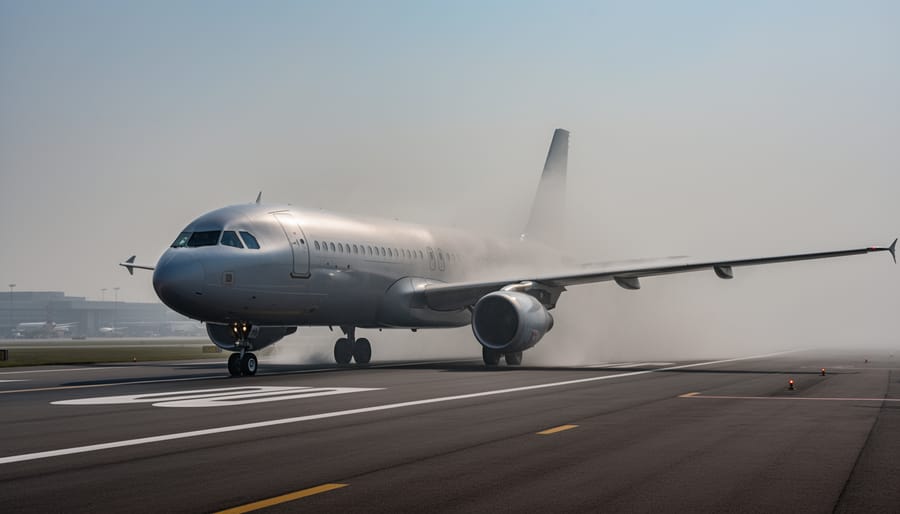
Pilots can’t just squint through the haze and hope for the best. Aviation has strict rules about how far they must see, and smoke violates those rules fast. When smoke rolls in from wildfires or other sources, it degrades visibility to the point where takeoffs and landings become unsafe, sometimes dropping horizontal sight lines below the required minimums within hours.
Aircraft certification requires specific visual ranges for different phases of flight. Most commercial operations need at least three statute miles of visibility for takeoff under standard instrument flight rules, and approach procedures vary from half a mile to three miles depending on the equipment and airport setup. Smoke doesn’t just blur the view, it scatters light, creates false horizons, and makes depth perception unreliable for pilots trying to gauge runway alignment or obstacle clearance. When controllers at Toronto Pearson, Vancouver, or Montreal measure visibility below these thresholds, departures and arrivals grind to a halt regardless of how desperately airlines want to move planes.
NAV CANADA monitors these conditions constantly through its Collaborative Flight Planning Services, which pilots and dispatchers use to access aviation weather data, NOTAMs, and real-time reports. Flight Information Centres track smoke plume movement, visibility trends, and air quality readings, then issue advisories that force airlines to adjust schedules. If the forecast shows smoke lingering for hours, airlines cancel flights preemptively rather than strand aircraft and crew at affected airports.
- NOTAMs
- Notices to Airmen that alert pilots to temporary hazards or changes in operating conditions, including smoke advisories and visibility restrictions.
- Visibility Minimums
- The legal minimum distance pilots must see horizontally to safely take off or land, typically ranging from half a mile to three miles depending on equipment and procedures.
- Collaborative Flight Planning Services
- NAV CANADA’s suite of tools providing pilots with briefings, flight plans, NOTAMs, and aviation weather to plan safe routes and operations.
- Air Quality Thresholds
- Measured concentrations of particulates and pollutants that trigger operational restrictions when smoke compromises breathable air or equipment performance.
Air quality matters beyond just what pilots see. Smoke carries particulates that can contaminate engine sensors, clog air filters, and reduce engine performance. While modern turbofan engines handle some contamination, dense smoke introduces variables that manufacturers haven’t certified for, pushing operations outside approved safety envelopes. Airlines won’t risk mechanical issues or passenger health complaints when air quality indices spike into hazardous ranges.
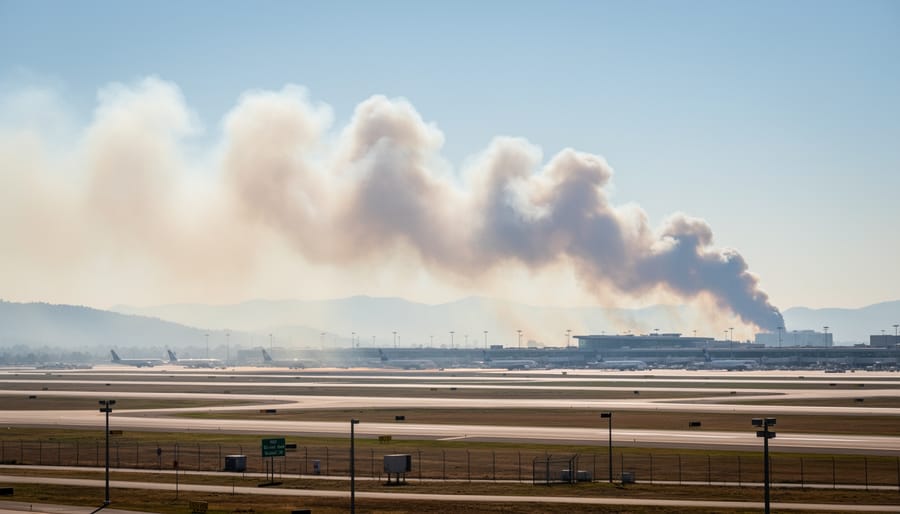
Major Canadian hubs face higher vulnerability because of their locations. Toronto Pearson, Ottawa, Calgary, Vancouver, and Montreal all sit in regions where wildfire smoke funnels through prevailing wind patterns during summer and fall. Their high traffic volumes mean delays cascade quickly, one smoke event grounds dozens of flights within an hour, stranding thousands of passengers. Geography and timing conspire to make these airports recurring victims when smoke season arrives.
What to Do When Your Flight Is Delayed by Smoke
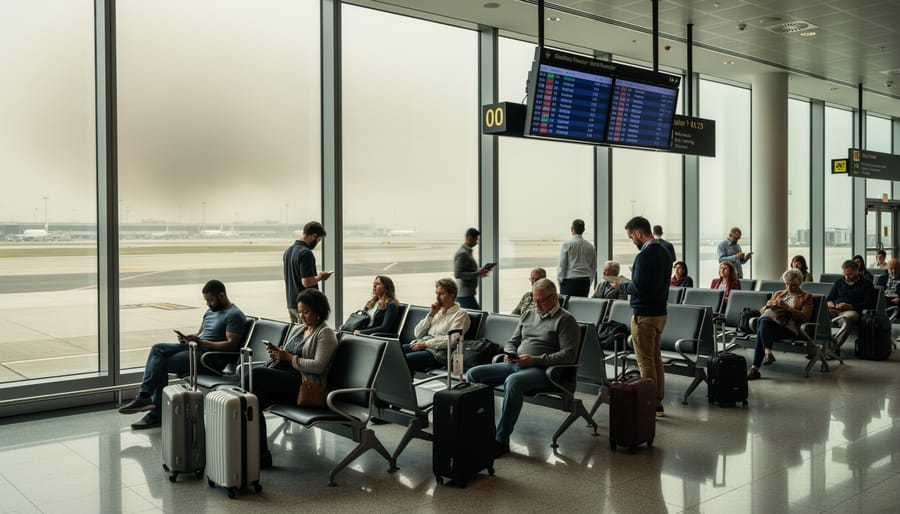
When you’re stuck at the gate staring at a “delayed” notice, the first thing you need is a clear plan. I learned this the hard way during a particularly bad wildfire season when my Vancouver connection got pushed back four hours with zero initial explanation.
Here’s exactly what to do when smoke grounds your flight:
- Confirm the delay reason with airline staff or your airline’s app. Don’t assume smoke is the culprit just because the sky looks hazy. Gate agents can access the official delay code, which will specify whether it’s visibility, air quality, or something else entirely. If you’re flying Air Canada, their mobile app typically shows delay reasons in real time, making it easier to track Air Canada delays without joining the queue at the desk. Screenshot this information immediately.
- Check NOTAMs and aviation weather conditions. NAV CANADA’s Collaborative Flight Planning Services provides NOTAMs and aviation weather tools that can give you insight into what pilots are seeing. While most of these resources are designed for aviation professionals, you can access general NOTAM information through the NAV CANADA website. Look for notices affecting your departure airport, especially those mentioning visibility restrictions or temporary flight restrictions due to smoke.
- Contact the airline about rebooking options and their compensation policies. Get in line early, both physically and digitally. Call the airline’s customer service while simultaneously using their app to explore alternatives. Ask specifically about their policy for smoke delays, whether they’re waiving change fees, and what options exist for rerouting through unaffected airports. Don’t wait for the airline to offer solutions; politely but firmly ask about every possibility.
- Monitor air quality forecasts for your departure airport. Environment Canada provides air quality health index forecasts that can help you gauge whether conditions are improving or worsening. If the forecast shows deteriorating air quality over the next six to twelve hours, you’re likely facing an extended delay. Cross-reference this with visibility forecasts, since both factors influence flight operations differently.
- Decide whether to wait or rebook based on realistic timelines. Airlines often provide optimistic delay estimates early on. If smoke has shut down operations at a major hub like Toronto Pearson or Calgary, and forecasts suggest conditions won’t improve until tomorrow, waiting at the airport is usually pointless. Make the hard call to rebook or arrange alternate transport before everyone else reaches the same conclusion and availability disappears.
- Document everything for potential insurance claims or future disputes. Take photos of airport screens showing your delay, save all email and app notifications, photograph any hazy conditions visible from the terminal, and keep receipts for meals, transportation, and accommodation. Even if smoke delays typically qualify as extraordinary circumstances beyond airline control, your travel insurance might cover expenses, and thorough documentation strengthens any claim.
- Arrange accommodation if an overnight delay looks likely. Once you’ve confirmed a delay extending past the last flight of the day, immediately book lodging. Airport hotels fill up fast during mass disruptions affecting hubs like Montreal or Vancouver. Ask the airline if they’re providing hotel vouchers, but don’t wait for their decision before securing a room. You can always cancel if they come through with accommodation.
The key is acting quickly while others are still hoping for the best. During that Vancouver delay, I wasted two hours waiting for updates before taking control of the situation myself. By the time I finally rebooked through Seattle, half the alternative routes were already full.
Stay calm, work through these steps methodically, and remember that smoke delays affect everyone equally. The passengers who fare best are those who gather information fast and make decisions before the crowd catches up.
Your Rights and What Airlines Owe You

Here’s the truth about what you’re owed when smoke grounds your flight: not as much as you’d hope, but more than nothing if you know what to ask for.
Under Canada’s Air Passenger Protection Regulations, smoke delays fall into a frustrating grey area. Airlines typically classify them as extraordinary circumstances outside their control, much like hurricanes or volcanic ash. This means you won’t be entitled to the standard compensation of $400 to $1,000 that applies to delays caused by airline operations. The regulation explicitly exempts events like natural disasters and air traffic control restrictions triggered by environmental conditions.
That said, airlines still have obligations. If your delay stretches beyond two hours, most carriers should provide meal vouchers. When delays extend overnight, you’re generally entitled to hotel accommodation and ground transport, though this depends on how the airline categorizes the cause. I’ve had mixed results here: Air Canada provided a hotel voucher during a Vancouver smoke delay in 2023, while a budget carrier insisted I was on my own because the conditions were beyond their control.
Your best move is to politely but firmly ask. Airlines have discretion on how they handle these situations, and gate agents can sometimes authorize assistance even when it’s not strictly required. Document everything with photos of delay boards, screenshots of airline communications, and receipts for any expenses you cover yourself.
For official updates on flight conditions and smoke-related restrictions, contact the appropriate Flight Information Centre. These NAV CANADA facilities provide real-time information about airport conditions and can confirm whether smoke is affecting operations. Your airline should have these numbers, or you can find regional FIC contact details through NAV CANADA’s Collaborative Flight Planning Services portal.
Check your travel insurance policy carefully. Some comprehensive plans cover delays from natural events including wildfire smoke, though coverage varies widely. If you purchased cancel-for-any-reason insurance, you might have more flexibility to rebook without penalties, even if you won’t recover all costs.
The reality is that smoke delays test your patience more than your wallet. Set realistic expectations, be prepared to advocate for yourself respectfully, and understand that some costs may simply be part of dealing with an unpredictable natural event.
Preventing Future Smoke Delay Headaches
The best defense against smoke delays is booking smart and staying informed before problems arise. I learned this the hard way after a rescheduled Vancouver connection cost me a full day, now I check air quality forecasts as religiously as I check the weather.
Start by timing your travel strategically. Wildfire smoke typically peaks from June through September in Canada, with afternoons seeing worse air quality than mornings. Book the earliest departure you can tolerate; 6 a.m. flights often escape before smoke thickens or winds shift. For connections through Toronto Pearson, Vancouver, or Calgary, airports with documented smoke vulnerabilities, opt for same-day connections with at least three hours between flights rather than tight 90-minute windows.
Travel insurance matters more than most travelers realize. Standard policies often exclude “acts of nature,” but comprehensive plans covering natural events or trip interruption for any reason will protect you when smoke grounds your flight. Read the fine print specifically for weather-related delays and ensure the policy covers rebooking costs and accommodations.
Set up proactive monitoring systems. NAV CANADA’s Collaborative Flight Planning Services offers NOTAM updates, though you’ll need to check these before each trip since real-time alerts aren’t typically available to passengers. Download air quality apps like AQICN or Environment Canada’s weather app, setting notifications for your departure airport starting three days before travel. Monitor the Air Quality Health Index (AQHI) for readings above 6, which often trigger operational concerns.
Build genuine buffer time into multi-leg journeys. If you’re connecting through Vancouver during summer months, overnight between flights rather than risk missing onward travel. The few hours of lost time beats rebooking chaos when smoke rolls in unexpectedly.
At-a-Glance Details
When you’re stuck in a smoke delay, quick access to the right resources makes all the difference. Here’s what you need to know in one place:
| What You Need | Where to Find It | Why It Matters |
|---|---|---|
| Current NOTAMs | NAV CANADA Collaborative Flight Planning Services | Confirms official airspace restrictions and visibility issues at your airport |
| Air Quality Index | Environment Canada’s AQHI or local weather apps | Shows current conditions and forecast trends to estimate delay duration |
| Flight Information Centre | 1-866-WXBRIEF (1-866-992-7433) | Provides real-time aviation weather updates and delay explanations |
| Airline Rebooking | Your airline’s app or customer service desk | Gets you rebooked faster than waiting in line at the gate |
Keep screenshots of delay notifications and save all communication from your airline. This documentation becomes essential if you file a travel insurance claim or need to prove the delay cause to your employer. The airports most frequently hit by smoke disruptions, Toronto Pearson, Montreal, Vancouver, Ottawa, and Calgary, often experience simultaneous delays across multiple carriers, so having these resources bookmarked on your phone before you travel saves precious time when conditions deteriorate.
Common Questions About Smoke Delays
Smoke delays raise a lot of urgent questions when you’re stuck at the airport. Here are the answers to what travelers ask most often.
How can I access complete NOTAMs for my flight?
NAV CANADA provides comprehensive NOTAMs through their Collaborative Flight Planning Services, which pilots and flight planners use for official briefings. As a passenger, you can check basic NOTAM information through airline apps or ask gate agents, though detailed technical NOTAMs are primarily designed for aviation professionals.
Will my travel insurance cover smoke delays?
It depends entirely on your policy’s specific coverage for natural events and trip interruptions. Most standard policies don’t cover delays caused by extraordinary circumstances like wildfires, but comprehensive trip protection plans sometimes include benefits for extended delays regardless of cause, read your certificate of insurance carefully.
How long do smoke delays typically last?
There’s no standard timeframe because it depends on wind patterns, fire behavior, and air quality improvements. Some delays clear within a few hours as smoke drifts away, while persistent wildfire smoke can ground flights intermittently for days until conditions improve or wind shifts direction.
Are certain seasons or airports more prone to smoke delays?
Canadian wildfire season typically peaks from June through September, making summer the highest-risk period. Airports like Toronto Pearson, Montreal, Vancouver, Ottawa, and Calgary have all experienced significant smoke-related disruptions, though western airports closer to forested regions face more frequent impacts.
One question that comes up constantly: can you get a refund if you choose not to fly due to smoke? Airlines generally don’t offer refunds for delays caused by extraordinary circumstances outside their control, which includes smoke from wildfires. However, you can often rebook for a later date without change fees, depending on the airline’s policy and fare class. Some carriers will waive change fees during major disruption events affecting entire airports, so it’s worth asking even if it’s not advertised.
If you need real-time updates beyond what your airline provides, contacting a Flight Information Centre can give you official aviation weather information, though they primarily serve pilots rather than passengers. Your airline’s customer service team remains your best resource for rebooking options and accommodation assistance during extended smoke delays.
Smoke delays are nobody’s favorite travel disruption, but they don’t have to derail your entire trip. I’ve sat in enough delayed departure lounges watching haze settle over runways to know the frustration firsthand, yet each experience taught me something valuable: preparation and perspective make all the difference.
Understanding why smoke grounds flights, recognizing the signs early, and knowing exactly what steps to take gives you control over an otherwise helpless situation. You can’t clear the air or speed up Mother Nature, but you can check NOTAMs, communicate with your airline, protect your rights, and make informed decisions about rebooking or waiting it out.
The reality is that smoke delays fall outside airline control, meaning your options may be limited compared to mechanical issues or overbooking. That’s frustrating, sure, but it’s also a safety measure keeping you out of the air when visibility or air quality creates genuine risk. Accepting what you can’t change while actively managing what you can makes these delays far more bearable.
Build flexibility into your travel plans during wildfire season, monitor conditions at airports like Toronto Pearson and Vancouver, and keep the troubleshooting steps handy. Your patience during these uncontrollable events will serve you better than any complaint ever could.