Vape Rules for Airplanes: What Air Canada Travelers Need to Know Before Packing
Yes, you can fly with a vape, but it has to ride in your carry-on. Transport Canada requires e-cigarettes to be carried in the cabin, never in checked baggage, and spare batteries follow the same rule. The reasoning is simple. If a device gets switched on by accident in the cargo hold, the heating element can start a fire, and nobody is there to catch it. In the cabin, you and the crew can.
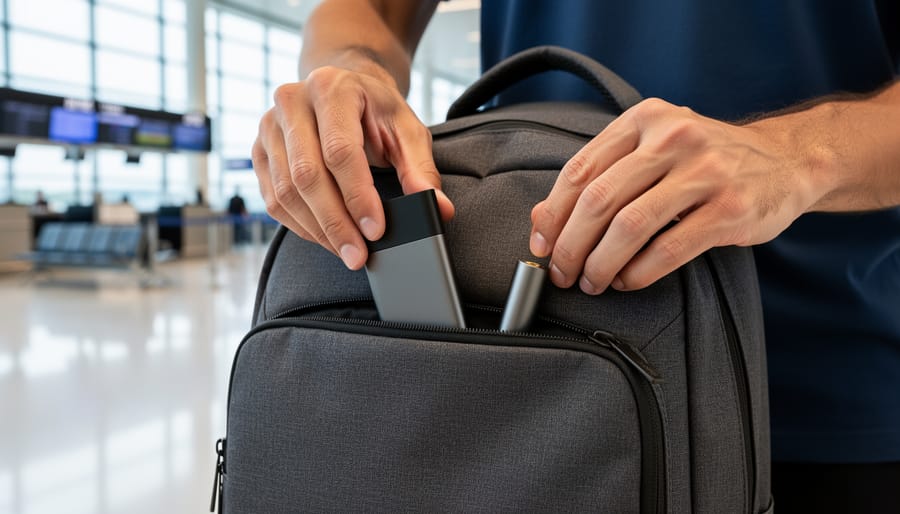
That’s the whole answer for your vape. The one thing I’d add: air travel gets busy and rushed, so pop your device into a pocket of your personal bag before you reach the security line rather than digging for it at the last minute. Little habits like that save a lot of airport stress.
CBD is a different story. Transport Canada says that if you use cannabis for medical purposes in any form, CBD included, you can’t cross a border with it unless Health Canada and the authorities of every country you’re visiting or transiting through have authorized it. British Columbia’s government also says it’s illegal to transport cannabis products containing THC or CBD outside Canada. So the carry-on trick doesn’t apply here.
Below, you’ll find a quick checklist and answers to the questions travelers ask most.
The Short Answer: Where Your Vape Goes on a Flight
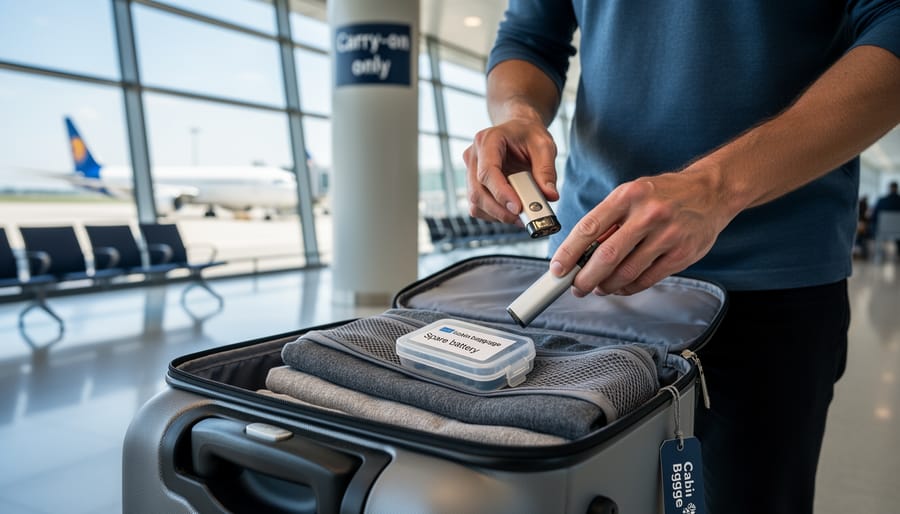
If you’re flying with Air Canada, your vape goes in the cabin with you, not in your checked bag. Transport Canada requires e-cigarettes to be carried in the cabin, and that’s the national rule for flights within Canada, so it applies whichever airline you book.
Spare batteries follow the same logic. They’re permitted, but they also belong in your carry-on. So if you have a backup battery tucked in a toiletry kit or a jacket pocket, move it to the bag you’re taking on board before you reach the bag drop.
The reason comes down to fire risk. A vape has heating elements, and if the device is switched on by accident while it’s buried in a suitcase, those elements can heat up. In the cargo hold, nobody is there to notice or respond. In the cabin, the device stays within your reach, and you or the crew can deal with a problem right away.
It’s an easy mistake to make, since a vape pen can hide in a coat pocket, a gym bag or the corner of a toiletry pouch. A quick sweep through everything you plan to check takes about a minute and saves you a repack at the counter.
I’d also treat this as the baseline rather than the whole story. Airlines can attach conditions to certain special items, so it’s worth checking with Air Canada if your situation is unusual.
Why Transport Canada Keeps Vapes Out of the Cargo Hold
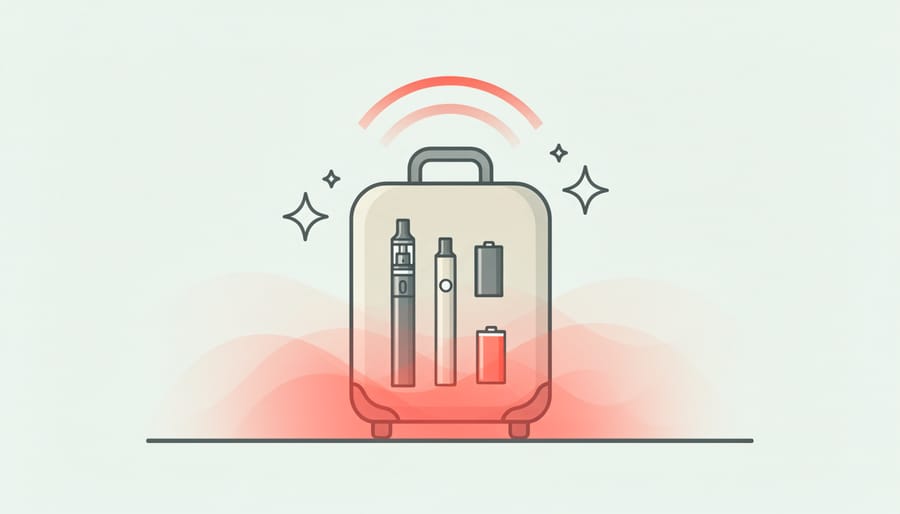
Here’s the thing about a vape in a checked bag: nobody’s around to notice if something goes wrong. Transport Canada keeps e-cigarettes out of the cargo hold because of fire risk. If the heating element gets switched on by accident, it can heat up and start a fire, and in a sealed hold there’s no one to respond.
That’s why the rule is simple. Your vape and any spare batteries ride in the cabin with you.
I learned to respect this after a near-miss of my own. Before one early flight, I unzipped the front pocket of my suitcase for a last check and found my pen tucked in there, buried under a charging cable and a bundle of keys. It had been jostled around for days in my last trip. I moved it to my backpack right there in the driveway, and I’ve done a pocket sweep ever since.
A few habits make cabin travel easier:
– Keep the device somewhere you can reach it quickly, like a front pocket or the top of your carry-on, not buried at the bottom.
– Don’t let it rub against keys, coins, or other hard items that could press the button.
– Store spare batteries separately from loose metal objects.
– Do a quick check of your checked bag for stray devices before you zip it closed.
What Air Canada Says About Special Items
Air Canada’s own wording on special items is short, but it’s worth knowing. The airline says certain special items are subject to conditions and restrictions, which is a polite way of saying the rules can change depending on what you’re carrying. Sports or hunting equipment is a good example. It has to be registered at least 24 hours before your flight, and that’s a very different process from tossing a toothbrush in your bag. That requirement is only an illustration of how much these rules can vary from item to item, and it isn’t something that applies to vapes.
What does apply to everyone with a special item is Air Canada’s advice to arrive at the airport 30 minutes before your recommended check-in time so you can reconfirm the item with an agent. It’s a simple buffer, and it gives you a chance to ask questions before you’re standing at the bag drop with a line forming behind you.
I couldn’t confirm the airline’s published detail on vapes specifically, so don’t rely on this section alone. If you’re unsure about your device or your batteries, contact Air Canada directly before you travel and get the answer straight from the source.
CBD Is a Different Story: Border Rules You Need to Know
Vapes and CBD can look like the same thing at the airport, but the rules behind them are very different. The vape rule is about where the device rides on the plane. The CBD rule is about whether it can cross a border at all, and that’s where travelers can get into real trouble.
Transport Canada is direct about it: if you use cannabis for medical purposes in any form, including CBD, you cannot cross a border with it unless you’re authorized by Health Canada and the relevant authorities of every country you’re visiting or transiting through. That last part is easy to miss. A layover counts. If your route to a sunny destination connects through a third country, that country’s rules matter too, even if you never leave the terminal.
The British Columbia government puts it even more plainly: it is illegal to transport cannabis and products containing THC or CBD outside of Canada. So for anyone flying internationally, the safest assumption is that CBD stays home unless you’ve sorted out proper authorization well ahead of time. If you want the longer breakdown, this guide on how to travel CBD internationally walks through the legal headaches in more detail, and the medical marijuana rules are worth a read if your CBD is part of a medical routine.
Here’s the catch for anyone who vapes CBD. A vape-style CBD product falls under both sets of rules at once. It has to ride in your cabin baggage like any other vape, and it’s still a CBD product, so the border rules apply in full. Following the cabin rule doesn’t make it okay to carry across a border.
I’ve learned to treat this as a decision I make before packing, not a question I try to answer at the gate. If a trip crosses an international border or connects through another country, I check first, and I only pack what I’m sure I can legally take.
Your Pre-Flight Checklist for Vapes and CBD
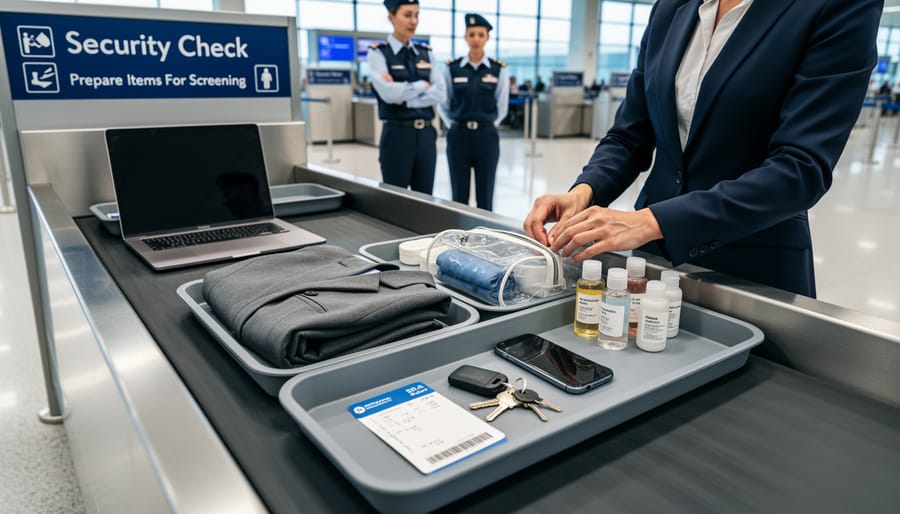
Before you head to the airport, run through a quick checklist. It takes five minutes and saves you a lot of stress at security. If you want a broader walkthrough of how to fly with vape devices, that guide goes deeper, but these steps cover the essentials.
- Put your vape in your carry-on. Transport Canada requires e-cigarettes in the cabin, not in checked baggage.
- Pack spare batteries in your carry-on too. They’re permitted, but only in the cabin.
- Check your checked bag for stray devices. Look through side pockets, toiletry kits and jacket pockets, since a forgotten pen is easy to miss.
- Decide whether any CBD product is traveling at all. If it doesn’t need to come along, the simplest fix is leaving it home.
- If you’re crossing a border with medical cannabis or CBD, confirm you have authorization from Health Canada and the relevant authorities of every country you’re visiting or transiting through.
- Arrive early. Air Canada advises showing up 30 minutes before your recommended check-in time so an agent can reconfirm anything unusual.
Keep in mind that a CBD vape counts under both sets of rules, so it needs the cabin and the border check. If any step leaves you unsure, ask an agent at the airport or contact Air Canada directly before you get to the security line.
Common Questions About Flying with Vapes and CBD
Can I put my vape in checked baggage? No. Transport Canada says e-cigarettes must travel in the cabin.
Can I bring spare batteries? Yes, but they also go in your carry-on.
Can I fly out of Canada with CBD? Not without authorization from Health Canada and every country you’re visiting or transiting through. British Columbia also says transporting CBD products outside Canada is illegal.
Where can I confirm Air Canada’s special-item conditions? Ask an agent at the airport or contact Air Canada directly.
What about liquid limits? Check current screening limits with the airline or airport.
Keep your vape and spare batteries in your carry-on, and treat CBD seriously before any border. Pack smart, arrive early, and travel with confidence.