Guide to Tobermory: Top Attractions, Practical Travel Tips, and Local Insights
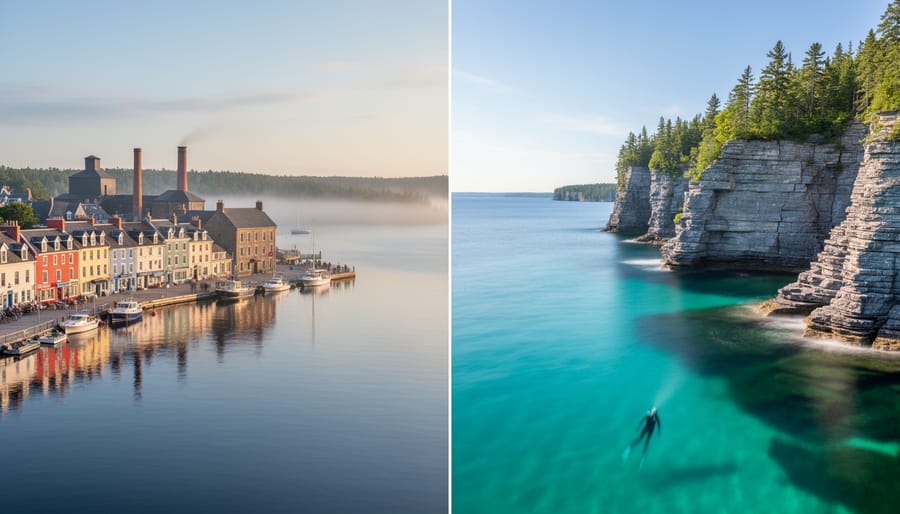
Tobermory isn’t just one place. It’s two of the most striking waterside destinations you’ll find in the travel world: a colorful harbor village on Scotland’s Isle of Mull and a rugged peninsula town in Ontario, Canada. Both draw adventurous travelers with crystal-clear waters, dramatic coastlines, and communities that have learned to thrive at the edge of wild landscapes.
I first encountered the name Tobermory while planning a Scottish island-hopping trip in 2021, only to discover months later that my friend had just returned from “Tobermory” in Canada. We spent an hour convinced one of us was confused before realizing we were both right. That dual identity is exactly what makes researching this destination tricky but twice as rewarding.
The Scottish version sits at the northern tip of Mull, where pastel-painted buildings curve around a protected bay that’s sheltered sailing boats for centuries. The Tobermory Distillery anchors the town, and the Whisky Festival on June 20th, 2026 brings rare tastings and behind-the-scenes tours directly from the distillers. Walk the harbor at sunset and you’ll understand why this place inspired the children’s show Balamory.
Ontario’s Tobermory claims the crown of the Bruce Peninsula, where Georgian Bay’s turquoise waters crash against Niagara Escarpment cliffs. Divers travel from across North America to explore the 22 shipwrecks in Fathom Five National Marine Park, some sitting in water so clear you can see them from the surface. The Chi-Cheemaun Festival celebrates local culture and community spirit for all ages, though the real draw here is nature: hiking the Bruce Trail, swimming in the Grotto’s jade-green pool, or catching the ferry to Flowerpot Island.
Both towns punch well above their small populations when it comes to natural beauty and outdoor adventure. This guide breaks down what each Tobermory offers, how to plan your visit, and the practical details that turn a scenic destination into an unforgettable trip.
Why Visit Tobermory?
Both Tobermory destinations punch above their weight when it comes to delivering memorable experiences, which is exactly what caught me off guard during my first visit to a Scottish harbor town years ago. I expected quaint scenery, but I didn’t anticipate the way a small coastal village could combine natural beauty, cultural depth, and genuine adventure in one compact setting.
If you’re drawn to Scotland’s Tobermory on the Isle of Mull, you’re stepping into a world where whisky heritage runs deep. The Tobermory Distillery produces distinctive single malts shaped by sea air and island water, and if you time your visit for the Tobermory Whisky Festival on June 20th, 2026, you’ll experience rare tastings and tours led by the people behind the craft. Beyond the drams, wildlife boat trips offer close encounters with seals, dolphins, and white-tailed eagles cruising the dramatic Hebridean coastline. The colorful waterfront buildings create an iconic backdrop, but the real magic happens when you realize this working harbor still operates on a human scale.
Ontario’s Tobermory on the Bruce Peninsula appeals to a different kind of adventurer. The crystal-clear waters of Georgian Bay reveal shipwrecks frozen in time, accessible through diving or glass-bottom boat tours in Fathom Five National Marine Park. The Grotto’s turquoise cave pools and the rugged Bruce Trail attract hikers seeking raw Canadian wilderness. The Chi-Cheemaun Festival celebrates community spirit and culture for all ages, connecting travelers to the region’s living heritage.
Both destinations share an environmentally-conscious ethos, protecting fragile marine ecosystems and encouraging responsible exploration. Whether you’re sipping whisky overlooking a Scottish sea loch or snorkeling above a 19th-century schooner, Tobermory rewards travelers who value authenticity over tourist polish.
Top Attractions and Areas in Tobermory
1. Tobermory Distillery (Scotland)

The Tobermory Distillery sits right on the harbor’s edge, housed in a stone building that has been producing whisky since 1798. Tours take you through the whole process, from malting floors to copper pot stills, with craftspeople explaining how they create both the light, unpeated Tobermory single malt and the heavier, peated Ledaig expression. You get to see the aging warehouses where casks develop character over years, and the guides share stories about specific barrels and unusual finishes.
Tastings include drams you cannot find easily elsewhere, often straight from the cask. The experience feels personal rather than industrial, with small groups and real conversations about flavor profiles and production quirks.
If you are planning a visit, the Tobermory Whisky Festival on June 20th, 2026, offers a full day of rare tastings and tours led by the people behind the craft. It turns the distillery into a gathering spot where you can taste experimental releases, talk directly with the distillers, and understand what makes this island whisky distinct. Even outside festival dates, booking a tour gives you access to the working distillery and a chance to sample expressions that show how maritime climate and patient aging shape the final spirit.
2. Fathom Five National Marine Park (Ontario)
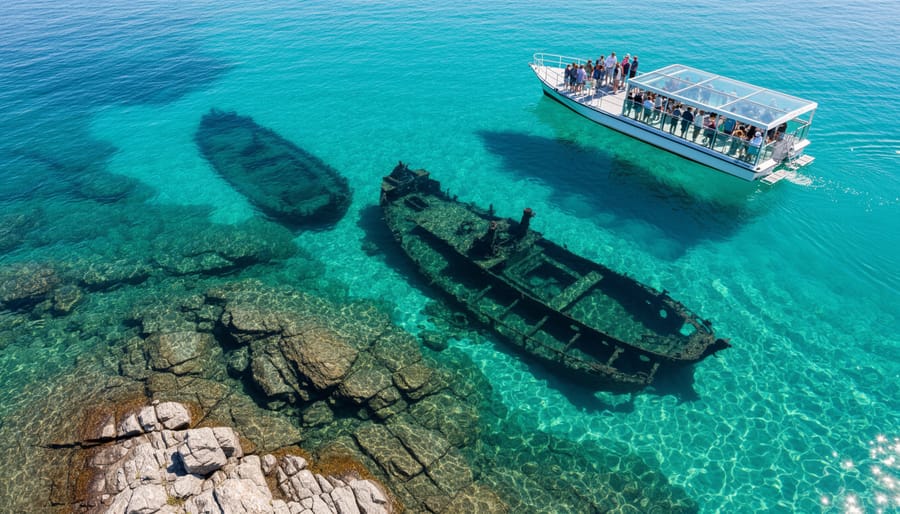
Fathom Five National Marine Park protects over twenty shipwrecks resting in the clear, cold waters of Georgian Bay, making it one of the best freshwater diving sites in the world. The wrecks range from intact schooners you can explore at recreational depths to deeper, more challenging sites for advanced divers. If you’re not a diver, glass-bottom boat tours offer a stunning view of the submerged vessels without getting wet, you’ll see wooden hulls, anchor chains, and the aquamarine water that makes these wrecks so photogenic.
Flowerpot Island, the park’s most visited feature, sits a short boat ride from Tobermory’s harbor. The island’s name comes from two towering rock pillars carved by waves and weather, and there are easy hiking trails that loop past the flowerpots, through forest, and along the shoreline. Boat shuttles run frequently in summer, but you’ll need to book your shipwreck diving and tours in advance during peak season.
Water clarity peaks in late spring and early fall when algae levels drop, though summer offers the warmest conditions. Georgian Bay stays cold year-round, so even in August you’ll want a wetsuit for any water activity.
3. Tobermory Harbor and Waterfront (Scotland)
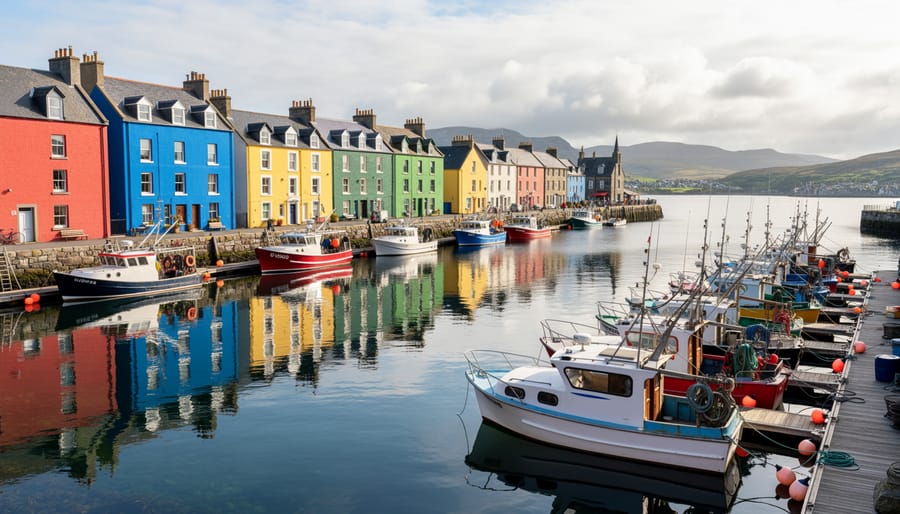
Tobermory’s harbor front is instantly recognizable, lined with brightly painted buildings that curve along the waterfront in shades of pink, yellow, blue, and red. The working harbor stays active throughout the day as fishing boats unload their catch, private yachts moor alongside lobster creepers, and the Oban ferry comes and goes. Beyond the postcard views, this is where you’ll board wildlife boat trips that head out into the Sound of Mull. Seals are almost guaranteed, lounging on rocks near shore, while dolphins appear more unpredictably. White-tailed eagles, reintroduced to the island decades ago, hunt along the coastline, their massive wingspans visible from the boats.
Early morning offers the best light for photographing the colorful facades, before tour buses arrive and the streets fill. Late afternoon brings the most harbor activity as fishing boats return and locals gather at the waterfront pubs. Wildlife trips run multiple times daily during summer, but morning departures often yield calmer seas and better animal sightings. Book a day ahead if you can, especially if you’re visiting during the June whisky festival when the town swells with visitors.
4. The Grotto and Bruce Trail (Ontario)
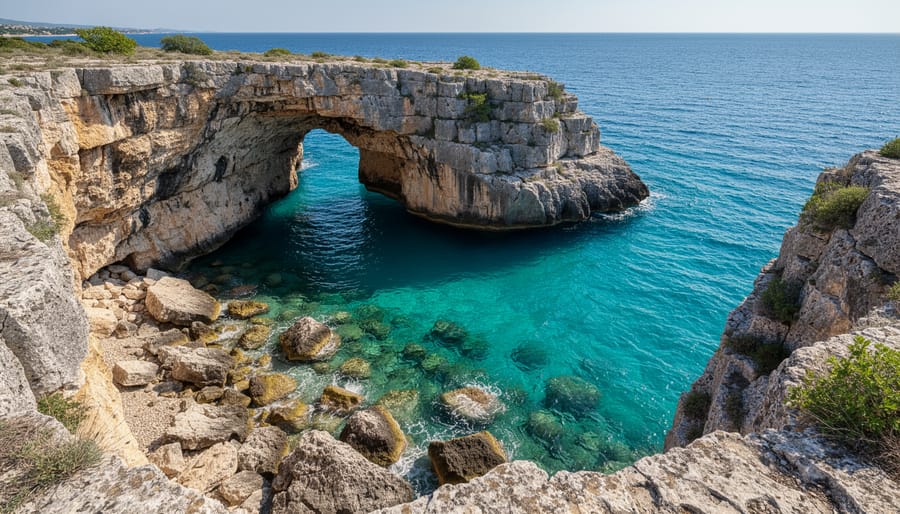
The Grotto stands as Ontario’s most photographed natural formation, a limestone cave carved by centuries of wave action, opening to a pool of impossibly turquoise water. You’ll reach it via the Bruce Trail, which winds through the Bruce Peninsula National Park’s rocky coastline and cedar forests. The 45-minute hike from the parking area isn’t technically difficult, but the uneven limestone requires sturdy footwear and attention on slick sections.
Crowds became overwhelming during peak summer weekends, prompting Parks Canada to introduce a reservation system for the Cyprus Lake parking lot. Book your timed entry weeks in advance if you’re visiting between June and September, or arrive before 8 a.m. as a walk-in. I learned this the hard way after driving two hours only to find the access road full and turned away.
The conservation measures exist for good reason. Thousands of visitors each year have eroded pathways and damaged fragile cliff-edge vegetation. Stay on marked trails, don’t climb outside designated areas, and pack out everything you bring. The water temperature hovers around 10°C even in summer, so swimming is brief for most people despite the inviting color.
For a fuller experience of the area’s dramatic geology and fewer crowds, explore other Bruce Peninsula hikes like the Indian Head Cove loop or Halfway Log Dump trails, which offer similar limestone formations with a fraction of the foot traffic.
5. Calgary Bay and Beaches (Scotland)
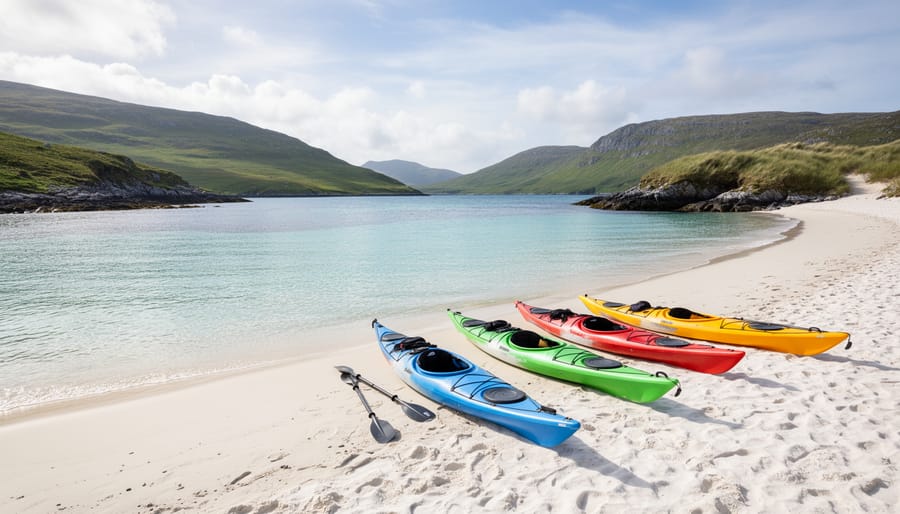
Calgary Bay sits about three miles west of Tobermory village, offering one of Mull’s most family-friendly coastal escapes. The beach stretches white and wide, backed by dunes rather than cliffs, which makes it ideal for younger children who want space to run without the vertical drop you’ll find elsewhere on the island. The water stays shallow for a surprising distance, though it’s still Scottish-cold even in summer, bring wetsuits if you’re planning more than a quick splash.
Kayakers favor Calgary Bay for its sheltered position and relatively calm conditions. Launch from the sand and paddle toward the headlands where you might spot seals hauled out on rocks. The Art in Nature sculpture trail winds through the woodland behind the beach, featuring site-specific works that blend into the landscape rather than dominating it. You’ll need about 45 minutes to walk the full loop.
This isn’t a facilities-heavy beach. There’s a small café and gallery at the car park, but no lifeguards or equipment rental. Pack everything you need, and time your visit for low tide when the sand expands dramatically.
6. Chi-Cheemaun Ferry (Ontario)
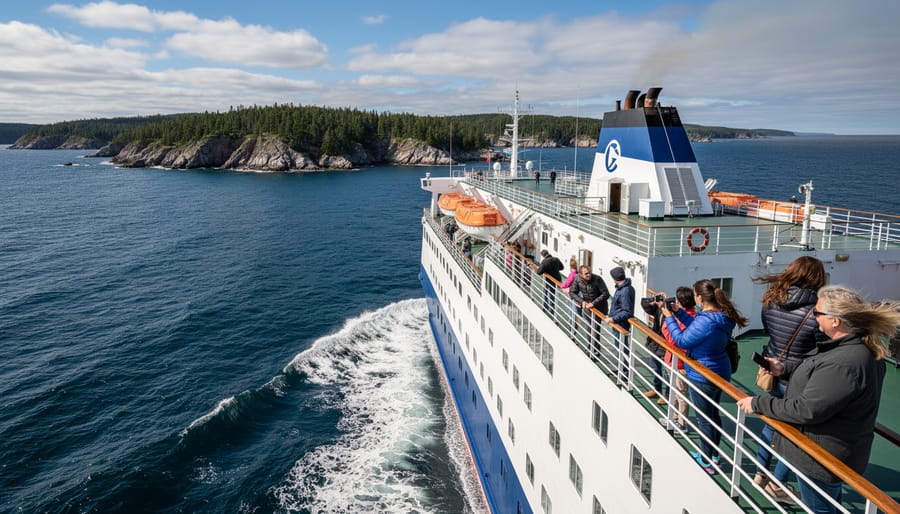
The Chi-Cheemaun ferry isn’t just transportation, it’s an eighty-minute journey across Georgian Bay that doubles as a scenic attraction. The vessel carries vehicles and passengers between Tobermory and South Baymoth on Manitoulin Island, cutting through deep blue waters with limestone cliffs receding behind you and open horizon ahead. I’ve watched travelers who boarded thinking it was simply a car ferry end up spending the entire crossing on deck, captivated by the changing water colors and occasional sightings of gulls riding the wind.
The Chi-Cheemaun Festival in Tobermory celebrates the ferry’s role in connecting communities, bringing together locals and visitors for a day of culture, music, and activities suitable for all ages. It’s a chance to experience the area’s spirit beyond its natural attractions, with the ferry itself serving as the symbolic link between island and mainland. Even outside festival timing, the crossing offers a contemplative pause in your itinerary, a chance to transition between destinations while enjoying the ride itself rather than merely enduring it.
7. Mull Museum and Local Heritage (Scotland)
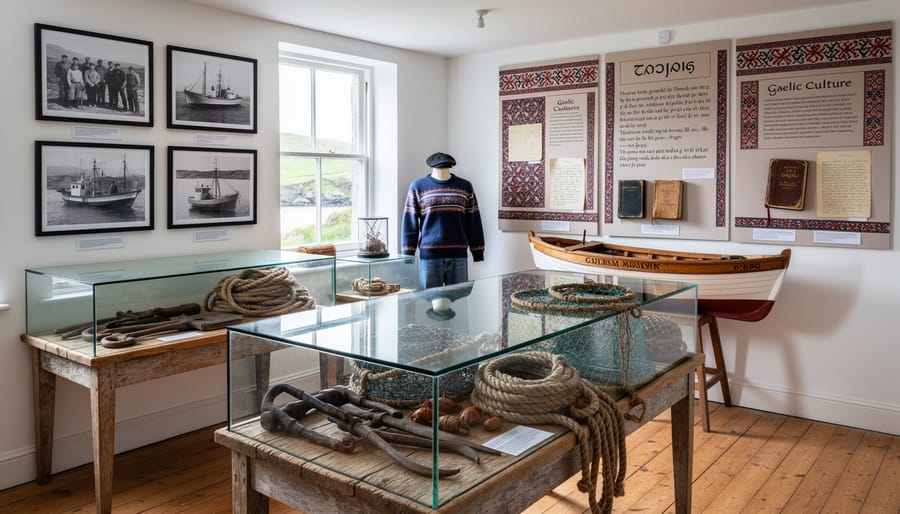
Tucked near Tobermory’s harbor, the Mull Museum occupies a converted bakery and packs surprising depth into its compact rooms. You’ll find artifacts from the island’s fishing past, nets, creels, photographs of weathered boats, alongside exhibits on Gaelic language revival and the everyday lives of crofters. I spent twenty minutes reading handwritten accounts from lighthouse keepers and didn’t expect to be so absorbed.
The volunteer-run museum changes displays regularly, so repeat visitors often discover something new. Admission is modest, usually by donation, and the staff genuinely enjoy sharing local stories. It’s particularly valuable on rainy afternoons when outdoor plans shift, and it provides context that makes the rest of Tobermory more meaningful. You’ll understand why the colorful harbor buildings matter, why certain families still speak Gaelic at home, and how this small town sustained itself through centuries of isolation and change.
Getting to Tobermory: Access and Transportation
Getting to either Tobermory requires planning, but the journey becomes part of the adventure once you understand your options.
Reaching Tobermory, Scotland
Flying into Glasgow offers the most straightforward international access. From there, you’ll drive roughly three hours to Oban, where the CalMac ferry departs for Craignure on Mull. The 45-minute crossing runs multiple times daily, but book ahead during summer and festival periods like the June 20th whisky festival. Once on Mull, Tobermory sits another 35 minutes north along single-track roads with passing places. If you’re not renting a car, bus services connect Craignure to Tobermory, though they limit your flexibility for exploring the island.
Reaching Tobermory, Ontario
Most visitors drive from Toronto, a straightforward four-hour route north through Owen Sound. Highway 6 runs the length of the Bruce Peninsula, ending right in Tobermory. Summer weekends bring heavy traffic, so I’ve learned to leave early or arrive midweek. Parking fills quickly at popular spots like The Grotto, where you’ll need to book timed entry through Parks Canada during peak season.
| Destination | Primary Route | Travel Time from Major City | Seasonal Notes |
|---|---|---|---|
| Tobermory, Scotland | Glasgow → Oban ferry → Drive | 5-6 hours total | Ferry reduced in winter; book summer crossings ahead |
| Tobermory, Ontario | Toronto → Highway 6 North | 4 hours | Winter road closures possible; timed parking May-October |
Rental cars give you freedom to explore both regions, but consider the environmental impact. Scotland’s small size makes buses viable if you’re staying put. In Ontario, some outfitters offer shuttle services to trailheads, reducing the need to drive everywhere. Winter travelers should check road conditions before heading north into Bruce Peninsula, where snow can close sections unexpectedly.
When to Visit and What to Pack
Scotland’s best window runs from May through September, with summer bringing the warmest weather, extended daylight, and key events like the Tobermory Whisky Festival on June 20th. Shoulder seasons (May and September) offer fewer crowds, better accommodation availability, and still-decent conditions for wildlife boat trips. Ontario’s peak season stretches from late June through August when water temperatures make diving and swimming bearable, though you’ll share The Grotto with plenty of others. Fall (September to early October) brings spectacular colors along the Bruce Trail and quieter trails, but the water gets cold fast.
Both destinations demand layers. Scotland’s weather shifts without warning, sunshine to sideways rain in twenty minutes, while Ontario’s Georgian Bay creates its own microclimates. Pack these essentials regardless of season:
- Waterproof jacket with sealed seams and a hood that actually stays on
- Hiking boots with ankle support and grip for wet rocks
- Sun protection: high-SPF sunscreen, sunglasses, and a hat (you’re exposed near water)
- Quick-dry layers including merino wool or synthetic base layers
- Sturdy daypack for trail snacks, water, and extra clothing
- Dive certification card and wetsuit if you’re heading underwater in Ontario
If you’re flying into Toronto for the Ontario route, check Toronto Pearson wait times before leaving your accommodation, the drive north is long enough without airport delays eating your first day. For Scotland, study public transport maps if you’re connecting through Glasgow, though renting a car gives you far more flexibility once you reach Mull.
Accommodation Options
In Scotland’s Tobermory, you’ll find traditional B&Bs run by island families, small waterfront hotels with views over the harbor, and self-catering cottages perfect for longer stays. The village is tiny, so accommodation fills quickly during events like the Tobermory Whisky Festival on June 20th and throughout July and August when wildlife tours peak. Book at least three months ahead for summer, six months if visiting during the festival.
Ontario’s Tobermory offers motels clustered near the harbor, provincial park campgrounds at Bruce Peninsula National Park, and vacation rentals ranging from simple cabins to lakeside houses. Campsite reservations open five months in advance and disappear within hours for July and August weekends. If you’re driving up for diving or hiking The Grotto, weekday visits give you better availability and lower rates than weekends.
For both destinations, look for accommodation with flexible cancellation policies, since weather can disrupt ferry schedules in Scotland and water conditions in Ontario. I learned this after a gale postponed my Oban ferry crossing, making a rigid booking a headache. Staying slightly outside either village center often means better value and easier parking, with the trade-off being a short drive to restaurants and attractions.
Local Tips and Insider Insights
I learned the ferry lesson the hard way in Scotland: I showed up at Oban expecting to drive onto the Caledonian MacBrayne ferry to Mull, only to discover they were fully booked three days ahead in July. Book your crossing at least a week in advance during summer, and reserve dinner tables in Tobermory’s handful of restaurants the day you arrive, this tiny village has more visitors than seats. The single-track roads on Mull demand patience and courtesy: pull into passing places on your left to let faster drivers or oncoming traffic through, and never park in a passing place itself.
In Ontario, I underestimated how cold Georgian Bay stays even in summer. The water at The Grotto hovers around 10-15°C, so bring a wetsuit if you plan to swim rather than just photograph. To avoid the crowds crushing The Grotto on sunny summer weekends, arrive before 8 AM or visit on overcast weekdays when the turquoise color is less dramatic but the experience is yours alone. Parking fills fast at Cyprus Lake trailhead, so carpooling makes practical sense. The Bruce Trail requires real footwear, not flip-flops, I watched someone turn back with bleeding feet after attempting the rocky route in sandals. Finally, pack layers for both destinations: Scottish weather shifts hourly, and Ontario evenings turn surprisingly cool even after hot days.
Frequently Asked Questions
Travelers planning a Tobermory visit often share the same practical concerns, starting with the most fundamental question: which Tobermory are you visiting? The Scottish harbor town on the Isle of Mull and the Ontario village on the Bruce Peninsula share a name and coastal charm, but they cater to distinctly different interests. Understanding the differences helps you book the right flights, pack appropriate gear, and set realistic expectations.
Which Tobermory should I visit for whisky versus diving?
Scotland’s Tobermory on the Isle of Mull is the whisky destination, home to Tobermory Distillery and the annual Tobermory Whisky Festival on June 20th. Ontario’s Tobermory on the Bruce Peninsula is Canada’s diving capital, with shipwrecks and the crystal-clear waters of Fathom Five National Marine Park.
Are both destinations accessible for travelers with limited mobility?
Scotland’s Tobermory offers harbor-level accessibility, with distillery tours and wildlife boat trips suitable for most fitness levels. Ontario’s Tobermory requires more physical capability, The Grotto involves steep trails and uneven rock, though Flowerpot Island glass-bottom boat tours provide easier access to the park’s highlights.
Can I bring diving equipment or specialized travel items to either location?
Ontario welcomes divers with local shops offering rentals and air fills, though transporting your own gear via the Chi-Cheemaun Ferry is straightforward. Scotland’s focus is wildlife tours rather than diving, so specialized underwater equipment is less relevant there.
How long should I plan to stay in each Tobermory?
Scotland’s Tobermory works as a two-to-three-day base for exploring Mull’s wider attractions, especially during festival periods. Ontario’s Tobermory typically needs three-to-four days to experience hiking, diving, ferry trips, and The Grotto without rushing.
Currency considerations are straightforward: Scotland uses British pounds, while Ontario accepts Canadian dollars (credit cards work universally). Language poses no barrier in either destination, though you’ll hear Gaelic place names and occasional Scottish accents in Mull. Both locations operate on seasonal tourism calendars, with summer offering the fullest experience but also the heaviest crowds and highest prices. I’ve learned that shoulder seasons, late May or early September, provide better value and more intimate encounters with these small communities, though you trade some weather reliability for the privilege.
Whether you choose Scotland’s whisky-soaked coastlines or Ontario’s crystalline diving spots, both Tobermory destinations reward travelers who venture beyond the usual tourist circuits. I’ve found that smaller harbor towns like these deliver the most memorable experiences precisely because they demand a bit more effort to reach and understand.
The decision between them comes down to what pulls you harder: sipping rare single malts while watching dolphins breach in Scottish waters, or floating above centuries-old shipwrecks in Georgian Bay’s impossibly clear depths. You can also travel solo or with friends depending on whether you want quiet contemplation or shared adventure, and both destinations accommodate either approach beautifully.
If your plans involve connections through busy airports, remember to track flight delays before heading to smaller regional transport links where timing matters more. The journey to either Tobermory requires patience, but that’s exactly what filters out the crowds and preserves the authentic character that makes these places worth discovering in the first place.