7 Smart Ways to Handle Flight Delays in Vancouver, Ranked by Usefulness
I’ve been stuck on the tarmac at Vancouver International Airport more times than I care to admit, watching my tight connection to Tofino slip away while the fog rolled in off the Strait of Georgia. Flight delays at YVR happen year-round, but you can minimize the chaos by knowing your passenger rights under the Air Passenger Protection Regulations, downloading real-time tracking apps before you even leave home, and packing essentials in your carry-on that turn a four-hour delay from miserable to manageable.
Vancouver’s unique position as Canada’s Pacific gateway means delays here ripple through entire West Coast itineraries. Weather is the biggest culprit, from November’s coastal storms to summer wildfire smoke that can ground planes without warning. But mechanical issues, crew shortages, and the airport’s single-runway configuration during construction periods all contribute to the problem.
The good news? Most delays are predictable if you know what to look for, and Canadian regulations actually give you more compensation rights than most travelers realize. I learned this the hard way during a six-hour fog delay that eventually earned me $400 in compensation, a lesson in travel insurance, and a newfound appreciation for noise-canceling headphones.
This guide walks you through the ten most useful strategies for handling YVR delays, ranked by immediate impact. Whether you’re reading this from Gate C right now or planning your first trip to British Columbia, these tactics will help you stay ahead of disruptions, protect your rights, and maybe even turn delay time into an unexpected chance to explore one of Canada’s best airport dining scenes.
How We Ranked These Strategies
We ranked these seven strategies based on four practical criteria that matter when you’re stuck at YVR: immediate impact on resolving your delay situation, how easy each tactic is to execute under stress, cost-effectiveness, and real-world success rates I’ve witnessed through dozens of Vancouver airport experiences and conversations with fellow travelers heading into British Columbia’s wilderness.
The top-ranked strategies deliver the fastest, most reliable results with minimal effort or expense. Notice that simply complaining to airline staff didn’t make our list, venting frustration feels productive but rarely moves the needle on rebooking or compensation. Instead, we prioritized proactive solutions that put control back in your hands.
Each strategy earned its position through repeated effectiveness during actual YVR delays, from fog-cancelled winter flights to summer thunderstorm groundings. The rankings reflect what actually works when your Whistler ski trip or Vancouver Island ferry connection hangs in the balance, not just theoretical advice.
1. Download Your Airline’s App Before Departure, Your First Line of Defense
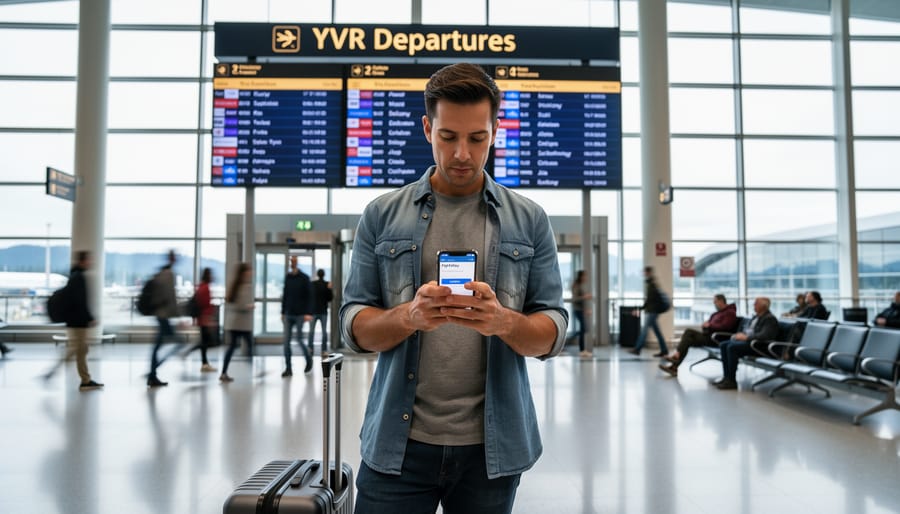
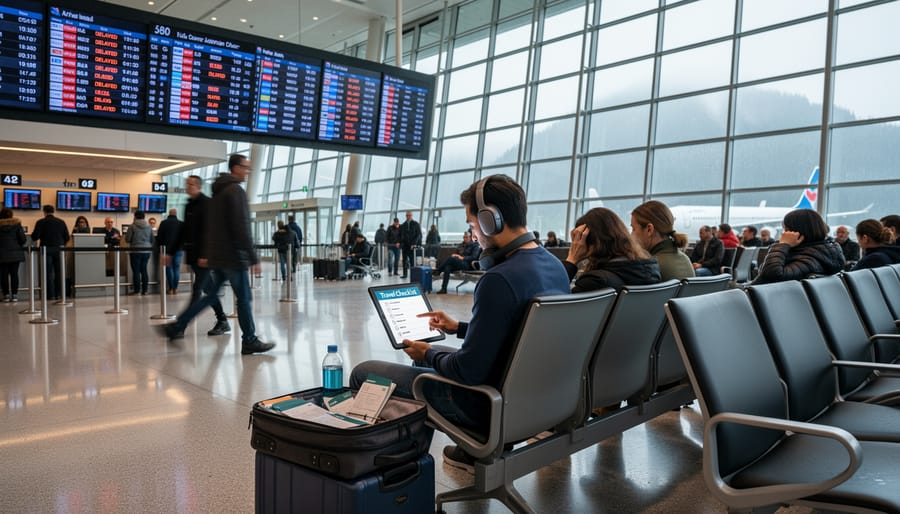
I learned this lesson the hard way during a November fog delay at YVR. While 80 passengers stood in an anxious line snaking toward the gate desk, I sat down, opened the Air Canada app, and rebooked myself onto the next available flight to Kelowna, all before the gate agent even called the first person forward. That three-minute head start saved me four hours of waiting and turned a potential disaster into a minor inconvenience.
Your airline’s mobile app is hands-down the most powerful tool for managing Vancouver delays. The moment a delay or cancellation appears in the system, you will get a push notification, often before the gate announcement. That early alert gives you a critical window to act while others are still checking departure boards or asking airport staff what is happening.
The rebooking feature is where the app truly shines. Most major carriers let you browse alternative flights and confirm new seats directly from your phone, no agent required. You can compare options, see available seats in real time, and secure your spot while competitors are still dialing customer service or joining that growing gate line. The interface also stores your digital boarding pass, so once you rebook, everything updates automatically.
Beyond rebooking, the app gives you direct access to customer service chat, a faster route than phone holds during weather events when call centers get slammed. You can also track your delay compensation eligibility, check gate changes, and monitor inbound aircraft status. Download it before you leave home, log in, and turn on notifications. When delays hit Vancouver, you will already be ahead of the crowd.
2. Know Your Passenger Rights Under Canadian Regulations, And Use Them
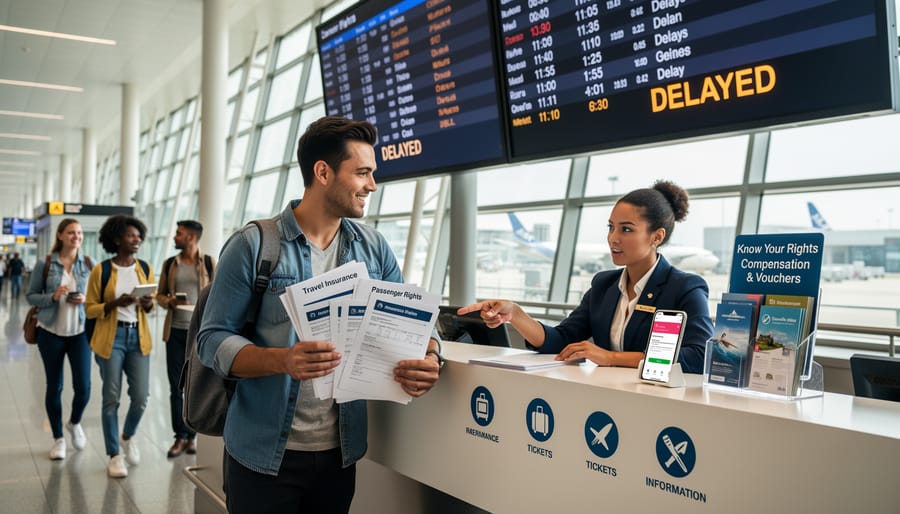
The APPR minimum compensation rules are your legal shield at YVR, but most travelers don’t know they exist until after they’ve already spent eight hours in uncomfortable airport chairs. I learned this the hard way during a maintenance delay that stretched into dinner time, watching dozens of passengers accept “Sorry, nothing we can do” while I was quietly filing screenshots and collecting meal vouchers. Here’s what you’re actually entitled to when flights go sideways in Vancouver.
Delay compensation under APPR kicks in based on delay length and cause. The key distinction is whether the disruption was within the airline’s control, think crew shortages or maintenance issues, versus outside factors like fog rolling across the Georgia Strait or air traffic control problems.
- Delays of 3+ hours within airline control: food and drink, and $400 compensation for arrivals delayed 3-6 hours
- Delays of 6+ hours: $700 compensation, plus meals and phone access
- Delays of 9+ hours: $1,000 compensation
- Overnight delays within airline control: hotel accommodation and ground transportation to and from the airport
- Weather and safety issues: airlines must provide updates and rebooking, but no cash compensation
Document everything from the moment delays are announced. Take photos of departure boards showing your flight status, save all text and email notifications, and keep receipts for any expenses you incur. At the gate, ask specifically for meal vouchers and hotel arrangements if you’re facing an overnight, don’t wait for agents to offer. Airlines won’t chase you down with compensation cheques later, so file claims through their websites within 30 days, attaching your documentation. International flights have slightly different thresholds, but the process is the same.
3. Book Accommodation Near YVR with Flexible Cancellation Policies

I learned this strategy the hard way during a December snowstorm that turned my 6 PM departure into a next-morning scramble. While other passengers queued for two hours at the airport hotel desk, only to find everything sold out, I pulled up my phone and cancelled a pre-booked room I’d reserved weeks earlier with free cancellation. Cost me nothing, saved me everything.
The YVR hotel cluster makes this dead simple. Within a 10-minute shuttle radius, you’ve got the Fairmont Vancouver Airport (literally inside the terminal), along with the River Rock, Westin Wall Centre, and several mid-range chains. Most offer 24-hour free cancellation through booking platforms, meaning you can reserve a room when you book your flight and cancel it penalty-free if you don’t need it.
Here’s when to activate: the moment your delay pushes past 10 PM or threatens to cancel entirely. Don’t wait for the airline to offer hotel vouchers, they’re often for properties 30 minutes away with no availability. Having your own reservation gives you control and a guaranteed bed.
The mental insurance alone justifies it. I now book backup rooms for any YVR departure after 4 PM during November through February. If I fly out smoothly, I cancel from the gate. If weather rolls in, I’m already sorted while everyone else panics.
4. Befriend Gate Agents and Airport Staff, Politeness Pays Off
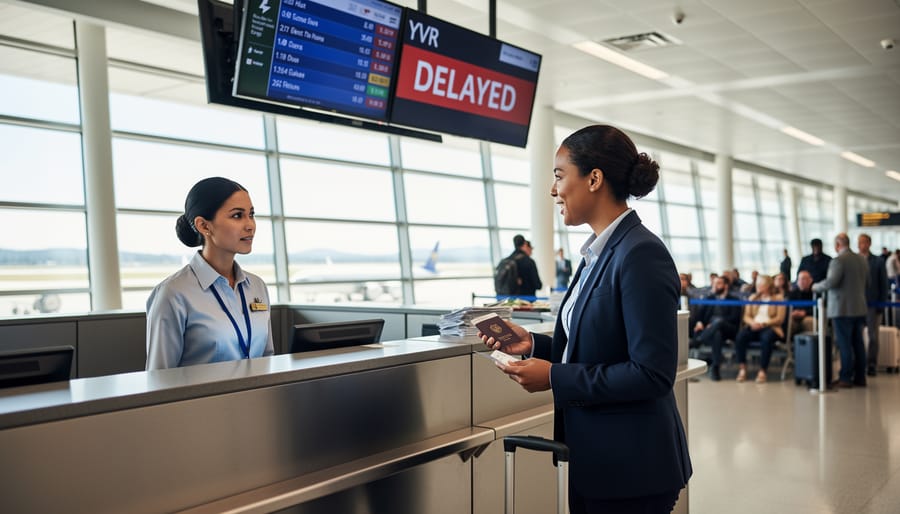
Gate agents at YVR see dozens of stressed travelers every hour during delays, but the ones who approach with composure and respect get better outcomes. During a weather-related backup last November, I watched two passengers with identical rebooking needs get vastly different results, the difference was entirely in their approach.
When delays hit, gate agents control rebooking authority that automated systems don’t offer: seats on partner airlines, meal vouchers beyond standard entitlements, and priority placement on standby lists. They also monitor YVR flight delays today across multiple carriers and can spot alternative routing options you won’t find on the app.
Start by acknowledging the chaos they’re managing. A simple “I know you’re dealing with a lot right now” immediately differentiates you from the shouters. State your situation clearly: “I’m connecting to Kelowna for a wedding tomorrow morning, what options do we have?” Ask questions rather than making demands. “Is there availability on WestJet’s next flight?” works better than “Put me on WestJet.”
If the first agent genuinely can’t help, politely request a supervisor, but only after they’ve tried. Supervisors have broader discretion for compensation and can override certain system limitations.
I once got rebooked on an Alaska Airlines flight to Seattle, then onward to Vancouver Island, because I stayed calm and asked the agent what she would do in my situation. She admitted it was technically available and made it happen. That courtesy turned a 12-hour delay into a 3-hour detour, and I learned to track delays on partner carriers too.
5. Pack Delay Essentials in Your Carry-On

I learned this lesson the hard way during a five-hour fog delay at YVR a few years back. My phone died at 22%, I was starving because I’d skipped breakfast, and I watched enviously as prepared travelers settled in with snacks and charging cables while I scrounged for overpriced airport food. Now I never fly through Vancouver without a properly stocked carry-on.
The difference between a tolerable delay and a miserable one often comes down to what you packed that morning. Your delay survival kit doesn’t need to be elaborate, just strategic:
- Phone charger and portable battery pack (10,000mAh minimum)
- Refillable water bottle (empty through security, fill at YVR’s water stations)
- Protein-rich snacks like nuts, granola bars, or jerky
- Essential medications plus copies of prescriptions
- Complete change of clothes in a compression bag
- Headphones, downloaded entertainment, and a paperback book
- Basic toiletries (toothbrush, face wipes, deodorant in TSA-friendly sizes)
YVR actually makes extended waits more bearable than most airports. You’ll find charging stations throughout the domestic and international terminals, not just at gates. Water bottle refill stations are near most restrooms. If you’re stuck long enough and have lounge access through a credit card or airline status, the Plaza Premium lounges offer showers, hot food, and quiet workspaces.
The fresh shirt trick saved me during that fog delay. When my morning flight finally departed at 2 p.m., I didn’t board feeling grimy and defeated. Small comfort, maybe, but it made the rest of my trip to Tofino feel less derailed. Pack like you expect a delay, and you’ll handle the actual delay with your sanity intact.
6. Monitor Weather and Air Traffic Patterns in Advance
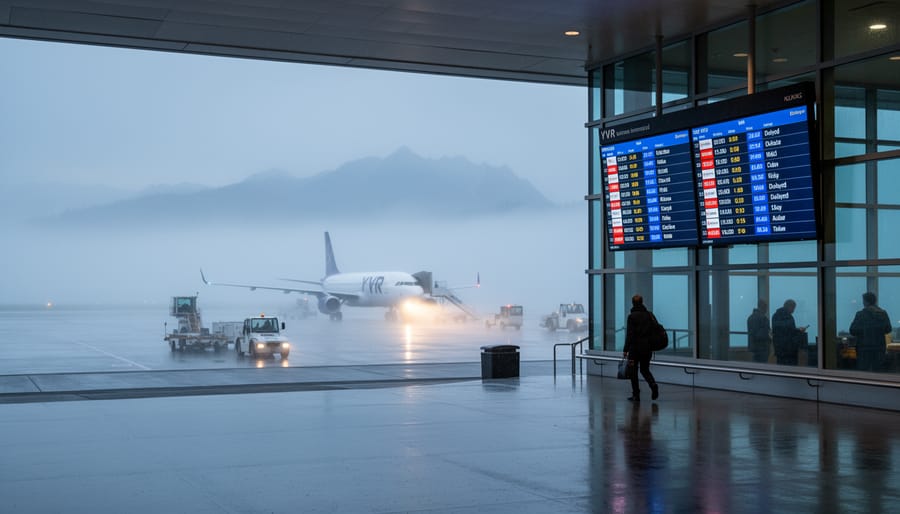
Check YVR’s real-time flight status page the morning of your departure, it’s updated constantly and shows delays before airlines send notifications. I learned this the hard way after arriving for a 6am flight that had been delayed three hours due to overnight fog, information that was posted online at 4am but didn’t reach my phone until I was already at the terminal.
Vancouver’s weather creates predictable delay patterns. Fog rolls in most frequently during October through January mornings, sometimes grounding departures until 10am or later. Summer afternoon thunderstorms between June and August can cause ripple-effect delays that compound throughout the evening. Knowing these seasonal windows helps you choose flight times strategically.
Flight tracking tools like Flightradar24 or FlightAware show your specific aircraft’s location and delay history. If your inbound plane is stuck in Toronto, you’ll know about your delay before the gate agent does.
For BC trips with tight connections, ferry sailings to Vancouver Island, heli-skiing pickups, or cruise departures, build in buffer time aggressively. A morning YVR arrival for a 2pm Tsawwassen ferry sailing feels safe until weather delays push you into the next sailing or beyond. Factor in airport security wait times and ground transportation, then add another two hours for weather contingency.
7. Consider Travel Insurance for High-Stakes BC Trips

Travel insurance isn’t essential for every Vancouver trip, but if you’re connecting through YVR to high-value BC experiences, it becomes genuinely worthwhile. I learned this the hard way when a friend’s fog delay caused them to miss their cruise departure from Vancouver, $4,000 in non-refundable costs gone.
Delay coverage typically reimburses you for missed connections, non-refundable bookings, and additional accommodation costs when flights are delayed beyond a threshold (usually 6-12 hours, depending on the policy). For travelers heading to remote wilderness lodges with strict check-in windows, heli-skiing operations with tight departure schedules, or all-inclusive packages where timing matters, this protection pays for itself in a single incident.
The cost-benefit math works best for expensive, time-sensitive itineraries. A $75 policy seems reasonable when protecting a $3,000 Tofino surf-and-stay package or a $5,000 Great Bear Rainforest expedition. For a simple weekend in Vancouver where you can use public transport maps to explore if plans shift, skip it.
Read the fine print carefully, some policies exclude weather-related delays or require minimum delay durations. Compare coverage limits against your actual trip costs, and buy insurance when you book, not at the airport.
What Causes Most Flight Delays at Vancouver International?
Vancouver’s coastal location creates a perfect storm of delay-causing conditions that are mostly weather-related. Fog is the biggest culprit, especially during fall and winter months when warm Pacific air meets cooler land temperatures, reducing visibility below landing minimums. I’ve personally sat through three-hour fog delays in November when YVR essentially shut down until conditions cleared, flights stacked up like dominoes because pilots simply couldn’t see the runway.
Winter brings a different challenge: de-icing. When temperatures drop and precipitation hits, every aircraft needs treatment before takeoff, creating cascading delays as planes queue for the de-icing pads. What starts as a 30-minute delay can stretch to two hours during heavy snowfall because the treatment only lasts a limited time, if conditions worsen, planes need re-treatment.
Air traffic congestion compounds these weather issues. YVR handles significant trans-Pacific traffic, and when storms disrupt arrival patterns, the ripple effects are massive. A delayed incoming aircraft means a delayed outbound departure, and suddenly your connection to Whistler or your seaplane to Vancouver Island is in jeopardy.
Understanding these patterns helps you plan smarter. If you’re flying in October through February, build extra buffer time into your BC itinerary. That ferry to Victoria or that first ski day at Whistler becomes far less stressful when you’ve anticipated the fog factor and booked accordingly.
Turning Delays into Opportunities: Quick Vancouver Stopover Ideas
A four-hour delay doesn’t have to mean four hours staring at gate monitors. If you’re stuck at YVR with enough time, the city’s actually within reach, but timing is everything.
The SkyTrain’s Canada Line runs directly from the airport to downtown Vancouver in 26 minutes. That connection opens up quick hits like Gastown’s cobblestone streets or a waterfront walk at Canada Place. During summer and fall, the Richmond Night Market sits just minutes from YVR and delivers legit Asian street food without the downtown trek. Even grabbing proper Vancouver coffee (JJ Bean, Revolver) or dim sum in Richmond beats another overpriced airport sandwich.
Here’s the math that matters: leave yourself 90 minutes to return, clear security again, and reach your gate. That means a 4-hour delay gives you roughly 2.5 hours of actual exploring time. Factor in SkyTrain schedules and walking distances. I’ve done the downtown dash during a six-hour mechanical delay, grabbed pho on Robson Street, stretched my legs along the seawall, and still boarded with time to spare.
Skip this if your delay’s under three hours or if you’re unfamiliar with Vancouver transit. The risk of missing your rebooked flight outweighs a rushed adventure. But for longer delays with domestic flights? The city beats the terminal every time.
Common Questions About Vancouver Flight Delays
Will the airline automatically rebook me if my Vancouver flight is delayed?
Airlines typically rebook passengers automatically for significant delays or cancellations, but you’ll get faster options by using their app or speaking with gate agents directly. Waiting for automatic rebooking can leave you with less desirable flight times.
Can I get compensation for a 2-hour delay at YVR?
Under Canadian Air Passenger Protection Regulations, you’re entitled to compensation starting at delays of three hours or more when the disruption is within the airline’s control. Two-hour delays don’t qualify for cash compensation, but you can request meal vouchers if the delay extends.
What if I miss my connection to a BC destination because of a Vancouver delay?
If both flights are on the same ticket, the airline must rebook you on the next available flight at no charge. For separate tickets, you’re responsible for rebooking and any associated costs, which is why travel insurance matters for multi-leg BC trips.
Is travel insurance worth it for domestic flights within Canada?
For standard domestic trips, probably not. But if you’re heading to expensive, time-sensitive BC destinations like remote lodges, cruise departures, or ski resorts with non-refundable bookings, the coverage can save you thousands.
How early should I arrive at YVR during winter months?
Plan for three hours before international flights and two hours for domestic during November through February. Fog and de-icing delays are common, and airport processing slows down when weather impacts operations.
Should I book the first or last flight of the day to avoid delays?
First flights are less likely to experience cascading delays from earlier problems, but they’re more vulnerable to overnight weather issues. Last flights give you rebooking options throughout the day if cancelled, but you risk getting stranded overnight if delays snowball.
These questions come up constantly in airport conversations and online forums, and the answers aren’t always intuitive. Understanding your rights and realistic expectations before you’re stuck in a delay situation reduces stress and helps you make smarter decisions under pressure.
Vancouver flight delays don’t have to derail your travel plans or ruin your mood. The difference between a stressful nightmare and a minor inconvenience usually comes down to preparation. Download that airline app, understand your rights, pack smart essentials, and treat gate agents like the humans they are. These aren’t just theoretical tips, they’re battle-tested strategies that work.
I’ve learned through years of navigating YVR that the travelers who handle delays best are the ones who plan for them without obsessing over them. Build buffer time into your BC itinerary, keep your carry-on stocked, and remember that sometimes the best travel stories come from unexpected detours. Whether you’re heading to Whistler’s slopes or Vancouver Island’s coast, these tools keep you in the driver’s seat. The mountains and ocean will still be there when you arrive.