How to Pack and Fly With Freeze-Dried Candy (and Taste-Test It on Arrival)
Yes, you can usually travel with freeze-dried candy, and it’s one of the easier treats to pack. It’s dry, lightweight, and shelf-stable, so you can carry it in your bag in minutes with no special gear. The real risks aren’t about flavor or freshness. They’re moisture, crushing, and the rules at the airport or border you’re heading to.
I learned the moisture lesson on a humid trip, when a half-open bag of freeze-dried gummies went from crisp and airy to chewy and sticky in a single afternoon. These candies are built to be crunchy, and they soak up water from the air fast. Seal them well, and they’ll survive nearly any trip.
Packing is simple. You need an airtight container or a resealable bag, a rigid case so nothing gets squashed, and a little padding. What takes more care is the rules side, since airlines and customs agencies set their own limits on food, and those can change. We’ll point you to the right places to check before you go, rather than guess at current regulations.
Once you’ve landed with your stash intact, the fun part is finally trying it. Below, we cover the packing steps, the risks to watch for, and a quick, practical taste test for the crunch-curious.
What to Gather Before You Pack Your Freeze-Dried Candy
Freeze-dried candy has two enemies: moisture and pressure. The stuff is basically a crunchy sponge, so a little humidity turns it chewy and sticky, and a little squeezing turns it to dust. Pack for those two problems and you’ve solved most of the trip.
I learned this the hard way. A few years ago I tossed a loose bag of freeze-dried treats into the bottom of my backpack, under a jacket and a water bottle. When I opened it at the hotel, the pieces were crushed and tacky, and the whole bag smelled faintly of sunscreen. Not the tasting moment I’d imagined.
Here’s the simple kit that prevents a repeat:
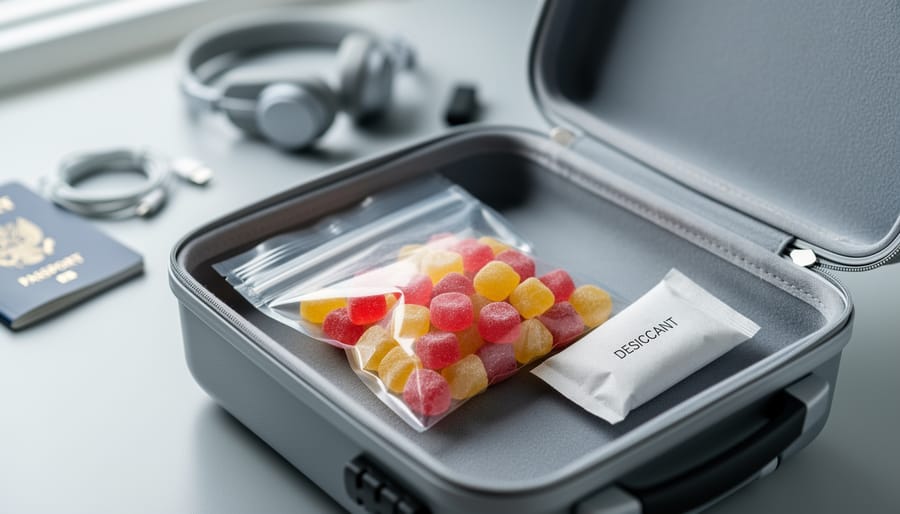
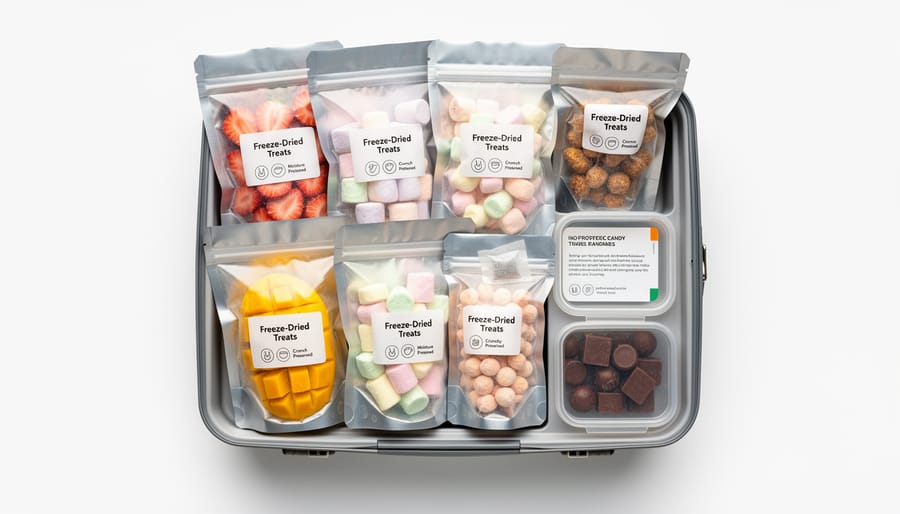
- A sturdy rigid container, like a plastic food tub with a snap lid, to stop crushing.
- Resealable moisture-proof bags to keep humid air out.
- Desiccant packets to absorb any stray moisture inside the bags.
- A hard-sided case or small box to protect the container in your luggage.
- A labeled snack pouch for the small portion you’ll actually eat on the road.
- A small trash bag or reusable pouch for wrappers and crumbs.
You don’t need to buy anything fancy. Most of this lives in a kitchen drawer already, and the desiccant packets often come tucked inside shoe boxes and vitamin bottles. The labeled pouch is worth the extra minute, too. It keeps your tasting stash separate from the sealed reserve, so you aren’t opening the main container every time you want a bite.
Safety Warnings and Rules to Check Before You Fly
Freeze-dried candy is about as low-drama as travel snacks get, but a few checks will keep it that way. The big one is where you’re headed. Many countries limit what food and candy can come across the border, and the rules aren’t always intuitive. If you’re crossing one, read up on the destination’s customs page first, and the same mindset behind our guide to international food rules applies here: look it up before you pack, not at the border.
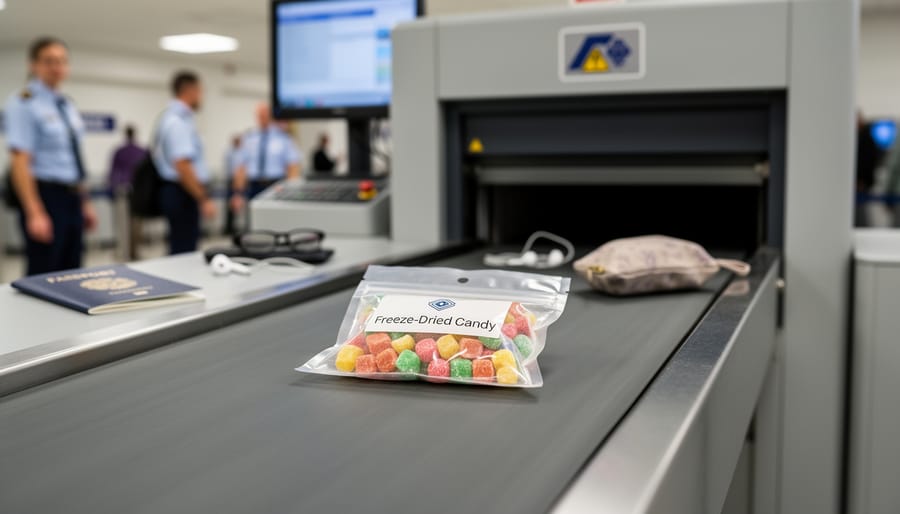
For airport screening, the TSA guidance on candy is a good starting point. Airlines and airports can differ, though, so check your carrier’s page too.
Then look at what’s actually in your bag. Commercial candy should stay in its original packaging, because the ingredient list and labeling answer most questions an inspector might have. Homemade or small-batch candy needs more care. If a batch has no ingredient or allergen label, leave it at home. It’s tough to explain to an officer, and it’s a real risk if you share it with a travel buddy who has a nut allergy. The same careful habits help you stay compliant with anything unusual you carry.
Know your stop signs, too. Reconsider the trip for a bag if:
– the batch is unlabeled or you can’t say what’s in it
– the border rules are unclear and you can’t get a straight answer
– the candy feels soft, sticky, or smells off, which signals moisture or spoilage
Finally, a note on eating it. Freeze-dried candy gets rock hard and can have sharp edges, so take small bites and go slowly, especially with kids.
How to Pack and Carry Freeze-Dried Candy Step by Step
Carry-On or Checked Bag: Which Works Better?
Carry-on is usually the safer bet for freeze-dried candy. You can keep the container on your lap or in the overhead bin, so nothing gets crushed under a heavy suitcase, and you can pull it out quickly if a security officer wants a look.
Checked bags have their own appeal. You get far more room, which helps if you’re bringing several bags of candy for friends or family. The tradeoff is rougher handling, since bags get stacked, dropped, and squeezed on the way to the plane.
A simple rule of thumb: if the pieces are delicate and airy, like freeze-dried gummy worms or marshmallow-style candies, keep them in your carry-on inside a rigid container. Sturdier pieces can ride in a checked bag if you nest them in a hard case and pad it with clothing. Either way, sealed packaging with a desiccant packet keeps moisture out.
Trying Freeze-Dried Candy on the Road: A Fun Taste-Test for Travelers
The first time I tried freeze-dried candy, I was stuck at a gate with a two-hour delay and a bag a friend had pressed on me before I left. I figured it would taste like regular candy with a weird texture. Then I bit into a piece of freeze-dried taffy and it shattered into something between a cracker and a cloud. The flavor hit harder than I expected, too, because pulling the water out concentrates the sweetness. It turned a dull layover into a small event, and honestly it’s one of the easiest ways to handle flight delays without leaning on vending machines.
Here’s what to expect when you try it. The first bite is a loud crunch, followed by an airy, almost foamy texture that melts on your tongue. Let a piece sit in your mouth for a moment and the flavor opens up. Eat slowly, since the edges can be sharp and very hard.
Some candies travel better than others:
– Sturdier picks: Gummy worms, fruit chews and taffy keep their shape and survive a bumpy bag.
– More fragile picks: Marshmallow-based pieces and anything puffy can crumble into dust, so give them a rigid container of their own.
Think of them as upgraded in-flight snacks easy to portion and fun to share.
To make it a ritual, save a few pieces for a viewpoint at your destination and have a tiny tasting there. Pass the bag around with your travel companions and let everyone guess the flavor before they read the label. A hotel-room taste test works too, especially after a long travel day.
How to Check Everything Went Smoothly and What to Do Next
The Big Takeaways for Flying With Freeze-Dried Candy
Think of it as a quick pre-flight checklist. If the candy stays dry, stays intact, and clears the rules, the only thing left to do is enjoy that first crunchy bite wherever you end up.
Flying with freeze-dried candy really is simple once you’ve got the basics down: keep it dry, keep it protected, and take a minute to check the rules for your airline and destination. That’s most of the battle. If you’ve been curious, start small. Pack a modest batch in a sturdy container with a desiccant packet, and save the first bite for somewhere memorable, like a quiet gate or a scenic stop. There’s a small, silly joy in that airy crunch when you’re far from home, and it turns an ordinary travel day into a tiny celebration.