Can You Actually Fly With Your Florida Medical Marijuana? Here’s the Real Story
Yes, you can fly with medical marijuana from Florida, with some important fine print. TSA’s current guidance lists medical marijuana as allowed in both carry-on and checked bags, marked “Special Instructions,” and the agency updated that page in April 2026. The catch: the TSA officer at your checkpoint has the final say on whether an item goes through.
Here’s why that matters. TSA screens for security threats, not drugs. Its officers aren’t hunting for illegal substances, but if something illegal turns up during screening, they’re required to refer it to a law enforcement officer. Florida’s state rules protect you at home. Airports and airplanes operate under federal oversight, and that’s where things get a little gray.
I learned long ago that the stress of flying with anything unusual comes from the unknowns, not the rules themselves. A little prep at home beats a tense conversation at the checkpoint every time.
Below, you’ll find a practical travel checklist, tips for lodging, and answers to the questions Florida patients ask most. Some details, like airline policies and documentation, vary, so we’ll point you to exactly what to verify before you pack.
The Short Answer: What TSA Says Right Now
Carry-On vs. Checked Bags
When TSA lists medical marijuana as “Yes (Special Instructions)” for both carry-on and checked bags, it’s saying the answer isn’t a flat no. It’s a conditional yes, and the condition lives in the fine print. That label applies to each bag type, so neither option is banned outright, but neither is a free-for-all either.
Here’s the part I’d stress: I’m not going to guess at what those instructions say. The wording can change, and TSA updated this guidance as recently as April 27, 2026. The safest move is to read the TSA special instructions required page yourself before every trip, so you’re working from the latest wording rather than something a blog (this one included) summarized months ago.
So which bag should you pick? If it were me, I’d lean toward the carry-on. The big reason is practical: your medicine stays within arm’s reach, so you’re never stuck without it if a bag gets delayed, rerouted, or lost. A checked bag rides in the cargo hold for hours, and you can’t get to it if you need a dose mid-trip.
That said, both options are listed as allowed, so choose whichever fits your situation. Just remember that the officer at the checkpoint makes the final call on what goes through, so a little patience and prep goes a long way.
What Happens If a Checkpoint Officer Spots It
Here’s the part that makes most travelers’ stomachs drop: what if the officer actually spots your medicine on the X-ray? Take a breath. TSA says its screening focuses on security, meaning the goal is catching threats to aviation and passengers, not hunting for drugs. Officers aren’t searching bags for illegal substances.
That said, TSA is clear that if an illegal substance or evidence of criminal activity turns up during screening, the matter can be referred to law enforcement. And the final decision on whether an item goes through the checkpoint rests with the individual TSA officer. Two different officers could handle the same situation a little differently, so it helps to know what happens at TSA before you get in line.
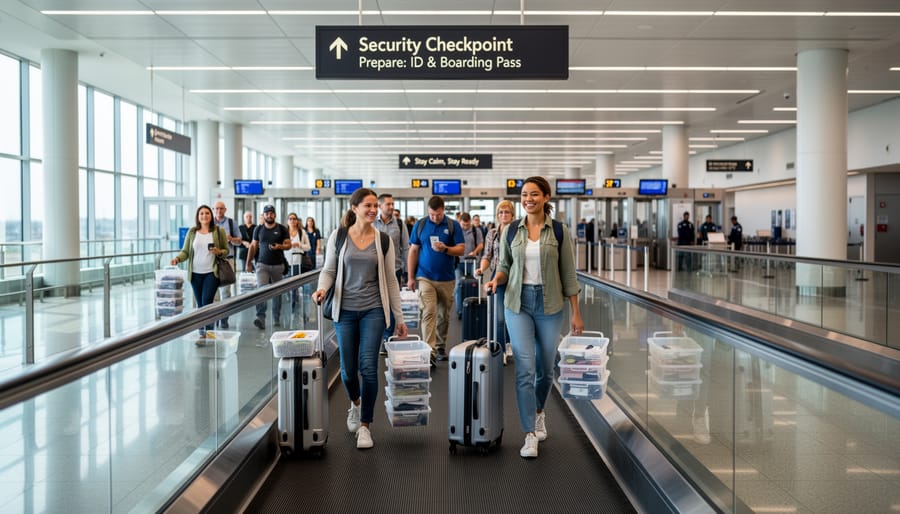
So what should you do? Stay calm and polite. Answer questions plainly, without arguing or over-explaining. Keep your medicine easy to reach so you can show it if asked, and don’t scramble or look flustered. Friendly and prepared goes a long way at a checkpoint, and it keeps a quick question from turning into a long delay.
Why Federal Rules Aren’t the Whole Picture for Florida Patients
Here’s the thing I wish someone had told me early on: getting past the TSA checkpoint is only one leg of the journey. TSA guidance covers what happens at the airport screening line, but your trip also touches the laws of wherever you take off and wherever you land.
State rules still matter at both ends. Florida’s medical program works inside Florida, but a Florida medical card doesn’t automatically carry weight in other states or countries. Some places recognize out-of-state patients, some don’t, and the rules can change from one destination to the next. If you’re flying somewhere new, check that location’s cannabis laws before you pack a single item. The same caution applies abroad, and our guide to international CBD travel shows how quickly the rules shift once you cross a border.
The recent move of medical cannabis to Schedule III at the federal level is the reason TSA updated its guidance. That’s encouraging, but it’s context, not a blanket green light. I wouldn’t read it as a promise that every airport, airline, or destination will treat your medicine the same way. TSA itself says the final decision rests with the officer at the checkpoint.
A few details I can’t hand you as fact, so please confirm them with the official sources before you fly:
– FAA rules that may apply to your trip
– Your airline’s policy on carrying medical marijuana
– Any documentation you may need to have with you
The safest habit is simple: check TSA’s official medical marijuana page, look up your destination’s rules, and contact your airline directly. It takes a few minutes now and saves a lot of stress at the gate.
Planning Your Trip: A Practical Checklist for Florida Travelers
Questions to Ask Your Airline Before You Fly
TSA’s guidance is clear, but I can’t tell you what your specific airline’s policy says. That’s why a quick call or message before you fly is worth the few minutes. Ask whether the airline has its own rules on traveling with medical cannabis, whether anything differs for carry-on versus checked bags, and whether they want any paperwork on hand. If you’re also packing edibles, our rundown of THC gummies rules covers a few extra things to think about.
Look for contact options on the airline’s website, usually under “Help” or “Contact Us,” where you’ll often find phone, chat, or social media support. Jot down the date, the name of the agent, and a short summary of what they told you. A quick screenshot of a chat can come in handy later.
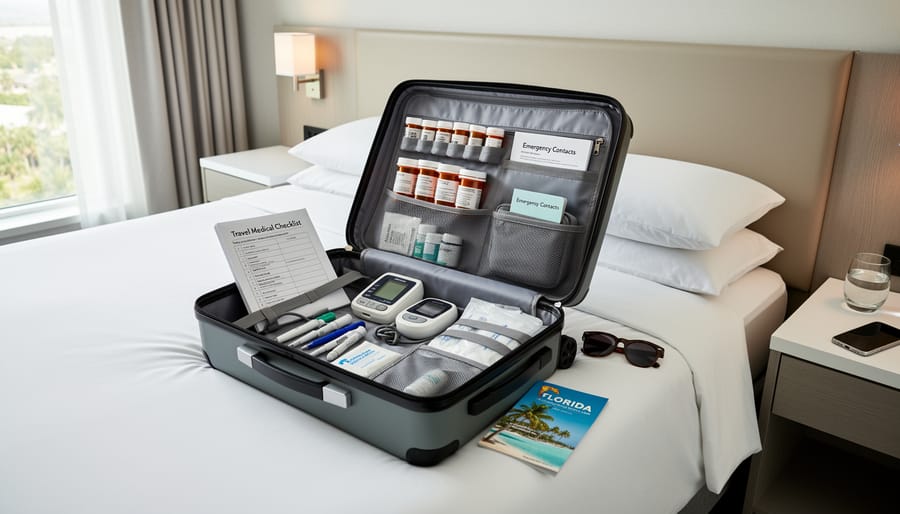
Here’s a simple pre-travel checklist to keep everything in order:
- Check TSA’s current medical marijuana page for the latest wording.
- Verify the laws at your destination before you pack.
- Contact your airline and note down their answers.
- Pack your medicine in its original, labeled packaging.
- Bring your medical card with you.
- Allow extra time at the airport, just in case.
Going through those steps once makes the actual travel day feel a lot calmer.
Hotels, Rentals, and Your Medication at the Destination
Once you’ve landed, the next question is where your medicine will actually sleep. Hotels and vacation rentals set their own house rules, and those rules don’t always match what’s legal in the surrounding area, so it pays to check before you book.
Start by reading the property’s policies page, then send a short email or message if cannabis products aren’t mentioned. A simple question works: “I travel with medically prescribed products. Are there any restrictions I should know about?” Keep the reply in writing so you have it if anything comes up at check-in.
Ask specifically about smoking and vaping. Many properties are entirely smoke-free, and that often covers vapes, balconies, and even outdoor areas. Some charge cleaning fees for violations, so it’s worth knowing the details up front rather than finding out at checkout.
Once you’re settled in, storage is mostly common sense. Keep everything in its original packaging, inside your bag or a small lockable case, and put it somewhere out of sight, like a dresser drawer or closet shelf, rather than on the nightstand. If your room has a safe, that’s a good spot. Housekeeping staff come and go, so a little discretion keeps things simple for everyone.
Common Questions About Flying With Florida Medical Marijuana
Here are quick answers to the questions travelers ask most. For the full breakdown, our guide to medical marijuana flight rules goes deeper, but these basics will get you started.
Can I bring medical marijuana in my carry-on or checked bag?
TSA’s current guidance lists medical marijuana as “Yes (Special Instructions)” for both carry-on and checked bags. Those special instructions are spelled out on TSA’s official page, so read them before you pack.
Will TSA search my bag for drugs?
TSA says its screening is focused on security and on detecting threats to aviation and passengers, and its officers don’t search for illegal drugs. If something illegal or evidence of a crime turns up during screening, though, TSA will refer it to a law enforcement officer.
Who makes the final call at the checkpoint?
The TSA officer does. Even with official guidance on your side, the final decision on whether an item goes through rests with the officer in front of you.
Where can I confirm the latest guidance?
Check TSA’s medical marijuana page directly. It was last updated on April 27, 2026, and it’s the best place to see the current wording before each flight.
Anything beyond that, like airline policies or specific paperwork, isn’t covered here, so confirm those details with official sources before you head to the airport.
So, can you fly with your Florida medical marijuana? TSA’s current guidance is genuinely encouraging. Its screening page lists medical marijuana as allowed in both carry-on and checked bags with special instructions, and its officers are focused on security threats, not on hunting for drugs. But the officer at the checkpoint still makes the final call, and that’s why a little preparation goes such a long way.
Keep your products in their original packaging, carry your medical card, and pack your medicine where you can reach it. Then check the rules at both ends of your trip, plus whatever your airline says, since those details sit outside what TSA covers. Give yourself extra time at the airport, stay calm and polite if anyone asks questions, and you’ve done most of what you can do.
The rules have shifted recently, and they may shift again. Before every flight, take two minutes to read TSA’s official medical marijuana page so you’re working from the latest wording. Then pack up, breathe easy, and enjoy the trip. You’ve got this.