Traveling With THC Gummies on a Plane: What the Rules Actually Say
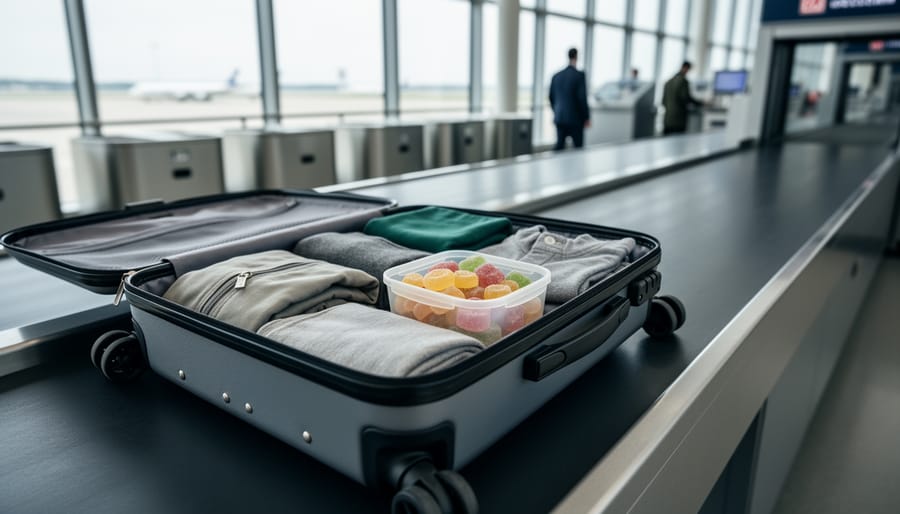
Short answer: no, you shouldn’t fly with THC gummies, even if you bought them legally at a dispensary. Airports are federally regulated, and under federal law cannabis products containing THC are still illegal, no matter what your home state allows. TSA officers aren’t hunting for edibles, but if they spot something during screening, they can refer it to local law enforcement. What happens next depends on the airport, the officer, and the state you’re standing in.
I learned this the hard way, sort of. Years ago I almost tossed a bag of gummies into my carry-on without a second thought, because they were legal where I lived and felt no different from candy. A friend who travels constantly stopped me and asked where I was flying. That one question changed my whole packing routine.
If your trip crosses a border, the stakes climb fast. International rules are stricter, and penalties can be serious. Hemp-derived CBD products follow a different set of rules, which is why many people choose to travel with CBD oil instead. Below, you’ll find how the rules work, what the real risks look like, and practical alternatives that keep you relaxed at the gate.
Why Flying With THC Gummies Is Different From Flying With CBD Oil
Here’s where a lot of travelers get tripped up: the rules that apply at home don’t follow you to the airport. You might buy gummies at a licensed shop in your state, but the moment you walk into a terminal, you’re dealing with federal rules, and THC is still federally illegal in the US.
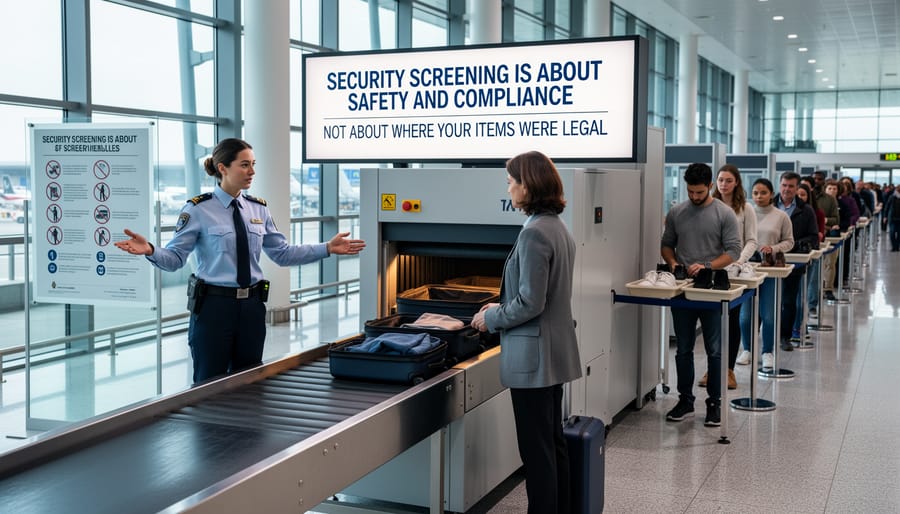
TSA’s job at the checkpoint is to look for security threats, not to hunt for drugs. But if an officer spots something that looks like an illegal substance, they’re expected to refer it to local law enforcement. What happens next depends on the airport, the officer and the state, which is why “it’s legal where I live” isn’t a safe bet.
CBD sits in a different category. Hemp-derived CBD with less than 0.3% THC is federally legal in the US. Gummies containing delta-9 THC above that threshold are not, no matter how they’re labeled or where they were purchased.
I learned this the awkward way, double-checking a bottle of CBD oil I’d packed and realizing the label said nothing useful about THC content. Now I check before I pack.
| Factor | Hemp-Derived CBD Oil | THC Gummies |
|---|---|---|
| Typical US federal status | Generally legal if under 0.3% THC | Generally illegal if above that threshold |
| Airport screening | Usually passes with proper labeling | Can be referred to law enforcement |
| International border risk | Varies widely by country | Typically high |
| What to bring | Original packaging and a lab report (COA) | Safest option is to leave it at home |
Rules also differ by country and sometimes by airline, and they change over time. This article stays general on purpose rather than citing the latest updates, so check the current TSA, airline and destination guidance before every trip.
How Airport Security and TSA Handle THC Gummies on Domestic Flights
Carry-On vs. Checked Bag: Does It Make a Difference?
Short answer: no, the bag you pick doesn’t change the legal picture. A THC gummy is just as illegal under federal law in your suitcase as it is in your jacket pocket. What changes is how likely someone is to notice it.
Carry-ons go through the checkpoint scanner, where officers look at images of your bag in real time, and anything that looks off can get pulled for a manual check. Checked bags are screened differently, usually out of sight, but they can still be opened and searched. Tucking gummies into a checked bag isn’t a loophole, just a different kind of gamble.
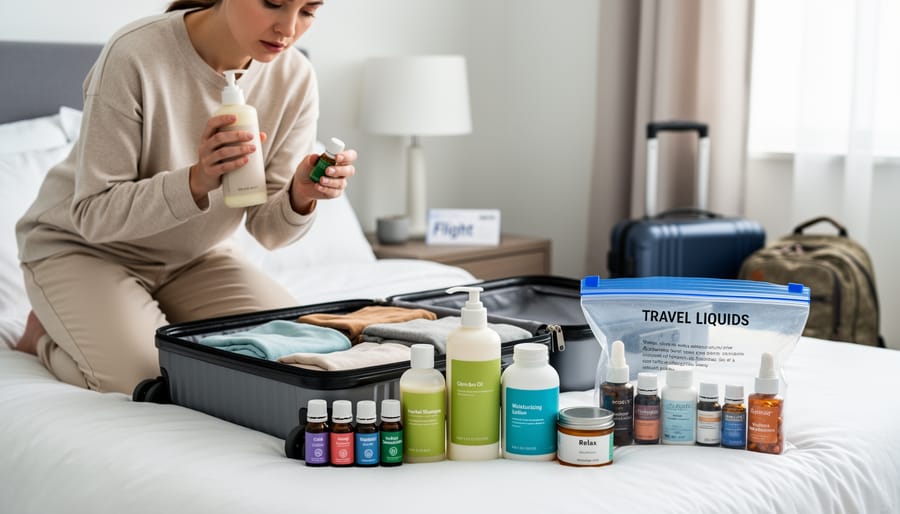
Here’s a detail that trips people up, though. Gummies are solid food, so the 3-1-1 liquid rule doesn’t apply to them. That rule is what makes CBD oil tinctures a packing puzzle, since the bottle needs to fit within the carry-on liquid limits. Gummies skip that headache, but they don’t skip the legal question.
Crossing Borders With THC Gummies: Canada and Beyond
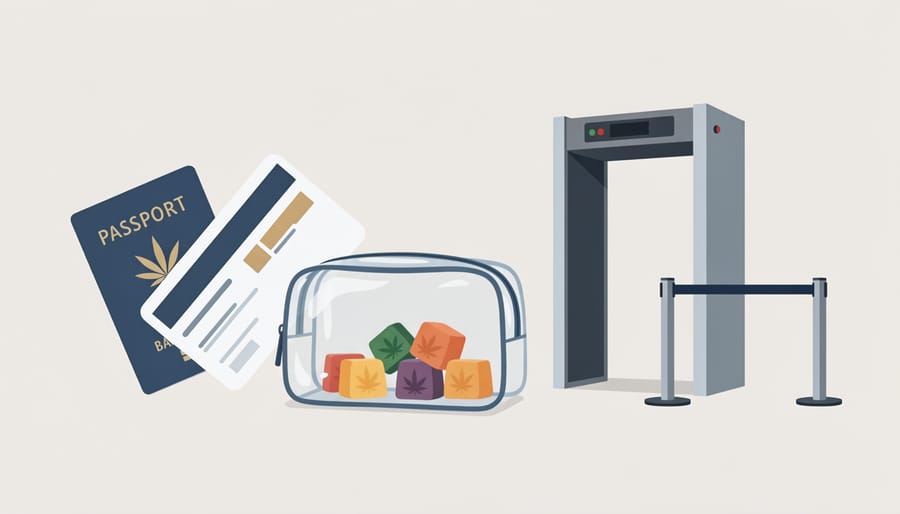
If you’re flying out of Vancouver or Calgary with a pack of gummies in your bag, here’s the short version: don’t. Cannabis products generally can’t cross international borders, and that includes the US-Canada line, even though both countries have legal cannabis markets. Legal at home and legal at the border are two very different things.
The logic is the same as with domestic flights, just with higher stakes. Border officers enforce the rules of the country you’re entering, not the one you’re leaving. A purchase from a licensed shop in British Columbia or Washington doesn’t give you a pass once you’re headed toward customs. Sealed packaging and a receipt won’t change that either.
One thing that catches people off guard is connections. If your itinerary has a layover in another country, that counts as a border crossing, even if you never leave the terminal. Your gummies would be subject to other countries’ laws the moment you land, even briefly. Some countries treat cannabis possession very seriously, and penalties can be severe, sometimes far beyond what a traveler would ever expect from a small bag of edibles.
I don’t say that to scare you, just to be realistic. A few minutes of research can save a trip, and a ruined vacation is a steep price for a snack.
Here’s a simple habit I follow: before any international trip, I check the destination’s rules, plus the rules of every airport I’ll pass through. Government travel pages and your airline are the best places to start, since policies shift and I’d rather you get the current version than trust my memory. If the rules look murky, leave the gummies at home and sort out your plan once you arrive.
Smarter Ways to Handle Cannabis Products on Your Trip
The simplest fix is to stop trying to carry the gummies at all. I learned that on a trip where I spent half the week before departure anxiously repacking a tin I never ended up bringing. If you’re headed somewhere with a legal market, buy there. A licensed shop will have fresh products, clear labeling, and zero airport drama. I picked up what I needed after landing and felt lighter the whole flight. Honestly, that saved me more stress than any packing hack ever has.
Here are a few other moves that work:
– Check the destination first. Look up local cannabis laws before you book, not after. Rules differ a lot from place to place, and if you use cannabis for health reasons, it’s worth reading up on the medical marijuana rules that apply to your route.
– Swap in hemp-derived CBD. If you want something calming in your bag, hemp-derived CBD is usually the easier option. Pick a product with a certificate of analysis showing it falls under the legal THC limit.
– Keep everything labeled. Leave CBD products in their original packaging, and carry a printed or saved copy of the lab report. If someone asks questions, you can answer them in seconds.
– Consider leaving it home. Some trips just don’t need it. A few days without a gummy beats a few hours explaining one.
None of this is legal advice, and policies change. A quick check of current airline, TSA, and destination guidance before you pack takes five minutes and can save you a much bigger headache.
Common Questions About Flying With THC Gummies
Can I fly with THC gummies between two legal states?
It’s still risky. Airports and planes fall under federal oversight, so state legality doesn’t protect you, and outcomes depend on the officer and the airport.
Does a medical card help?
Not reliably. A card is a state document, and it doesn’t override federal rules, though it’s worth reading what the rules say before you go.
Are delta-8 gummies treated differently?
Sometimes, but the rules are murky and change often. I’d check current guidance rather than assume they’re safe.
Can I mail them instead?
Mailing doesn’t get around the problem, since postal services follow federal law too. I wouldn’t count on it.
Is CBD oil allowed in my carry-on?
Hemp-derived CBD is generally easier, but liquid limits apply, so keep bottles small and labeled.
If you’re also bringing a vape, here’s how to pack & fly compliant. For anything else, check your airline, TSA, and government websites before you pack.
So here’s the bottom line: flying with THC gummies carries real legal risk, and “it’s legal where I live” won’t protect you at the airport. CBD oil is a different story. If you stick to hemp-derived products, keep the original labeling, and carry a lab report, traveling with it is usually much simpler.
Whatever you pack, check the current rules for your airline, airport, and destination before every trip. Policies change, and a quick look beforehand beats a surprise at the checkpoint. For more on traveling with CBD and vape products, keep browsing the site. Safe travels, and pack smart!