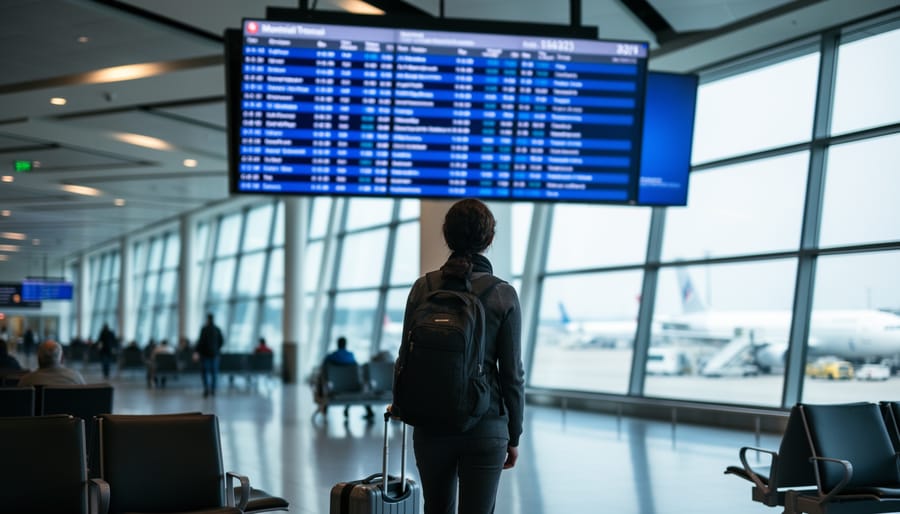
Montréal-Trudeau Airport Flight Delays: Why They Happen and What to Do
Standing in a Montreal airport terminal watching your departure time slip by? Check the official Aéroports de Montréal departures board or FlightAware’s real-time tracker first. On a typical disrupted day at Montréal-Trudeau, anywhere from 36 to over 100 flights can face delays, with cancellations ranging from 8 to 11 flights across US and Canadian routes.
I learned this the hard way last winter when my connection to Vancouver sat on the tarmac for three hours. The gate agent’s explanation about air traffic control delays felt deliberately vague, so I started digging into what actually causes YUL’s notorious backup patterns. Turns out, Montreal-Trudeau’s unique position as a bilingual hub serving both domestic and transborder traffic creates specific bottlenecks that other airports don’t face.
The good news? Most delays follow predictable patterns you can anticipate. Weather systems moving through the St. Lawrence corridor, peak-hour congestion between 6-9 AM and 4-7 PM, and cascading delays from Air Canada’s hub operations account for the majority of disruptions. Once you understand why your flight’s sitting still, you can take concrete steps to minimize the damage.
This guide walks you through the exact troubleshooting sequence I wish I’d known during that Vancouver fiasco: how to confirm whether your delay is minor or serious, what your rights are under Canadian passenger protection rules, and which rebooking strategies actually work when half the terminal is trying the same thing. We’ll also cover the prevention tactics that keep you off the departure board’s dreaded red text in the first place.
What’s Happening Right Now at Montréal-Trudeau
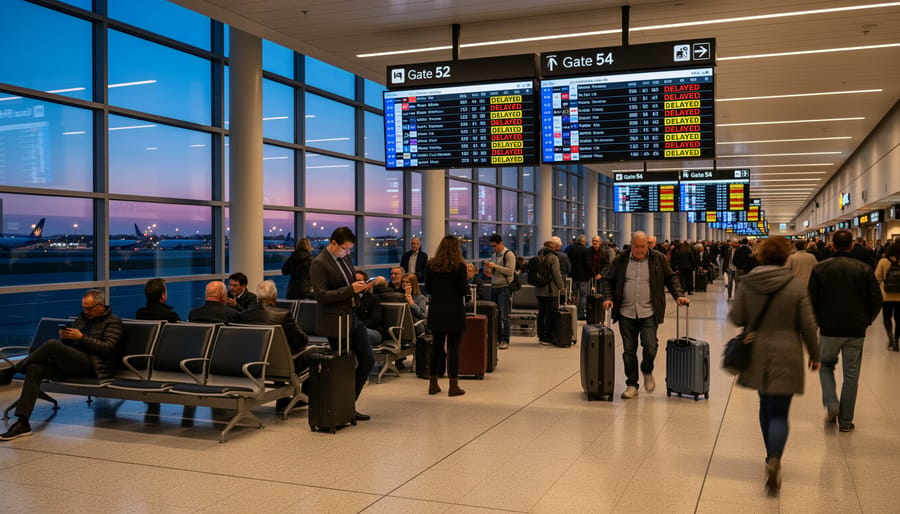
Flight delays at Montréal-Trudeau are not a rare occurrence, they happen daily, affecting dozens of flights across both domestic and international routes. On a typical day, you can expect anywhere from 36 to over 100 delayed departures and arrivals, with cancellations ranging from 8 to 11 flights. The numbers fluctuate based on weather, air traffic volume, and operational hiccups, but the pattern is consistent: if you’re flying through YUL, there’s a real chance you’ll encounter a delay.
US and Canada routes bear the brunt of these disruptions. Cross-border flights to American cities and domestic connections within Canada make up the majority of delayed and cancelled services. Real-time tracking data shows YUL delays and cancellations fluctuate hour by hour, so what looks manageable in the morning can snowball by afternoon.
Understanding these numbers matters because “delayed” can mean anything from a 20-minute push to a multi-hour wait. A delay count of 65 flights doesn’t tell you if your specific departure is part of that group or how long you’ll actually wait. That’s why checking your individual flight status is more useful than scanning aggregate delay stats. When you see Montreal airport delayed in a headline, it typically signals a higher-than-average disruption day, but even “normal” days at YUL involve dozens of delays. The key is knowing where to look for your flight’s current status, which we’ll cover next.
Common Causes of Flight Delays at YUL
Weather and Seasonal Factors
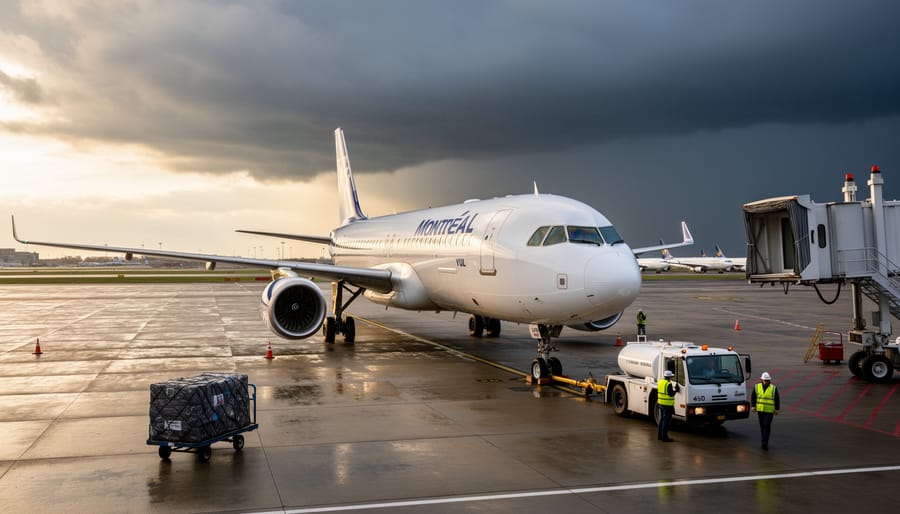
Montreal’s weather is the single biggest reason flights get delayed at YUL, and you can almost set your watch by the seasonal patterns. Winter is the worst culprit, from December through March, heavy snow and ice storms regularly force airlines to de-ice aircraft, close runways for plowing, and slow ground operations to a crawl. I’ve personally sat on a delayed plane at YUL watching crews spray down wings three separate times before we could push back, adding nearly two hours to what should’ve been a quick departure. The winter storms disrupt flights across Canada every year, and Montreal’s position in the storm track means it catches everything from Alberta clippers to Atlantic nor’easters.
Summer brings its own headaches. June through August means frequent thunderstorms rolling through in the late afternoon, creating airspace closures and chain-reaction delays that ripple through evening departures. Spring and fall are your best bets for on-time performance, though sudden temperature swings can still cause fog delays in April and November. If you’re booking travel to or through YUL, assume winter means at least a 30-minute buffer and avoid tight connections during storm season entirely.
Air Traffic and Infrastructure Constraints
Montréal-Trudeau handles over 20 million passengers annually, making it Canada’s third-busiest airport. That volume creates natural congestion, especially during peak morning and evening departure windows when multiple wide-body international flights compete for limited gate space and runway slots.
The cross-border dimension adds another layer of complexity. Flights between Canada and the US require preclearance facilities where passengers clear US customs before departure. When those checkpoints get backed up, often during security surges or system delays, they create a ripple effect that pushes back boarding times and departure schedules. A 15-minute customs holdup can cascade into hour-long delays across multiple flights.
YUL operates two parallel runways, but weather restrictions and simultaneous arrivals sometimes force single-runway operations, effectively cutting capacity in half. During winter de-icing, aircraft queue for treatment stations, and each plane can take 20-30 minutes to clear. With only a handful of de-icing pads available, the math works against on-time departures when snow falls steadily.
The airport’s layout also matters. Gates at the far ends of the terminals require longer taxi times, and aircraft waiting for their assigned spot often sit on taxiways, burning fuel and minutes that could have absorbed minor scheduling hiccups earlier in the day.
Airline-Specific Operations
Airlines operate complex networks where a single aircraft typically flies multiple routes each day, and crew members work scheduled rotations across different flights. When one flight runs late, whether from mechanical issues, weather at a previous airport, or customs delays, it cascades through the day’s schedule. The same plane meant for your Montreal departure might be inbound from Toronto or New York, and if it’s delayed there, your flight waits on the ground.
Crew scheduling adds another layer. Pilots and flight attendants must comply with strict duty-time regulations, meaning a delayed morning flight can trigger crew timeouts later in the day. Airlines sometimes need to find replacement crews, which takes time and isn’t always possible at smaller stations. Aircraft rotation planning also means carriers often use specific planes for particular routes; if that aircraft needs unexpected maintenance or gets stuck elsewhere in the network, there’s no immediate substitute sitting at YUL.
Hub-and-spoke operations amplify these issues. Montreal serves as a connecting point for many passengers, so airlines prioritize keeping their network flowing even if it means holding a departing flight for a delayed inbound connection carrying dozens of passengers. It’s a constant balancing act between on-time performance and not stranding travelers, and sometimes that calculation favours the delay.
How to Check Your Flight Status Right Now
When you’re dealing with a potential delay at Montréal-Trudeau, finding accurate, up-to-the-minute information becomes your top priority. I learned this the hard way during a December connection when I kept refreshing the wrong website while my actual gate changed twice. Here’s the systematic approach that works, starting with the most reliable sources and working outward.
Start with your airline’s official channels first, they know about operational issues before third-party trackers do. If you’re flying Air Canada (which handles a massive volume of YUL traffic), their Daily Travel Outlook provides the latest updates on flight disruptions, delays and cancellations with affected airports listed by date, region and cities. This daily outlook gets updated throughout the day as situations develop, making it more current than static departure boards. For other carriers, check their website’s travel advisories section or download their mobile app, which typically pushes delay notifications faster than email.
- Check your airline’s daily travel outlook or service updates page for system-wide disruptions affecting Montreal routes
- Visit the Aéroports de Montréal official departures page for real-time gate assignments and updated departure times specific to YUL
- Sign up for SMS alerts through Aéroports de Montréal’s notification service to receive status changes directly to your phone
- Monitor FlightAware or FlightView for live delay statistics and historical patterns, FlightAware currently shows total delays and cancellations affecting US and Canada routes
- Verify your gate information on arrival at the airport, as last-minute changes happen even when departure times hold steady
The Aéroports de Montréal departures page remains your single best resource for YUL-specific information, showing exactly what’s happening on the ground right now. This official source updates constantly and includes gate changes that third-party sites miss. Set up their SMS alert service before your travel day, it takes thirty seconds and sends updates straight to your phone without requiring you to refresh anything.
For broader context about what’s causing delays today, tools like FlightAware and FlightView offer airport-wide statistics. FlightAware tracks total delays and cancellations for the day, breaking down which routes (US-bound, domestic Canada, international) are most affected. FlightView provides similar Montreal Airport delay status data alongside arrivals and departures tracking. These aggregators help you understand whether your delay is an isolated incident or part of a system-wide issue.
I recommend checking multiple sources in this order: airline outlook first, then the official YUL departures page, then third-party trackers for context. Cross-referencing takes three minutes and prevents the panic of acting on outdated information. If you want deeper insight into how well your carrier typically handles disruptions at this airport, our Air Canada review covers operational reliability alongside other service factors.
What to Do When Your Flight Is Delayed
Short Delays (Under 3 Hours)
Short delays are annoying but manageable, the key is staying one step ahead of changing gate assignments and departure updates. I’ve spent enough two-hour waits at YUL to know that the right approach makes the difference between mild inconvenience and full travel meltdown.
First, enable SMS alerts through the Aéroports de Montréal system if you haven’t already. Gate changes and revised boarding times often post before gate agents announce them, and you don’t want to camp at the wrong terminal section. Keep your airline’s app open and refresh it every 20 minutes, carrier apps sometimes show updated departure slots faster than airport boards.
Find a spot near your gate with power outlets and sight lines to the departure screen. YUL’s international terminal has decent seating clusters past security, but they fill quickly during delay waves. If your delay stretches past 90 minutes, assess whether it’s worth the wait or smarter to rebook fast during delays onto the next available flight.
Grab food and water now, airport restaurants get slammed when multiple flights back up. Stay within earshot of your gate; short delays can suddenly become boarding announcements when slots open up.
Extended Delays and Cancellations
When your delay crosses the three-hour mark or your flight gets cancelled outright, you’re dealing with a different beast entirely. I learned this the hard way during a January snowstorm at YUL when my evening departure to Vancouver was cancelled at 8pm. The gate agent’s announcement sent two hundred passengers into scramble mode, forming an immediate line that snaked back to the food court.
Here’s what worked for me and what you should do immediately: head straight to the airline desk before the crowd swells. While walking there, simultaneously call the airline’s phone line and open their mobile app, whichever gets you an agent first wins. Don’t waste time arguing about why the cancellation happened; focus entirely on rebooking options. Ask specifically about flights on partner airlines if your carrier has nothing available today.
The hotel voucher situation is trickier than most travelers realize. If weather caused the cancellation, airlines typically aren’t required to provide accommodation. But if it’s mechanical, crew scheduling, or other airline-controlled issues, you may be entitled to a hotel, meals, and ground transportation. Don’t be shy, ask directly about your flight delay compensation rights and what the airline will cover. In my case, the airline provided a hotel voucher because they’d pulled the aircraft for maintenance.
For alternative routing, think creatively. That night, I accepted a next-day flight through Toronto that actually got me home faster than waiting for a direct flight two days later. Consider nearby airports like Ottawa or even driving to Toronto Pearson if you’re truly desperate and the destination matters more than the route.
Connecting Flight Complications
Missing a connection at Montréal-Trudeau can derail your entire travel day, so knowing your options ahead of time matters. If your inbound flight shows any delay, even 15 minutes, head straight to your airline’s desk or app and flag the tight connection. Gate agents can sometimes hold departing flights for a planeload of connecting passengers, but they need advance notice and you need to be visible in their system as affected.
YUL’s layout works in your favor: most connections happen within the same terminal, and the secure transit corridor lets you move between gates without re-clearing security. Budget at least 60 minutes for domestic connections and 90 minutes for international flights, especially if you’re changing airlines or need to collect and recheck bags. When I missed a connection here last winter due to a snowstorm delay, the airline automatically rebooked me on the next available flight and provided a meal voucher, but only because I’d set up their app notifications and reached the service desk before the departure gate closed.
If you miss your connection despite your best efforts, ask immediately about same-day standby options on later flights. Most airlines will rebook you at no charge when the initial delay was their responsibility, though you may face overnight waits during peak disruption periods.
Preventing Delay Headaches on Future Trips
You can’t control Montreal’s weather or airline operations, but you absolutely can control how vulnerable you are to delays. I’ve learned this the hard way after missing a connection through YUL during peak winter chaos, now I build my itineraries with delay resilience baked in from the start.
Book flights earlier in the day whenever possible. Morning departures face fewer cascading delays because they’re first off the ground before weather builds or operational issues compound. Airlines also have more rebooking options available if something goes wrong at 7 a.m. versus 9 p.m. I now avoid booking the last flight of the day on any route, especially during November through March when winter storms roll through unpredictably.
Build serious buffer time for connections, at least two hours for domestic and three hours for international. Yes, that feels excessive on paper. But when you’re watching your connecting flight board while stuck in a delayed inbound aircraft, you’ll thank yourself for the cushion. Tight 45-minute connections look efficient until weather or air traffic holds you on the tarmac.
Choose your travel windows strategically. July and August see fewer weather disruptions than January and February, though summer thunderstorms still cause afternoon delays. If you’re flying for something critical like a wedding or business meeting, consider arriving a day early.
Research which airlines for service have stronger operational performance at YUL by checking delay statistics on FlightAware before booking. Some carriers handle disruptions better than others, with more aircraft and crew positioned to recover quickly.
Travel insurance with trip delay coverage makes sense for expensive itineraries, but read the fine print, many policies only kick in after six-hour delays and won’t cover routine winter weather. The best insurance is realistic scheduling and low expectations during peak delay seasons.
Frequently Asked Questions
What causes most flight delays at Montréal-Trudeau Airport?
Weather is the primary culprit, especially winter snow and ice storms that require de-icing procedures and runway clearing. Air traffic congestion during peak hours, crew scheduling issues, and mechanical problems also contribute to delays at YUL, particularly affecting connecting flights through this major hub.
How can I check my current flight status at YUL?
Use the Aéroports de Montréal departures page for official real-time updates, your airline’s mobile app for notifications, or third-party trackers like FlightAware and FlightView for comprehensive delay statistics. Sign up for SMS alerts through Aéroports de Montréal to receive automatic updates about your specific flight.
Are cancellations happening at Montréal-Trudeau today?
Yes, cancellations do occur daily at YUL alongside delays. Recent data shows anywhere from 8 to 11 cancellations per day affecting both US and Canada routes, with delays ranging from 36 to 106 flights depending on weather conditions and operational factors.
Am I entitled to compensation for my delayed flight?
Under Canada’s Air Passenger Protection Regulations, you may be entitled to compensation if your delay is within the airline’s control and not safety-related. Compensation amounts range from $400 to $1,000 CAD depending on delay length and arrival time, but weather delays typically don’t qualify.
How far in advance will I know about a delay?
Airlines must notify you as soon as they’re aware of disruptions, but weather delays often emerge with little warning, sometimes just an hour or two before departure. Checking your flight status the morning of travel and signing up for airline alerts gives you the earliest possible notice.
Should I consider flying into a different airport to avoid YUL delays?
Alternative airports like Ottawa or Burlington might work for some travelers, but they come with longer ground transportation times and may face similar weather patterns. YUL’s infrastructure and flight options usually outweigh the delay risk unless you’re extremely time-sensitive or traveling during peak winter disruption periods.
These questions come up constantly when travelers face unexpected disruptions at Montréal-Trudeau. I’ve dealt with my share of these situations, and the compensation question always generates confusion because people assume any delay qualifies. Understanding the difference between controllable and uncontrollable delays saves a lot of frustration when you’re stuck at the gate.
The advance notice question reflects something I learned the hard way: airlines can’t predict weather delays with certainty, which is why building buffer time matters more than obsessively refreshing the status page. That said, checking Air Canada’s Daily Travel Outlook or FlightAware’s delay statistics before heading to the airport gives you a realistic picture of what’s happening across the network. If dozens of flights are already delayed, your odds of an on-time departure drop significantly.
One thing travelers often miss is that asking the right question matters as much as getting an answer. Instead of “Is my flight delayed?” try “What’s causing delays at YUL today and how long are they typically running?” That context helps you decide whether to wait it out, rebook proactively, or grab a meal knowing you’ve got time to kill.
How to Fix It Step by Step
When you discover your flight from Montréal-Trudeau is delayed, follow these troubleshooting steps to minimize disruption and keep your travel plans on track.
Step 1: Verify the delay immediately. Open the Aéroports de Montréal departures page or your airline’s app to confirm the updated departure time. Don’t rely on a single alert, check multiple sources including FlightAware or FlightView for real-time updates, as information can change within minutes.
Step 2: Assess the delay severity. Under one hour? Stay near your gate and monitor for changes. One to three hours? Use the time productively, grab a meal, work remotely, or explore the terminal. Over three hours or facing cancellation? Move immediately to Step 3.
Step 3: Contact your airline proactively. Call the customer service number while simultaneously approaching the gate agent. Ask about rebooking options, alternative routes, and whether you’re entitled to meal vouchers or hotel accommodation for extended delays. Being first in line, virtually or physically, gives you better rebooking choices.
Step 4: Document everything. Save screenshots of delay notifications, keep boarding passes, and photograph any airline communications. This evidence supports compensation claims under Canadian Air Passenger Protection Regulations if your delay qualifies.