Flight Delays News Update: What Changed and What to Watch in 2026
If your flight is delayed right now, the quickest way to get a clear answer is Air Canada’s Daily Travel Outlook, which lists disruptions, delays and possible cancellations by date, region and city. It covers Air Canada, Air Canada Rouge and Air Canada flights, so check it before you head to the airport.
The bigger story is south of the border. A nationwide ground stop in the United States, ordered by the FAA, grounded flights at airports across the country, including inbound ones. Travelweek reported that the stop was triggered when a data overload hit the telecommunications routers at regional air traffic control centres. More than 2,500 U.S. flights were already cancelled on the day of the report, after roughly 9,100 cancellations and 7,030 delays the day before. Canadian travelers could feel the ripple effect, especially on connections through U.S. hubs.
I’ve been stuck in a terminal while a ground stop rolled through, and the worst part was not knowing what was real. So below, we’ll sort verified facts from rumor and cover what you can actually do about it.
What Changed: A U.S. Ground Stop With a Ripple Effect on Canadian Flights
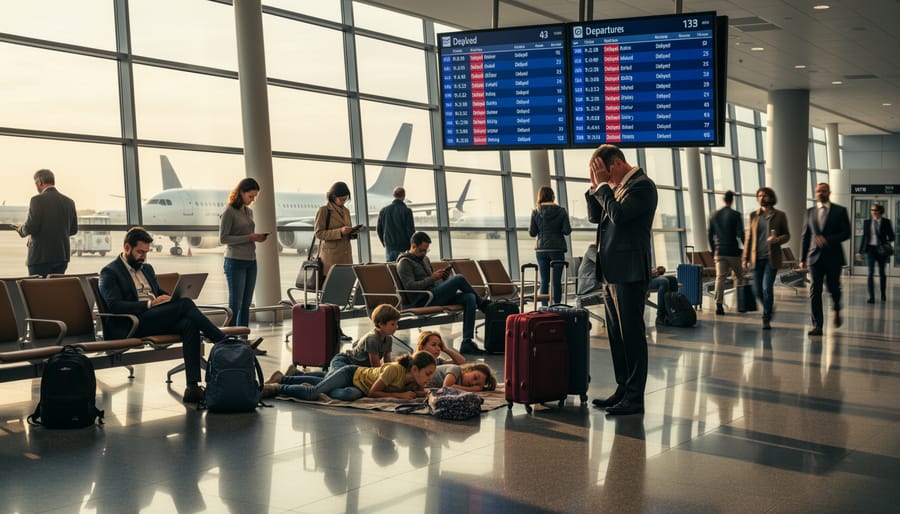
A ground stop is exactly what it sounds like. Flights are held on the ground until it’s safe to resume, so planes that were ready to leave stay put, and the whole schedule starts to back up behind them.
That’s what changed here. According to Travelweek, the FAA’s order grounded flights at airports across the U.S., including inbound flights. The reported trigger was a data overload that hit the telecommunications routers at regional air traffic control centres, which is the kind of problem that can stop things quickly.
So why should a Canadian traveller care? A nationwide ground stop in the United States could have a ripple effect on Canadian air travel. Cross-border routes are the obvious worry, but connections matter just as much. If your itinerary passes through a U.S. airport, or your aircraft and crew are coming from one, a delay down south can quickly become a delay for you.
Keep in mind that this reflects reporting available at the time of writing, and conditions in situations like this change fast. I’m not claiming to know the live status of any particular flight or airport, so treat this as context rather than a current-conditions report.
Key Developments in the Flight Delay Update
1. The FAA Ordered a Nationwide Ground Stop
According to Travelweek, the FAA ordered a nationwide ground stop that grounded flights at airports across the U.S. In plain terms, a ground stop means planes are held where they are until it’s considered safe to resume normal operations. That’s the whole idea, and it’s a big one when it covers an entire country.
The order wasn’t limited to departures from American airports. Travelweek reported that the ground stop included inbound flights as well, which is why the effects can spread well beyond U.S. borders. If your trip touches a U.S. airport, even just for a connection, this is worth knowing about.
We don’t have details on how long the stop lasted or how it was resolved, so we’re not going to guess. Check your airline directly for the latest on your own flight.
2. A Data Overload Hit Air Traffic Control Telecommunications
According to Travelweek, the ground stop began when regional air traffic control centres’ telecommunications routers were hit with a data overload. Think of those routers as the traffic cops of a phone network. They carry the messages that let controllers talk to each other, hand flights off between regions, and keep track of where every plane is.
When those systems get swamped, controllers can’t safely do any of that. So the FAA holds flights on the ground until communication is reliable again. The routers overwhelmed by data overload weren’t a problem with any single airline or airport, which is why the effects spread so widely.
I always find it a little reassuring, honestly. A ground stop is the system choosing caution over risk, even when it’s a pain for travelers.
3. The Cancellation and Delay Numbers Were Large
The numbers behind this disruption are hard to ignore. According to Travelweek, more than 2,500 flights cancelled that day across the U.S., and that came right after roughly 9,100 cancellations and 7,030 delays the day before.
That’s a lot of stranded passengers, missed connections, and rebooking lines. If you’ve ever sat on an airport floor hunting for an outlet while your plans fell apart, you know how fast those totals turn into real stress.
One caveat worth repeating: these figures come from that single Travelweek report. They aren’t a live count, and the situation can shift quickly. Treat them as a snapshot of the scale, not today’s tally.
4. Canadian Air Travel Could Feel the Ripple Effect
Air Canada’s Daily Travel Outlook is the place to look for airline-specific updates. It lists flight disruptions, delays and possible cancellations, and it applies to Air Canada, Air Canada Rouge and Air Canada flights. Affected airports are listed by date, region and city, so you can find your departure or arrival point and see what the airline has posted.
The reason it matters now is simple. A nationwide ground stop in the United States could have a ripple effect on Canadian air travel, especially on cross-border routes and U.S. connections. That doesn’t mean any particular Canadian airport is affected right now. I’d treat the outlook as the source of truth rather than guessing, and check it again before you head to the airport, since conditions can shift quickly.
Why This Matters for Your Trip, Especially if You’re Heading to or From West Canada
A U.S. ground stop doesn’t stay in the U.S. When flights are held on the ground, the planes and crews meant for your trip can end up stuck in the wrong city. That’s the ripple effect Canadian travelers feel most. Cross-border flights get delayed or cancelled, and if your route connects through a U.S. airport, one late leg can break the whole chain.
I learned this the hard way on a trip years ago. A delay on my first leg meant I missed my connection, and I spent a long evening in an airport trying to rebook. What it taught me is simple: build cushion into your plans, and never assume the first flight will run on time.
If you’re flying out of or into the West Coast, it helps to know how to handle delays in Vancouver before you need to. Delays also reach beyond the airport. They can push back hotel check-ins and squeeze the time you have for attractions you’ve already planned around.
If you’re traveling with CBD or vape products, give yourself extra time and keep everything properly packed. A rebooking or reroute can mean more security checks, and being organized makes those far less stressful.

What to Watch Next and How to Protect Your Plans
When a disruption like this is unfolding, the best thing you can do is stop refreshing social media and go straight to the source. Your airline’s daily outlook page, your airport’s notices and your booking app are the three places that actually matter. Air Canada’s Daily Travel Outlook, for example, lists affected airports by date, region and city, so you can see at a glance whether your route is in play. If you want a deeper walkthrough, here’s how to track Air Canada delays before you head out the door.
I learned the hard way that a quick check beats a long wait at the gate. Here’s a simple checklist to run through now, no matter how things develop:
- Check your airline’s daily travel outlook before leaving for the airport.
- Sign up for flight status alerts so changes reach you first.
- Pack essentials, plus any CBD or vape items, in your carry-on and within airline rules.
- Know your rebooking options before you need them.
- Confirm that your hotel and ground transport can flex if your arrival shifts.
I won’t guess when things will settle, because nobody can say for sure. Instead, build a little slack into your plans and keep your confirmations handy, so a delay stays an inconvenience rather than a derailment.
Flight Delay Update FAQs
Where can I check Air Canada delays?
Air Canada’s Daily Travel Outlook lists flight disruptions, delays and possible cancellations, with affected airports organized by date, region and city. It covers Air Canada, Air Canada Rouge and Air Canada flights, so start there before you head to the airport.
Can a U.S. ground stop affect my Canadian flight?
Yes. A nationwide ground stop in the United States can ripple into Canadian air travel, especially on cross-border routes and U.S. connections.
What is a ground stop?
In simple terms, flights are held on the ground until it’s safe to resume. In this case, Travelweek reported the FAA’s order grounded flights at U.S. airports, including inbound flights.
What should I do if my flight is delayed or cancelled?
Check your airline’s official updates first, then your booking app for rebooking options. Keep your receipts and read up on flight delay compensation so you know what to ask for.
Honestly, the biggest lesson I’ve learned from my own travel hiccups is to ask early. Agents tend to have more options at the start of a disruption than at the end of it.
Delays like these are frustrating, but they usually sort themselves out faster than the headlines suggest. The short version: a U.S. ground stop, reportedly sparked by a data overload at air traffic control telecommunications, caused big cancellation and delay numbers, and Canadian flights could feel some of the ripple.
If you take one thing from this update on flight delays, make it this: check your airline’s official updates before you head to the airport. Air Canada’s Daily Travel Outlook lists affected airports by date, region and city, so you’ll know where things stand before you pack the car.
Keep your bags organized, give yourself a little extra time, and stay flexible. A delay is a detour, not the end of the adventure. Safe travels, and see you out there!